
WATER LINE REPLACEMENT
WATER LINE REPLACEMENT in Smithfield, NC
Copper service lines commonly last 50 to 70 years and galvanized steel frequently fails between 40 and 60, which means plenty of homes are living on borrowed time without knowing it. Just Right Plumbing, LLC replaces water service lines across Smithfield, NC using correctly sized modern materials, buried to the required depth with proper separation from the sewer, and coordinated through both NC811 and the county inspection process from the very first day of the job to the last.
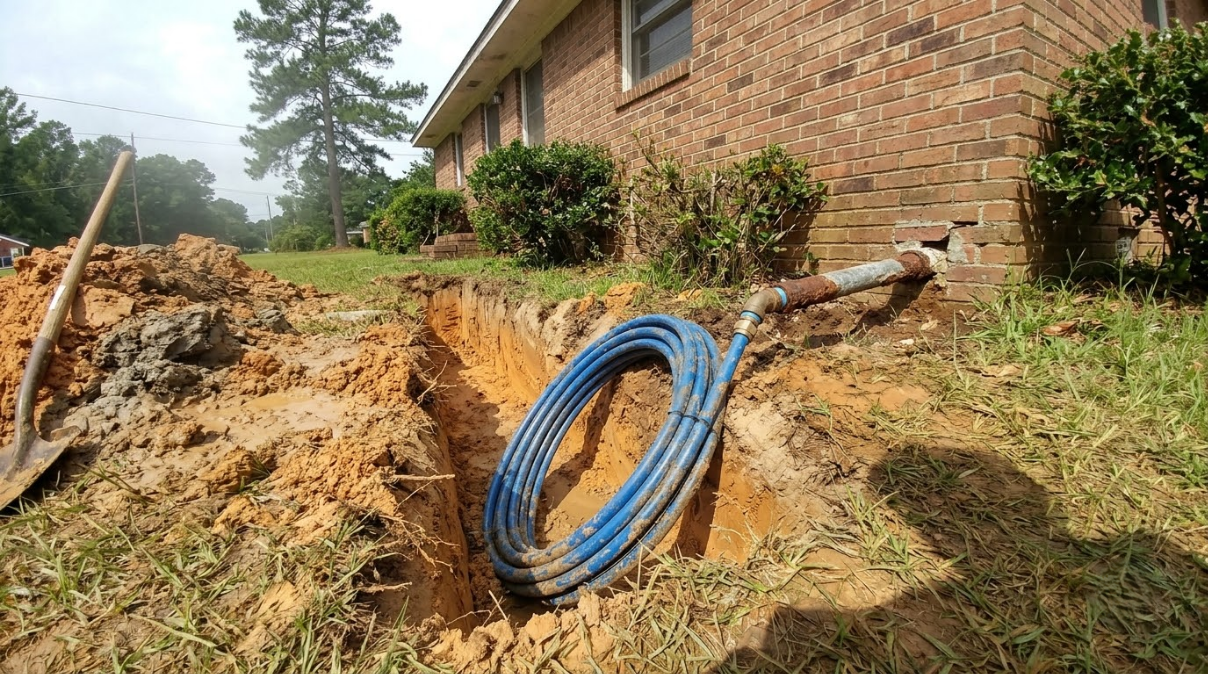
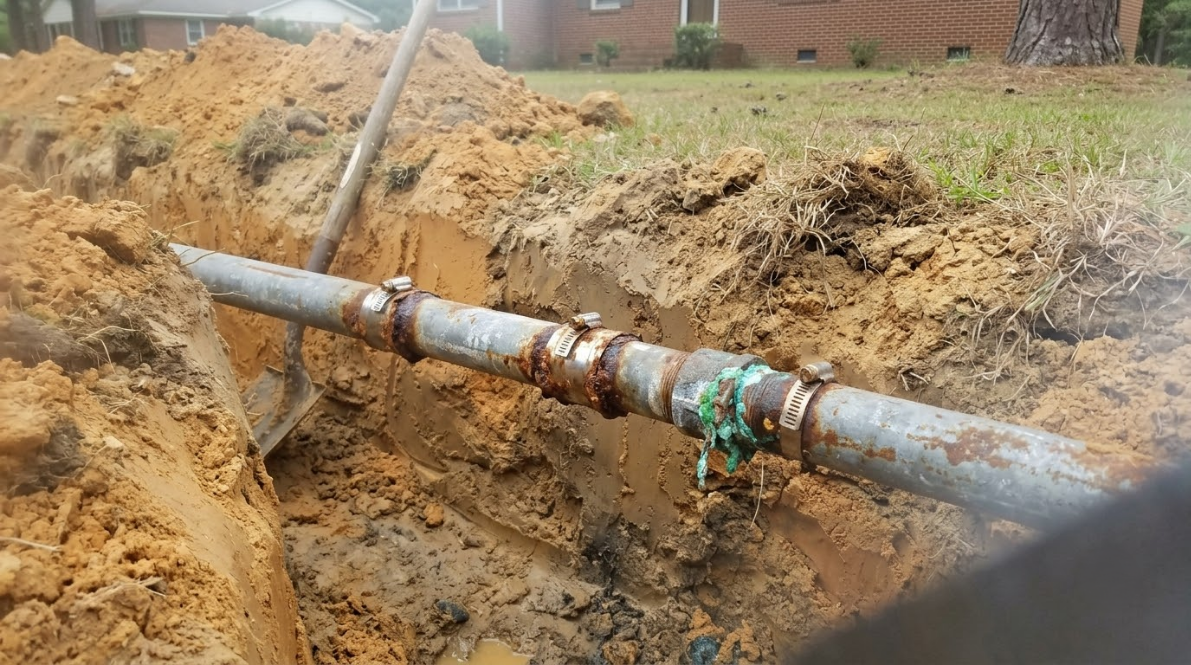
THE FOURTH REPAIR IS THE EXPENSIVE ONE.
A service line that has failed just once may simply have been unlucky about where somebody put a fence post. A line that has failed three separate times is telling you clearly that the material has reached the end of its working life, and every subsequent repair is money spent on a pipe with no real future left in it.
At that point replacement stops being the expensive option altogether. It becomes instead the one option that finally ends the cycle rather than quietly extending it another eighteen months.
✓ Correct sizing and burial depth
✓ NC811 notified before excavation
✓ Trenchless boring where suitable
✓ Permit and inspection coordinated
WATER LINE REPLACEMENT
BURIED PIPE SHOULD BE FITTED ONCE.
Modern service line materials remove most of what killed the pipe they replace. Copper and PEX do not scale internally the way galvanized steel does, and a properly bedded line at correct depth is protected from the ground movement and frost that damage shallow installations. Sized to the fixture demand of the house rather than simply matching whatever came out, a replacement should comfortably outlast the mortgage attached to the property.
RUN LENGTH VARIES ENORMOUSLY AROUND HERE.
Service lines here range from a short run at the front of a town lot to well over 100 feet on properties set back from the road. That distance changes everything: the sizing needed to hold pressure at the far end, whether trenchless boring makes sense, and how much surface has to be crossed. We measure and assess rather than quote a length from a map.
A SERVICE LINE SHOULD OUTLAST THE MORTGAGE.
Anything buried underground should be installed once and then forgotten about entirely, and that means correct sizing, correct depth, correct separation from the building sewer, and materials chosen deliberately for the soil they will sit in. 7+ years of digging up other people's shortcuts has made that particular principle completely non-negotiable for us here. Would you like your existing service line assessed properly before it fails on you again?
WHY CHOOSE US FOR WATER LINE REPLACEMENT.
SIZED FOR THE WHOLE HOUSE
Line diameter is calculated from fixture demand and run length rather than copied from the old pipe. That is what keeps pressure strong at the far end of a long property.
TRENCHLESS WHERE IT FITS
Directional boring pulls a new line through with only two access pits, leaving driveways and lawns largely untouched. Where the ground allows it, that is nearly always the better route.
BURIED TO PROPER DEPTH
State minimum cover is 12 inches, and correct separation from the building sewer is equally important. Doing both properly is what protects the new line from frost and contamination.
UTILITIES LOCATED FIRST
NC811 receives the full statutory notice before anything is excavated. Water services frequently share ground with gas, power, and communications, none of which tolerate an impatient shovel.
PERMIT AND INSPECTION HANDLED
Where the work requires a permit through Johnston County, we arrange and coordinate it. That record matters for your insurance position and for whoever buys the property later.
SURFACE RESTORED WITH CARE
Backfill goes in compacted layers, and driveways, turf, and planting are reinstated as closely as conditions allow. A new service line should not scar the property permanently.
WHAT WE REPLACE
OUR WATER LINE REPLACEMENT WORK
Six replacement scenarios cover the service line work that actually comes up on local properties. Site conditions, run length, and the existing material together decide which approach genuinely suits your home.
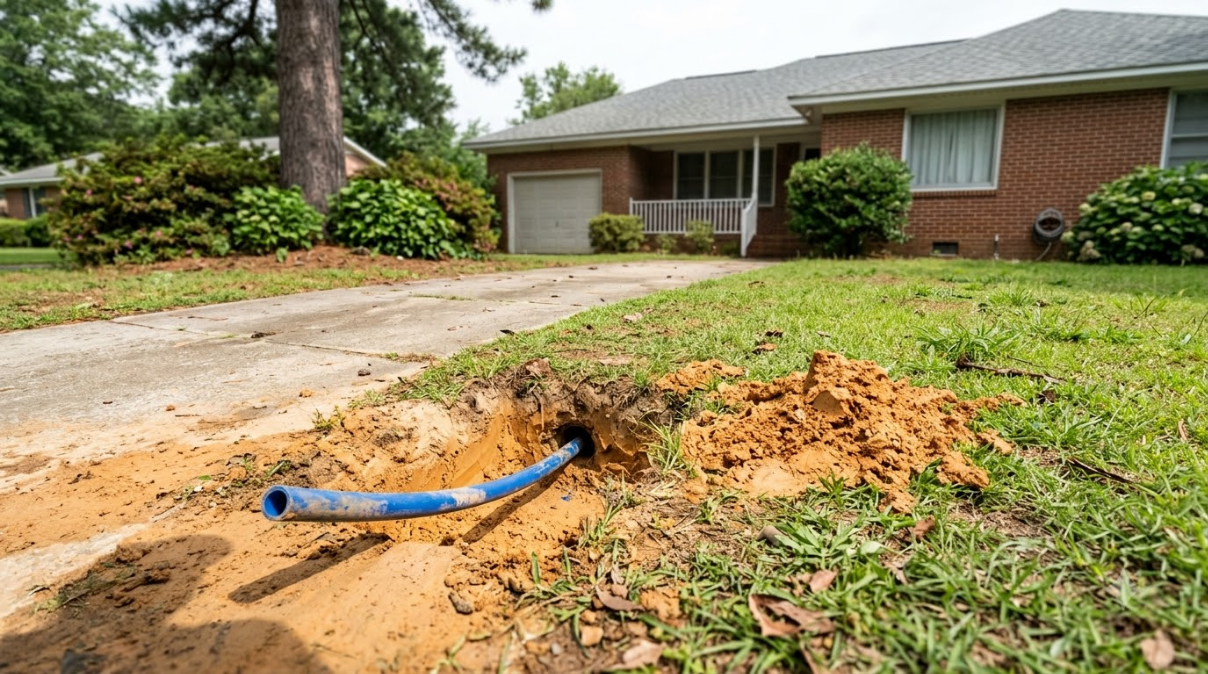
TRENCHLESS
Directional Boring Replacement
A new line is pulled underground between two small access pits, leaving driveways, patios, and mature planting undisturbed. On suitable ground it is faster, tidier, and considerably less disruptive than trenching.
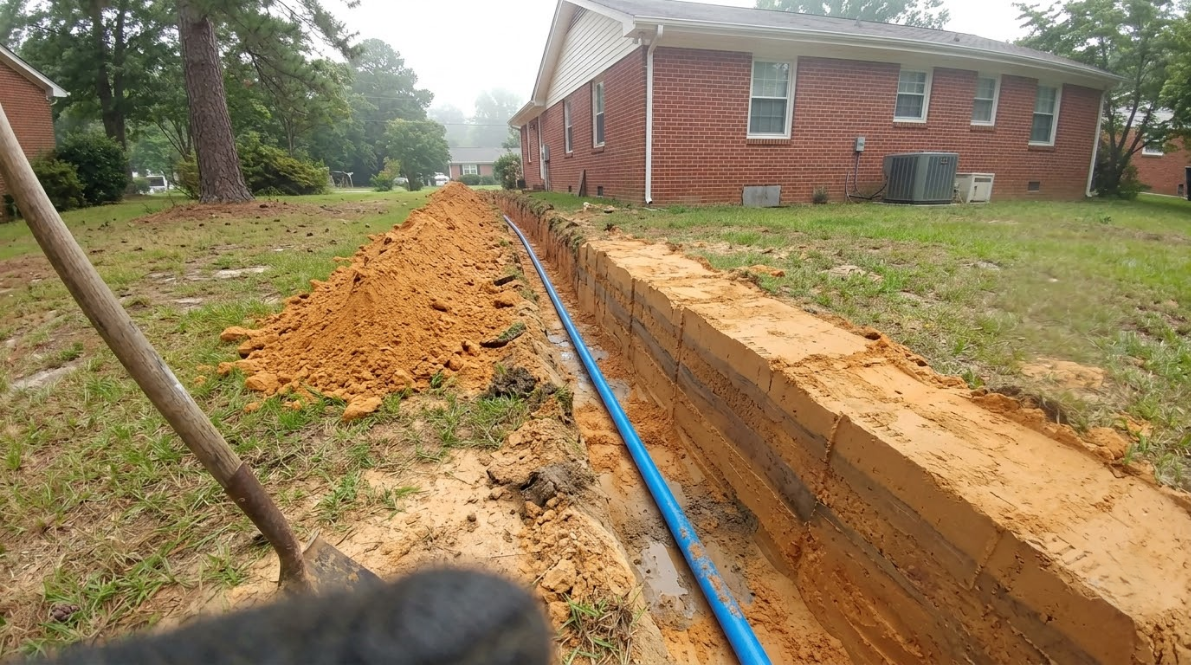
OPEN CUT
Full Trench Replacement
Where obstructions, depth changes, or ground conditions rule out boring, an open trench remains the right method. It is kept as narrow as the work permits and backfilled in compacted layers.
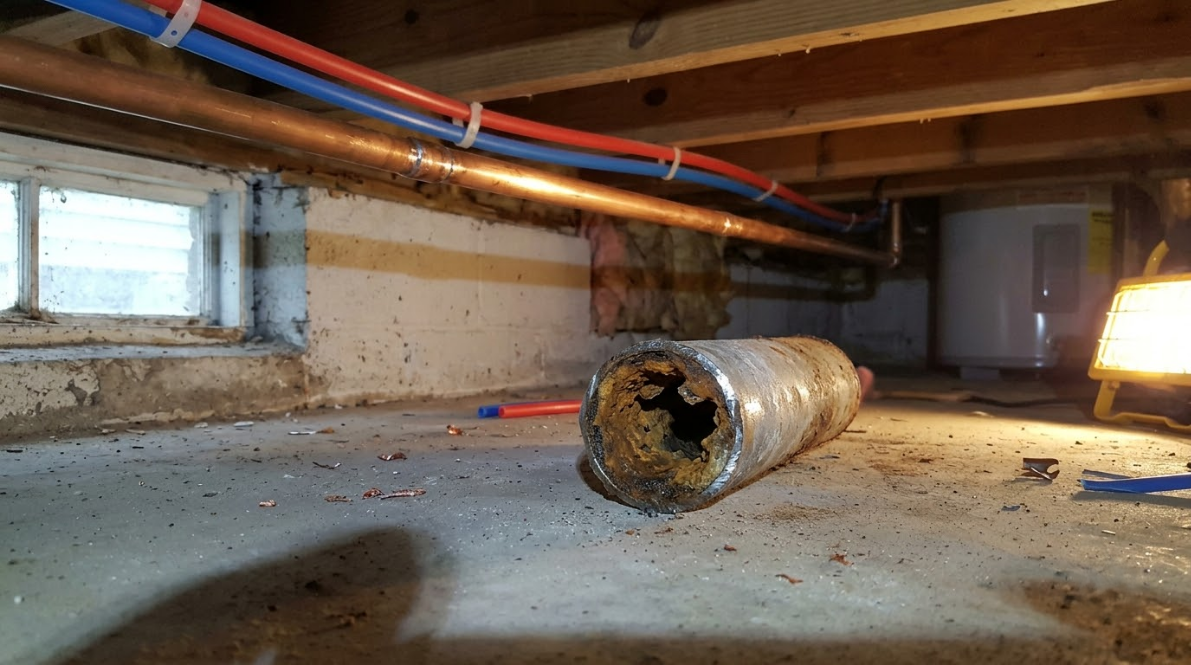
GALVANIZED
Galvanized Line Replacement
Old steel corrodes internally along its full length, restricting flow and eventually perforating. Replacing the whole run in copper or PEX restores pressure and removes the recurring failures for good.
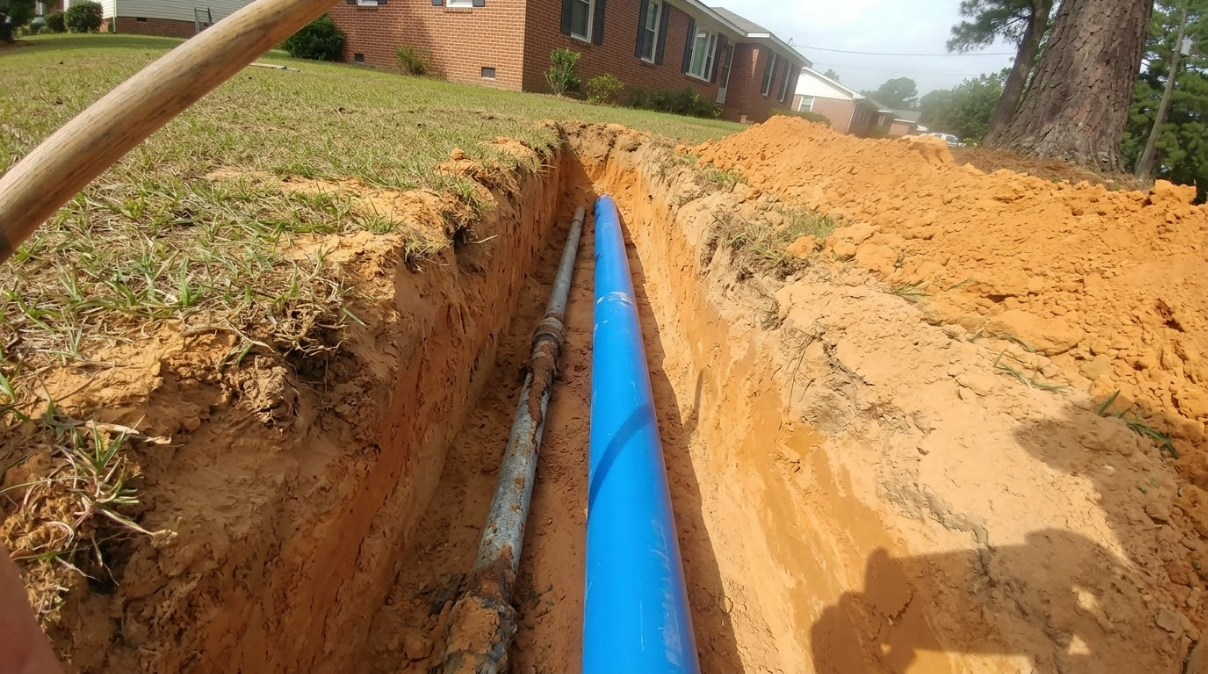
UPSIZING
Service Line Upsizing
Homes with added bathrooms, irrigation systems, or long runs frequently outgrow an undersized service line. Increasing the diameter restores pressure at the furthest fixtures rather than chasing symptoms inside the house.
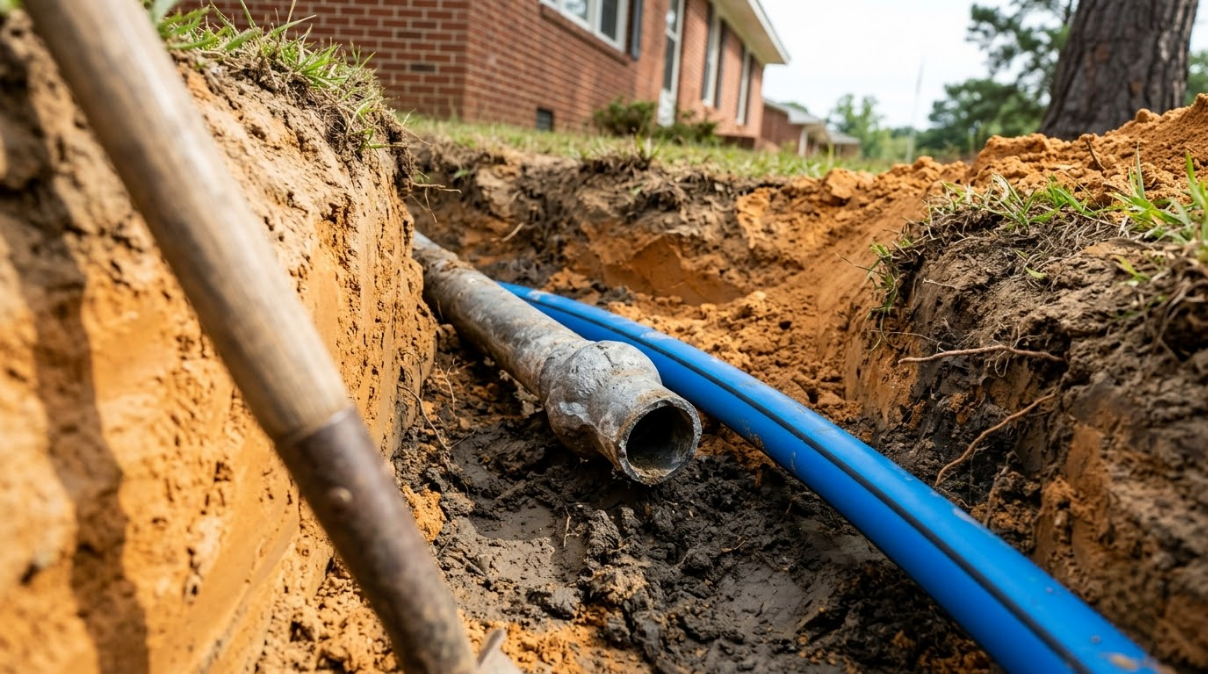
LEAD
Lead Service Line Replacement
Utilities across the state are inventorying service line materials under the revised federal rule. Where a lead line is identified, full replacement is the only appropriate response regardless of condition.
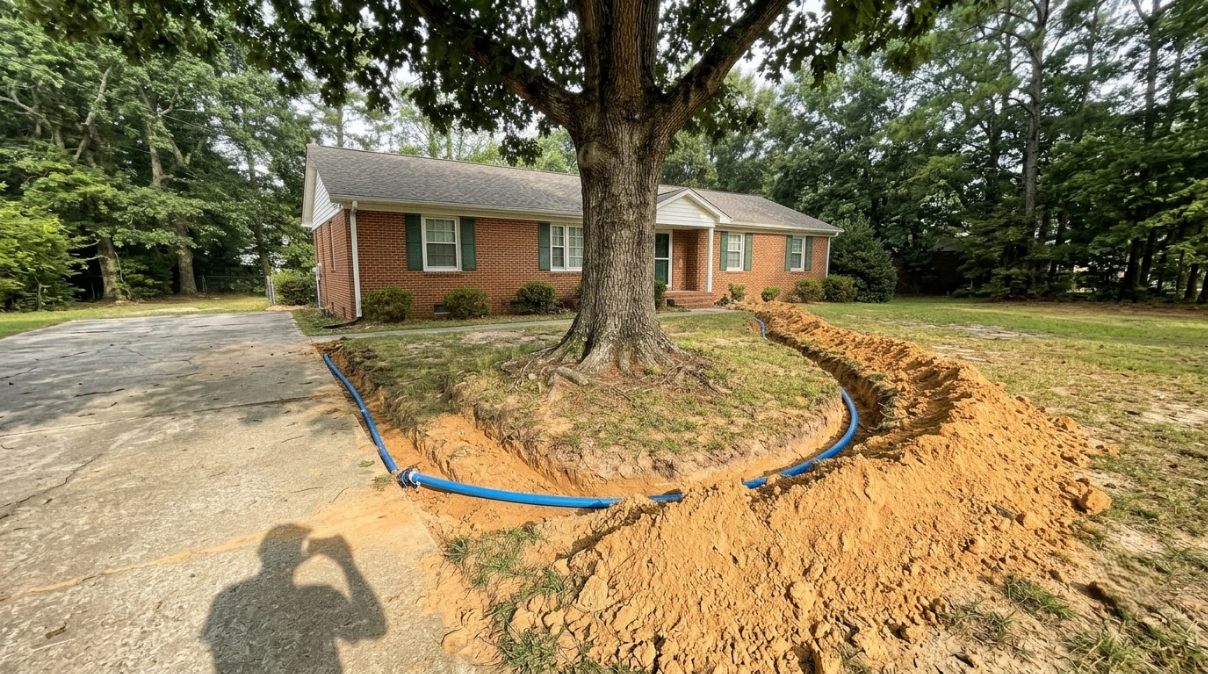
REROUTING
Service Line Rerouting
Sometimes the sensible answer is a new path entirely, away from a driveway, a mature tree, or a structure built over the original run. Rerouting avoids repeating the same failure.
THE WORD ON OUR WORK
WHAT OUR CLIENTS SAY.
The reaction we hear most often after a replacement is about the water itself. Pressure at upstairs fixtures, showers that no longer fade when a tap runs elsewhere, and the simple relief of not waiting for the next leak all get mentioned regularly.
Common Questions
FREQUENTLY ASKED QUESTIONS.
The questions homeowners ask most before replacing a water service, covering timescales, materials, permits, trenchless options, and how long the water actually stays off during the work.
How long does it take to replace a water line?
Most residential replacements take one to three days from start to restoration. The water itself is typically off for 4 to 8 hours during the active connection stage rather than the whole project.
Do I need a permit for water line replacement?
Yes. Replacing a water service is licensed plumbing work requiring a permit and inspection through Johnston County Building Inspections. Just Right Plumbing, LLC arranges that for properties throughout Smithfield, NC.
Is copper or PEX better for a water service line?
Both perform well. Copper is rigid, long established, and handles heat well. PEX flexes, resists freeze damage, and pulls through a bore in one continuous length with no buried joints.
Who is responsible for the water line from the street to the house?
Responsibility usually changes hands at the meter. The utility maintains the side running toward the main, and the property owner maintains the service line running from the meter to the building.
Can a water line under a slab be replaced without breaking the floor?
Frequently, yes. Rerouting the line overhead through walls and attic space, or boring an entirely new path outside the building footprint, both avoid breaking open any concrete in most residential situations.
How do I know if my water line needs replacing?
Repeated leaks on the same run, visibly corroded galvanized pipe, discolored water at first draw, pressure that has declined steadily over years, and a known lead or Orangeburg material all point that way.
Do I have to replace a lead service line even if it is not leaking?
Yes. Lead service lines are being identified and removed under the revised federal lead and copper rule, and condition is irrelevant, since the concern is water quality rather than leakage.
Why should I choose Just Right Plumbing for water line replacement?
We size the new line to the house, bore rather than trench wherever possible, and handle the permit. Property owners across Smithfield, NC appreciate a job planned before it starts.
HOW WE WORK
FROM FAILING LINE TO FULL PRESSURE, HERE IS HOW.
STEP 01
Assess the existing service
Material, age, diameter, run length, and the full repair history all get established first. Static pressure is then measured at the house, which frequently reveals an undersized line rather than a leaking one.
STEP 02
Plan the route and the method
Driveways, mature trees, structures, and the meter position together decide between directional boring and an open trench. That single decision shapes the timeline, the cost, and how much of your surface gets disturbed.
STEP 03
Size the new line properly
Diameter is calculated from the fixture demand of the house and the length of the run, so that pressure holds up at the furthest outlet rather than fading away as soon as two taps open at once.
STEP 04
Permit, notify, and schedule
The county permit is arranged and NC811 receives its full 3 working days of statutory notice. Work is then scheduled around your household, the site access, and the current state of the ground.
STEP 05
Install, connect, and inspect
The new line is bored or laid at correct depth with proper separation from the sewer, connected at both the meter and the building, then pressure tested and presented for the county inspection.
STEP 06
Restore the ground and hand over
Access pits and trenches are backfilled in compacted layers, the surfaces are reinstated, and the whole system is flushed through. You get the completed paperwork and a walkthrough of the new shut-off arrangements.
Get Your Free Estimate
STOP PAYING FOR THE SAME LEAK, FREE.
Tell us the pipe material, the age of the house, and how many leaks you have already paid for. We will give you an honest opinion over the phone on whether replacement is genuinely the right call yet.
WHAT YOUR FREE ESTIMATE COVERS:
✓ Repair history reviewed honestly
✓ Correct line sizing calculated
✓ Boring and trenching compared
✓ Permit and NC811 handled by us
✓ Realistic timeline and water-off window
✓ Surface restoration included