
Water Line Repair
WATER LINE REPAIR in Smithfield, NC
North Carolina requires water service piping to be buried at least 12 inches below grade, and a service line no smaller than three-quarters of an inch, which is why a break out in the yard usually announces itself as soft ground rather than anything you can see. Just Right Plumbing, LLC repairs water service lines across Smithfield, NC, locating the break accurately before excavating, notifying NC811 first as the law requires, and opening only the ground that the repair genuinely needs.
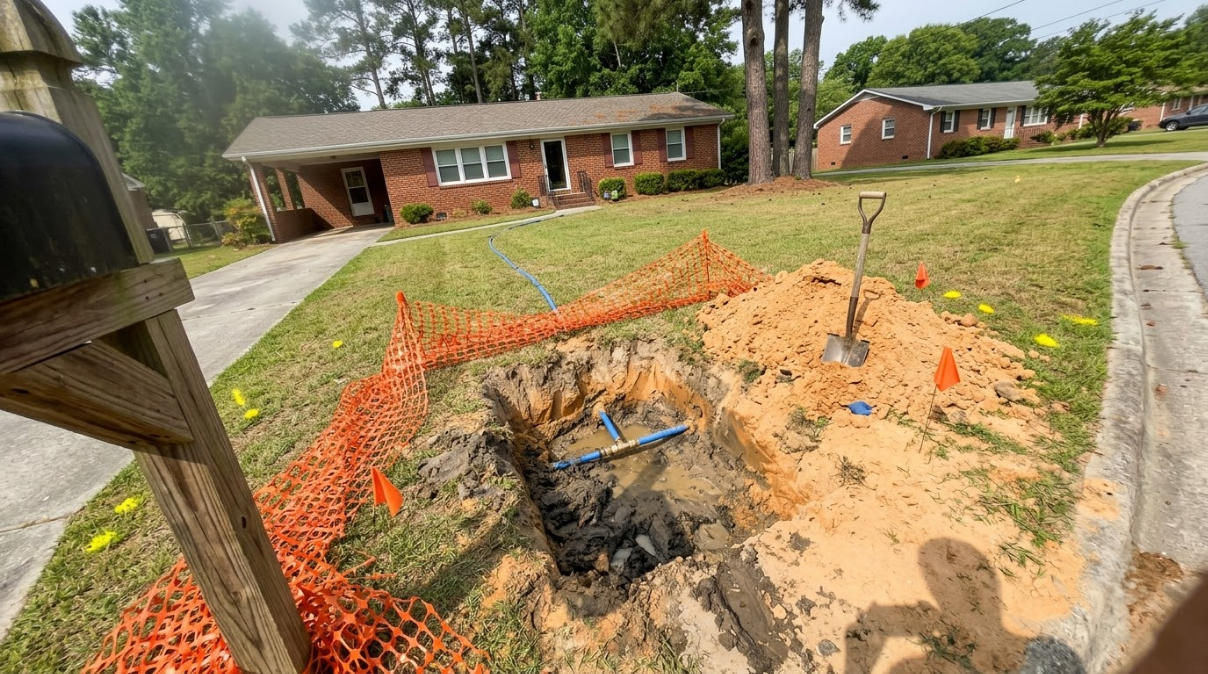
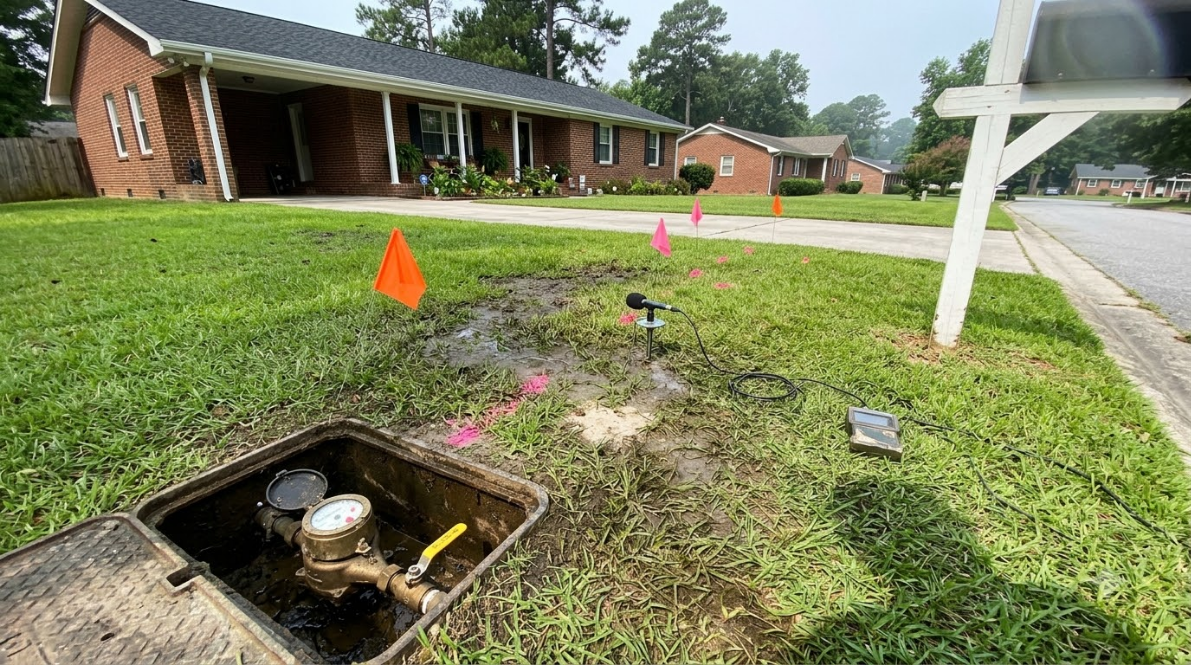
A YARD LEAK COSTS MONEY EVERY HOUR.
Unlike a drain problem, a broken water service loses pressurized water continuously, day and night, and every gallon of it eventually appears on your bill. A meter that keeps turning with the whole house shut down is all the proof anybody needs, and the volume adds up considerably faster than most homeowners expect it to.
That urgency is exactly why accurate locating matters so much here. Finding the break precisely is what turns a full day of exploratory trenching into one short, contained excavation.
✓ Break located before any digging
✓ NC811 notified as the law requires
✓ Excavation kept small and precise
✓ Licensed P1 plumber on every job
WATER LINE REPAIR
THE SERVICE LINE IS THE ONE NOBODY THINKS ABOUT.
Everything inside the house depends on a single buried pipe running from the meter to the building, and it is the only part of the plumbing most people never see. Pressure loss, discolored water, a meter that never rests, soft ground, and unusually green grass along one line are the whole vocabulary it has. Learning to read those signs early is what keeps a repair small and a bill reasonable.
SHALLOW BURIAL MAKES LOCAL LINES VULNERABLE.
Twelve inches is the state minimum cover, and plenty of service lines around Smithfield sit close to it. That depth keeps installation costs down but leaves the pipe exposed to garden work, fence posts, vehicle loads across a driveway, and root pressure from mature trees. It is also why NC811 notification matters before anyone digs, ourselves included, and why we never assume the line runs where it looks like it should.
NC811 GETS CALLED BEFORE ANYTHING GETS DUG.
State law requires 3 full working days of notice to the utility owners before any excavation begins, and there is simply no version of this work where that step gets skipped to save a little time. 7+ years on the tools has produced a very healthy respect for what tends to sit alongside a water service in a shared trench. Want the line located before anybody starts digging?
WHY CHOOSE US FOR WATER LINE REPAIR.
LOCATED BEFORE EXCAVATED
Correlation and listening equipment pin down the break before the ground opens. That precision is what separates a small, contained excavation from a trench across your entire front lawn.
NC811 HANDLED PROPERLY
We notify utilities and wait out the statutory notice period every time. Gas, power, and communications lines frequently share a trench with water, and none of them forgive a shortcut.
REPAIR OR REPLACE, ASSESSED HONESTLY
Where the line is sound apart from one break, we repair it. Where the material is at the end of its life, you will hear that before spending on a repair.
MINIMAL GROUND DISTURBANCE
The excavation is sized to the repair rather than to convenience. Driveways, established planting, and hardscaping all get worked around wherever the ground conditions allow it.
CORRECT DEPTH AND MATERIALS
Repairs go back at proper cover with correct fittings and required separation from the sewer. Doing it to code is what stops the same section failing again in 2 winters.
GROUND PUT BACK PROPERLY
Backfill goes in compacted layers and the surface is restored carefully. A repaired water line should not leave a settling depression across your yard next spring.
WHAT WE REPAIR
OUR WATER LINE REPAIR WORK
Six repair services cover the service line problems that actually arise on residential and small commercial properties. Every one of them begins with accurate locating and NC811 notification before any ground is opened.
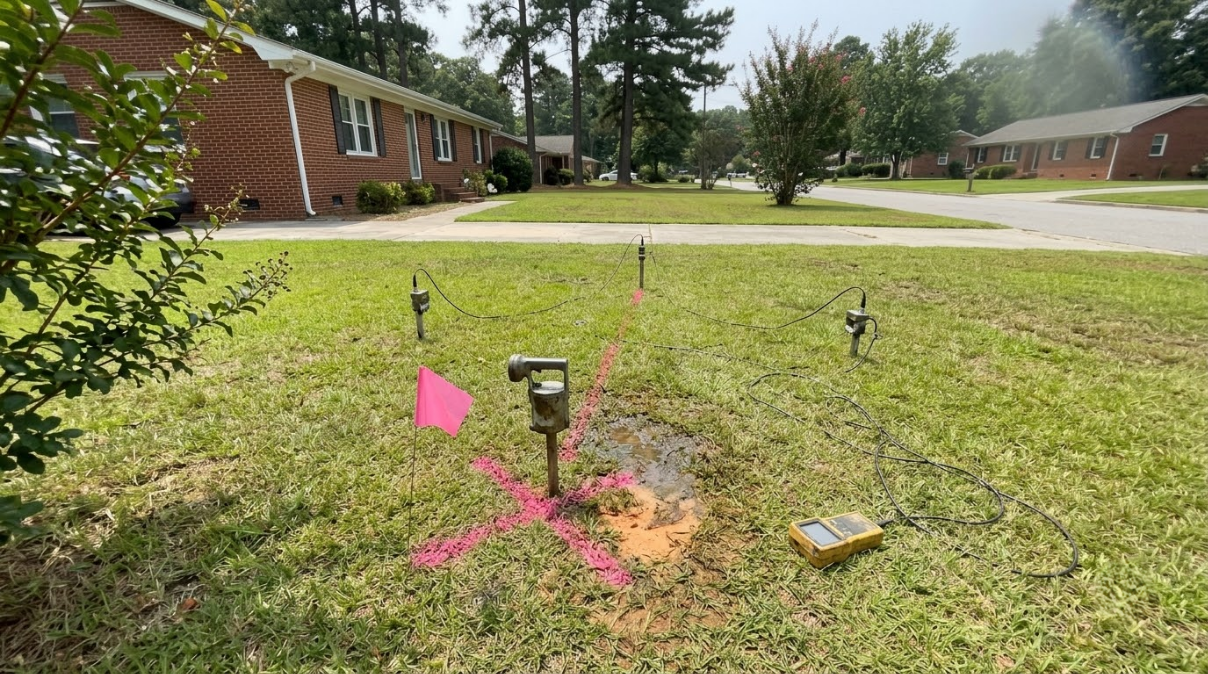
LOCATING
Underground Leak Locating
Correlation equipment and acoustic listening follow the sound of escaping water along a buried line. Marking the break accurately on the surface is what keeps the excavation small and the cost sensible.
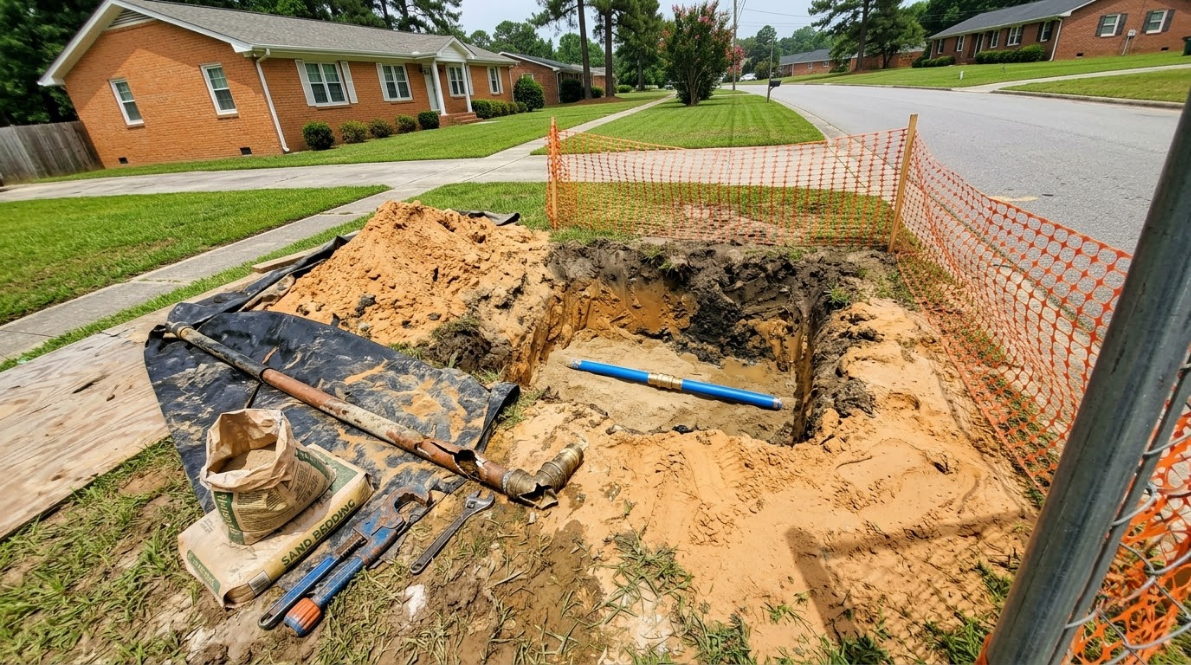
BREAKS
Service Line Break Repair
Cracks, splits, and separated fittings all get repaired with correct materials and proper bedding beneath. The line goes back at code depth with the required separation from any nearby sewer.
FITTINGS
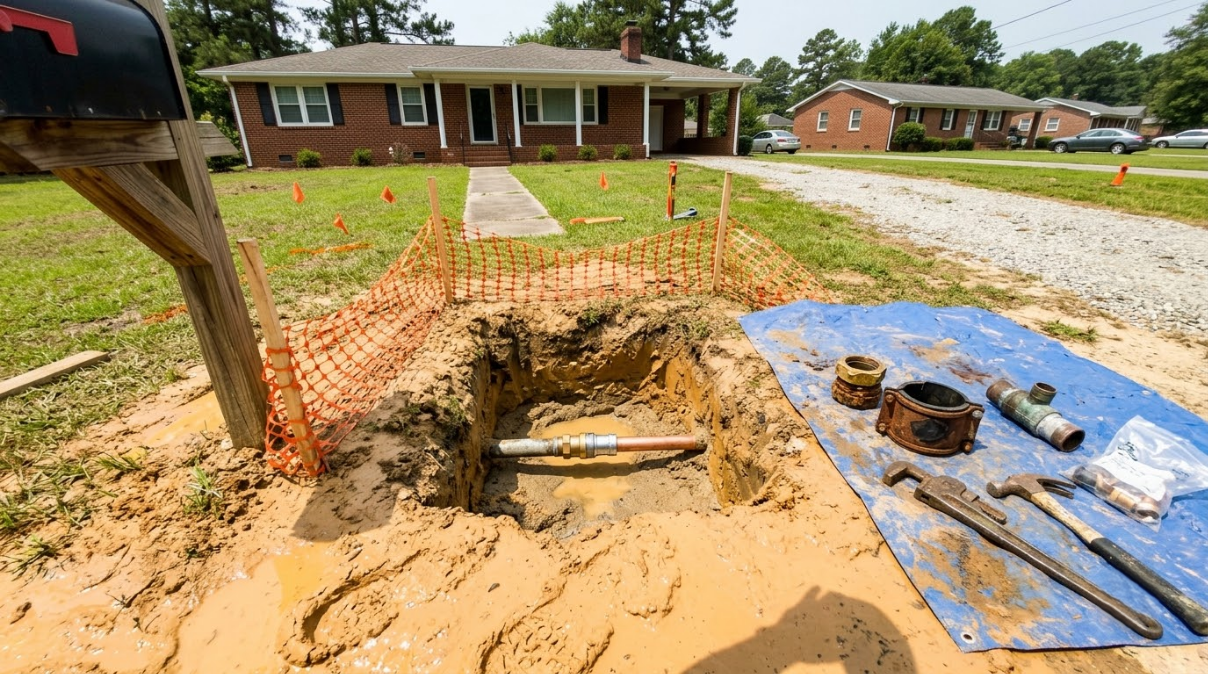
Coupling and Fitting Repair
Compression couplings, transitions between dissimilar materials, and old repair clamps are all common failure points. Replacing them with correct fittings removes the weak spot entirely rather than simply patching around it.
METER
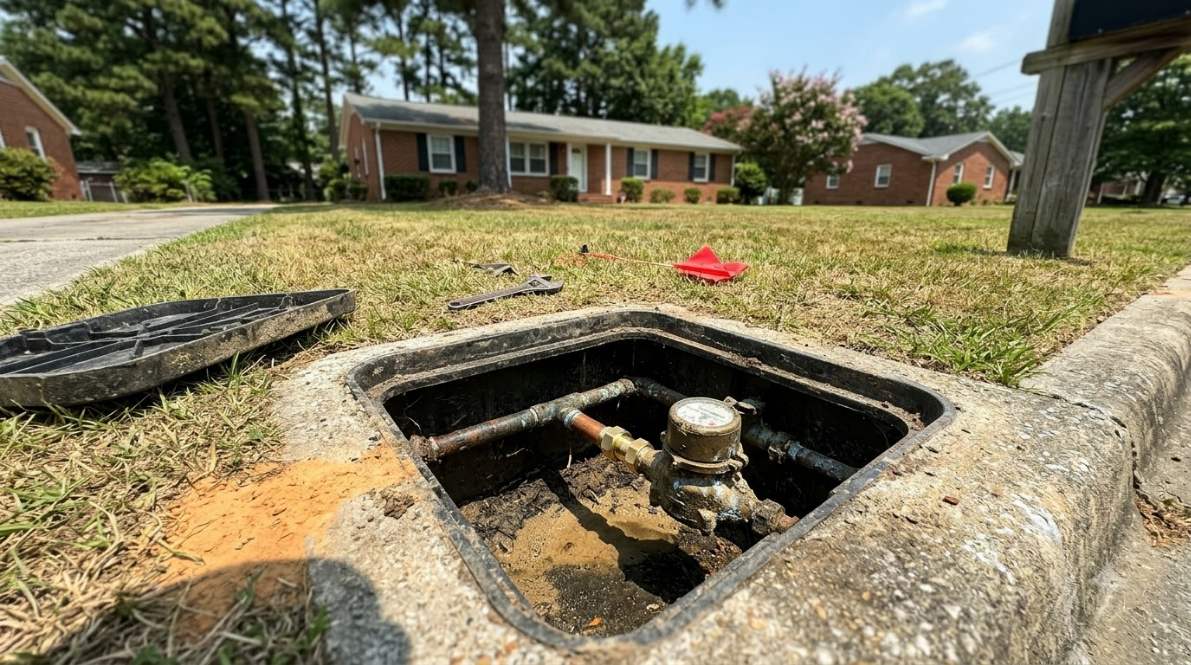
Meter Side Connection Repair
Leaks at or near the meter setter need care, since responsibility often changes at that point. We identify which side has failed and coordinate with the utility where that is appropriate.
FREEZE
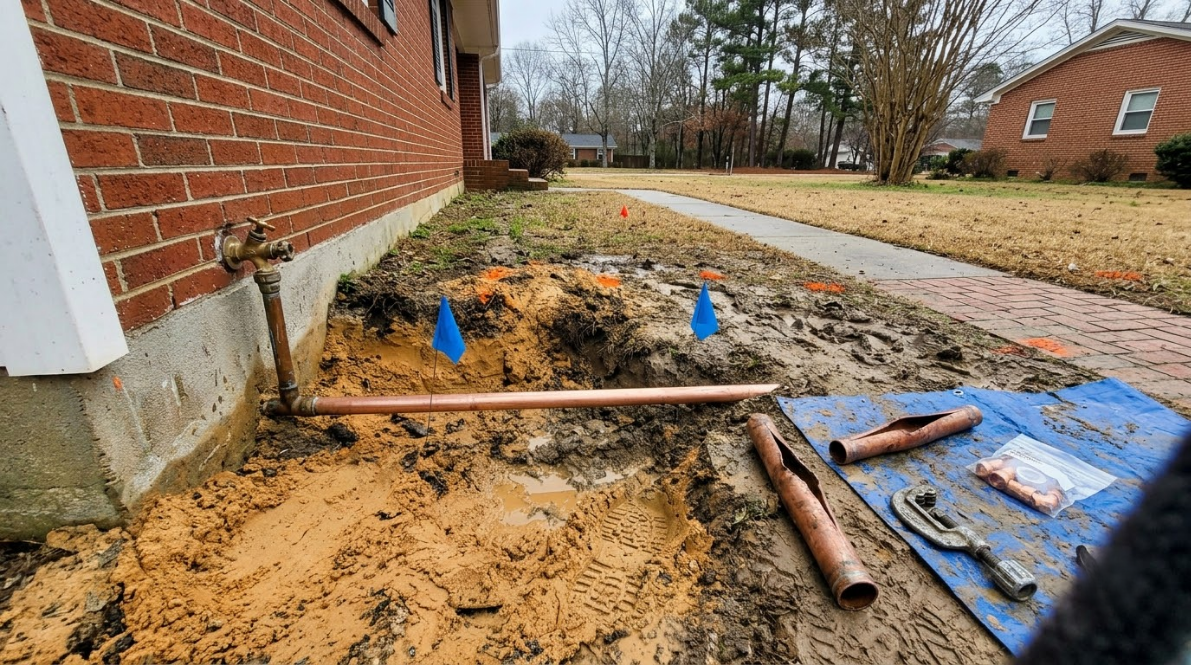
Freeze Damage Line Repair
Shallow lines and exposed sections near foundations split during hard freezes, and the damage frequently shows only once the ground thaws. We check the full run rather than repairing one break.
PRESSURE
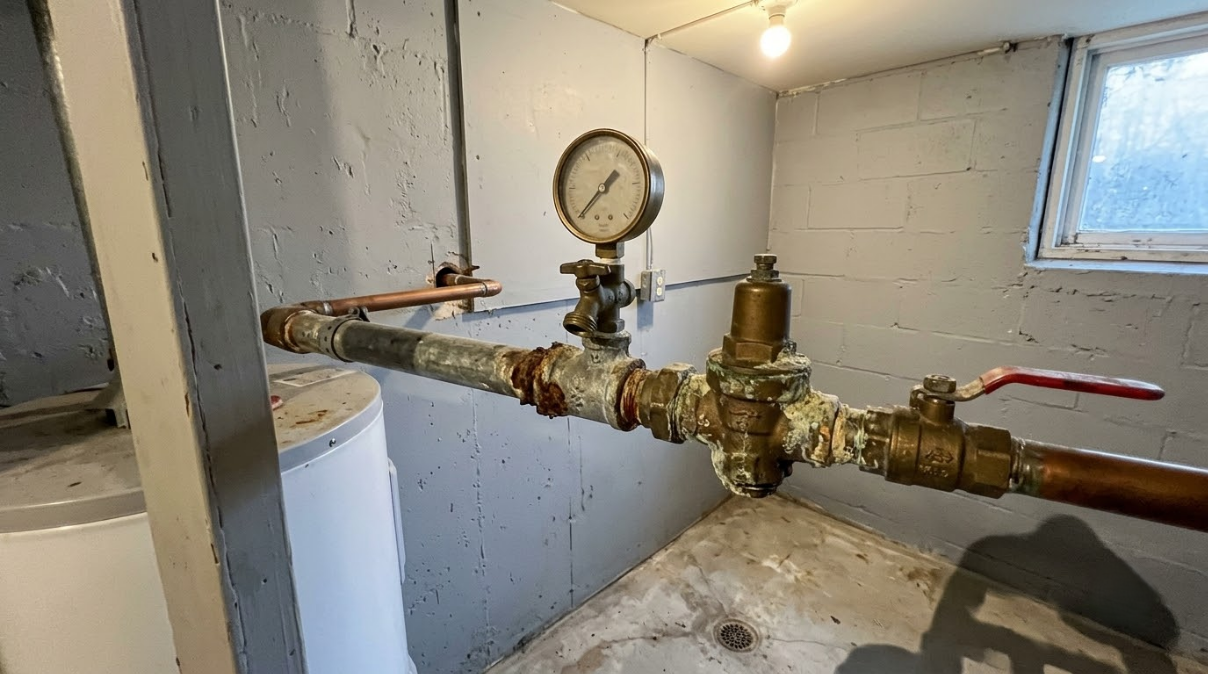
Pressure Loss Diagnosis
Falling water pressure is not always a leak. Partially closed valves, failing regulators, corroded galvanized sections, and undersized lines all produce it, and each one needs a completely different repair.
THE WORD ON OUR WORK
WHAT OUR CLIENTS SAY.
Property owners mention two things in particular after service line work: that the digging turned out far smaller than they had braced themselves for, and that they understood exactly where and why it was happening well before any machinery arrived on the site.
Common Questions
FREQUENTLY ASKED QUESTIONS.
Questions homeowners ask about water service lines, covering responsibility, warning signs, whether repair or replacement makes sense, and how a buried break is found without digging blindly.
What is the difference between a water line and a water main?
The main is the public pipe running under the street and belongs to the utility. Your water service line runs from the meter to the building and is generally the property owner's responsibility.
Who is responsible for a leaking water line?
Ownership typically changes at the meter. The utility maintains its side, and the customer maintains the service line from the meter to the house, though local rules vary and we confirm before starting.
How can I tell if I have an underground water leak?
Watch for a meter that keeps moving with everything shut off, unexplained bill increases, falling pressure, soft or soggy ground along the line, and grass noticeably greener in one narrow strip.
Is a wet spot in the yard always a water line leak?
Not always. Irrigation faults, sewer leaks, roof drainage, and a naturally high water table all produce damp ground. A simple meter test quickly distinguishes a pressurized leak from every other explanation.
Can a water line be repaired instead of replaced?
Often, yes, particularly where the pipe is otherwise sound and the failure is a single break or fitting. Galvanized steel and early plastics near the end of their life argue for replacement instead.
Should a galvanized steel service line be repaired or replaced?
Usually replaced. Galvanized steel corrodes internally along its whole length, so repairing one section simply leaves the rest at exactly the same stage of deterioration and the same risk of failing.
How long can I expect a water service line to last?
Copper commonly gives 50 to 70 years, galvanized steel 40 to 60, PVC over 50, and ductile iron 75 to 100. Soil chemistry and pressure shorten all of those figures.
Why should I choose Just Right Plumbing for water line repair?
We locate the break before digging, notify NC811 properly, and keep the excavation small. Property owners around Smithfield, NC value both the precision and the honest repair or replace advice.
HOW WE WORK
FROM SOFT GROUND TO SOLID REPAIR, HERE IS HOW.
STEP 01
Confirm the leak with the meter
Everything gets shut off inside and the meter is watched. Continued movement proves water is escaping on the pressurized side, and the rate gives a useful sense of how large the break is.
STEP 02
Trace and locate the break
Correlation and acoustic equipment follow the line and pinpoint where the sound of escaping water is strongest. That position is then marked on the surface, along with the expected depth of the pipe below.
STEP 03
Notify NC811 and wait
Utility owners receive the 3 full working days of notice that state law requires, and the marks are then checked on site. Gas and power frequently share the same ground as a water service.
STEP 04
Excavate precisely
The hole is opened at the marked location and kept as small as the repair sensibly allows. Careful hand work near the pipe protects both the line itself and anything else sharing that trench.
STEP 05
Repair to code and pressure test
The damaged section is replaced with the correct materials and fittings, bedded properly, and returned to the required depth and separation from the sewer. The repair is then pressure tested before any backfilling.
STEP 06
Backfill and restore the surface
Material goes back in compacted layers to reduce any future settlement, and turf or hardscaping is reinstated as closely as conditions will permit. You also get a clear account of exactly what failed and why.
Get Your Free Estimate
LOCATE THE BREAK BEFORE THE DIG, FREE.
Tell us what the meter is doing and where the ground has gone soft, and we will explain over the phone what that usually indicates, how locating works, and what a contained repair would realistically involve.
WHAT YOUR FREE ESTIMATE COVERS:
✓ Meter test explained over the phone
✓ Leak locating scope described
✓ NC811 notification handled by us
✓ Repair and replacement compared
✓ Excavation footprint estimated honestly
✓ Ground restoration included