
Leak Detection
Leak Detection in Smithfield, NC
A single stuck toilet flapper can lose more than 200 gallons of water an hour, while a slab leak may waste water for months without ever showing itself on a floor. Just Right Plumbing, LLC locates hidden leaks across Smithfield, NC using acoustic listening equipment, pressure isolation, and simple meter testing, so the repair that follows opens only a few inches of finished surface instead of an entire wall, a ceiling, or a long length of concrete guessed at hopefully.
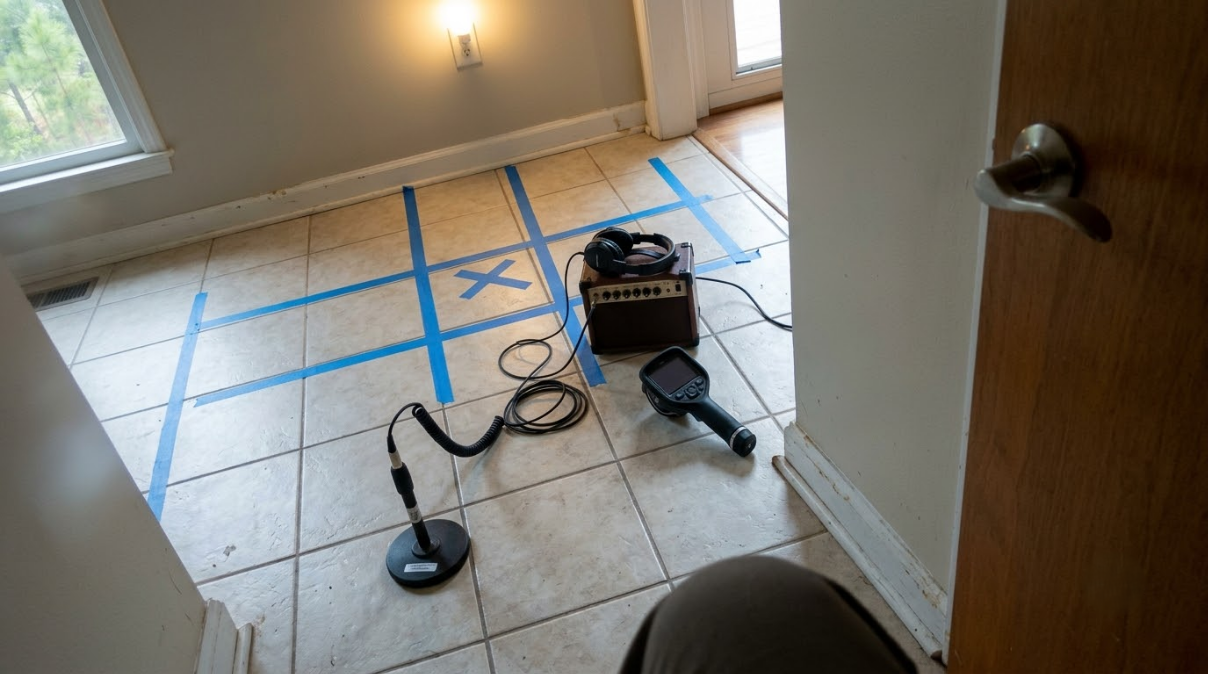
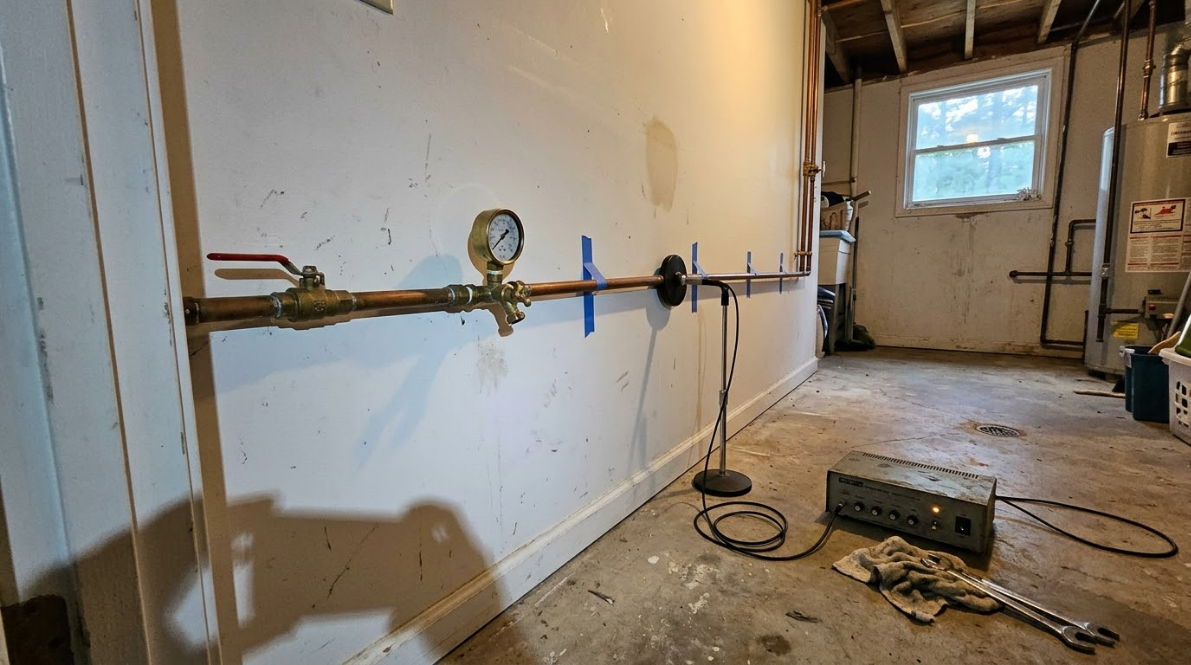
FINDING IT IS A SEPARATE SKILL FROM FIXING IT.
Almost any competent plumber can repair a pipe once it has been exposed. Working out which pipe it is, in which wall, at which point along the run, without opening everything around it, is a different discipline entirely, and it is where most of the money in a hidden leak is either saved or quietly wasted.
We isolate sections, listen carefully along the run, and confirm the location before anything at all is cut. Most leaks are pinned down within an hour or 2 of arriving on site.
✓ Acoustic and pressure testing used
✓ Location confirmed before cutting
✓ Slab, wall, and underground leaks
✓ Licensed P1 plumber on every visit
LEAK DETECTION
WATER NEVER APPEARS WHERE IT ESCAPES.
This is the single fact that costs homeowners the most money. Water leaving a pipe follows framing, pipe runs, and the slope of a slab, then emerges at the lowest point it can reach. A stain on a hallway ceiling can easily originate two rooms away. Opening the wall beneath the stain is therefore a coin toss, which is exactly why the detection work has to come first and the demolition second.
SLAB HOMES HIDE LEAKS PARTICULARLY WELL.
Slab-on-grade construction is common throughout Johnston County, and a supply line failing beneath concrete gives very few clues. Warm patches on a floor, a water heater running more than it should, unexplained bill increases, and the faint sound of running water in a quiet house are often the only signals. Acoustic equipment and pressure isolation are what turn those vague symptoms into a marked point on the floor.
FINDING IT WITHOUT BREAKING IT IS THE SKILL.
There is always a cheaper approach available, which is to start cutting into finished surfaces and keep going until water eventually appears. We have repaired the results of that method rather more often than we would like. 7+ years with acoustic gear and pressure testing has taught us that an hour spent listening usually saves a full day spent patching afterward. Would you rather we listened first?
WHY CHOOSE US FOR LEAK DETECTION.
LOCATION BEFORE DEMOLITION
Nothing gets opened until we know what is behind it. That order routinely turns a full wall repair into a patch the size of an access panel.
EQUIPMENT THAT ACTUALLY LOCATES
Acoustic listening gear, pressure isolation, and meter testing together pinpoint a leak closely. Guesswork and a moisture meter alone rarely narrow it down enough to be useful.
SLAB LEAKS TAKEN SERIOUSLY
Concrete makes everything harder, not impossible. We locate under-slab leaks properly and then discuss whether repair in place or rerouting the line is the sensible option.
THE CAUSE INVESTIGATED TOO
A leak is often a symptom of pressure, water chemistry, or pipe age. Where that is the case, you will hear it, because the second leak is usually already forming.
FINDINGS EXPLAINED CLEARLY
You get a plain account of where the leak is, how confident we are, and what the repair involves before any commitment is made about the next step.
DAMAGE KEPT TO A MINIMUM
Access is cut deliberately and neatly. A tidy opening is far easier and cheaper to make good afterward than a hole somebody enlarged while searching.
WHAT WE LOCATE
OUR LEAK DETECTION WORK
Six detection services cover the hidden leaks that homeowners and property managers actually deal with. Each one ends with a marked location and a clear explanation rather than a general area to explore.
ACOUSTIC
Acoustic Leak Detection
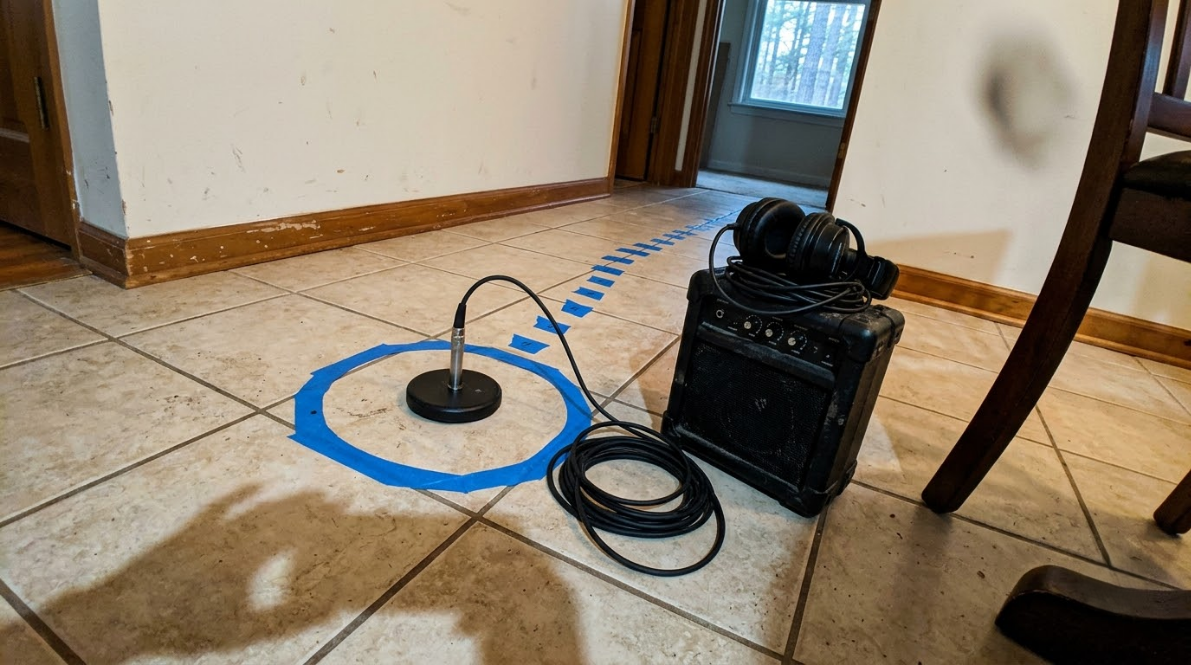
Pressurized water escaping a pipe makes a distinctive sound that carries through structure and soil. Listening equipment follows that signal along the run and regularly pinpoints a leak within an inch or two.
SLAB
Slab Leak Detection
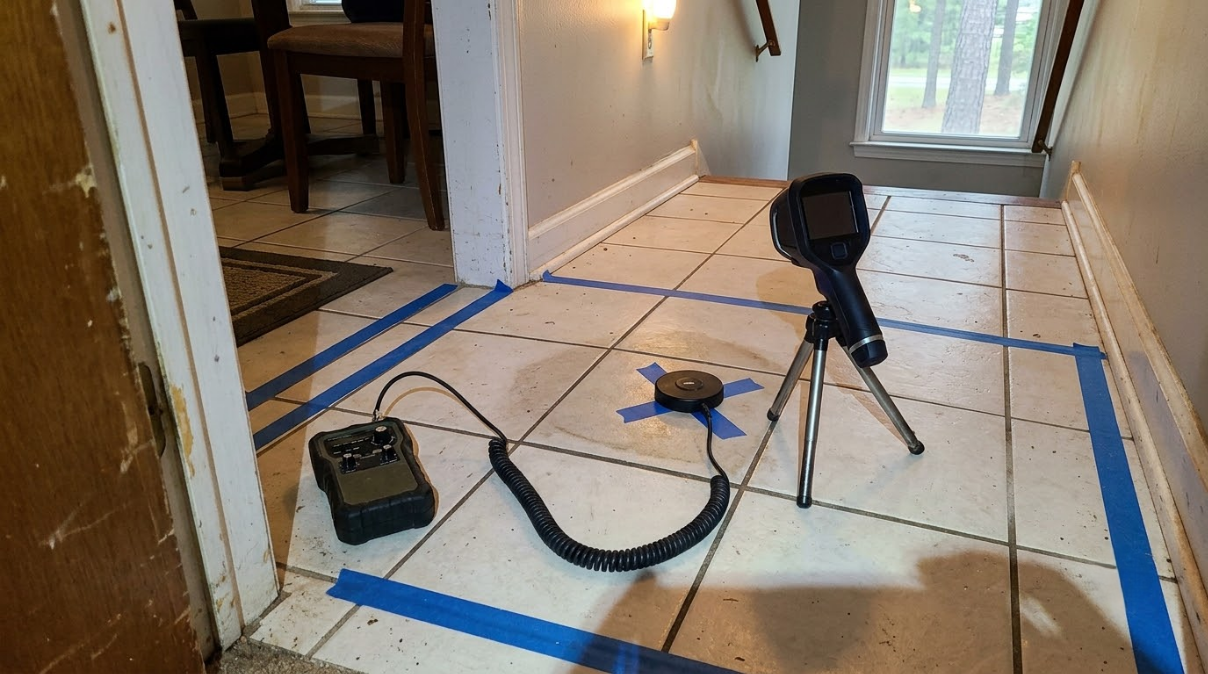
Supply lines beneath concrete announce themselves through warm floor patches, faint running sounds, and rising bills. Acoustic tracing and pressure isolation locate the failure without ever opening the slab speculatively.
PRESSURE
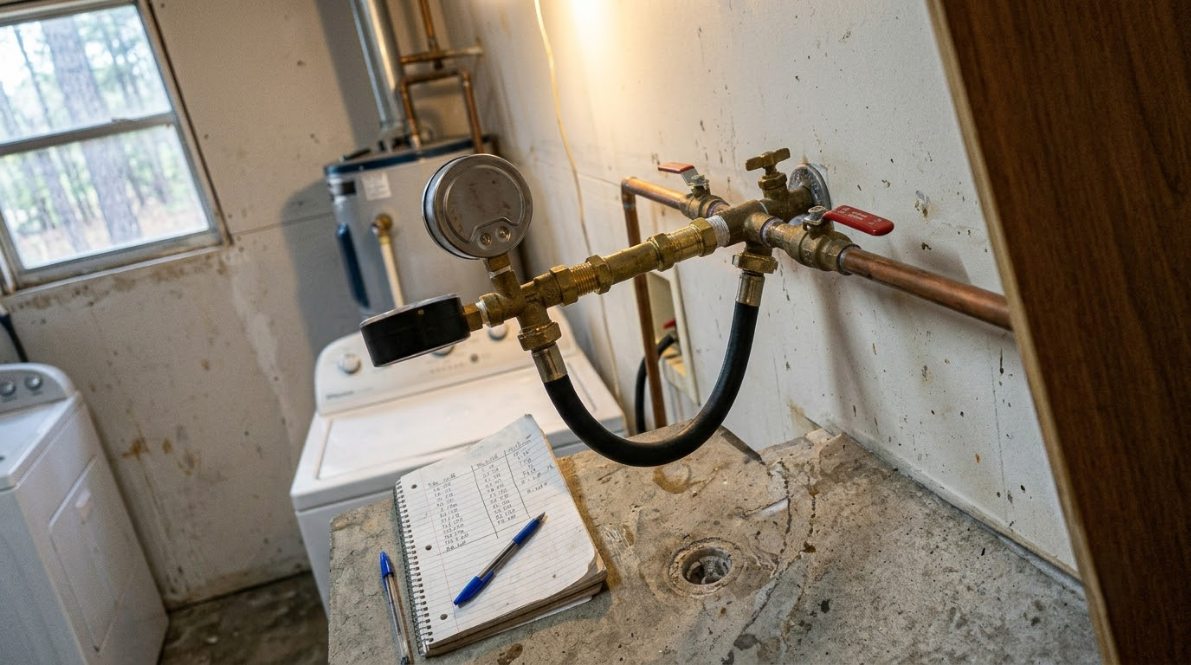
Pressure Testing and Isolation
Isolating sections and watching pressure hold or fall proves which part of the system is losing water. It also confirms whether a suspected leak is on the hot side or the cold.
UNDERGROUND
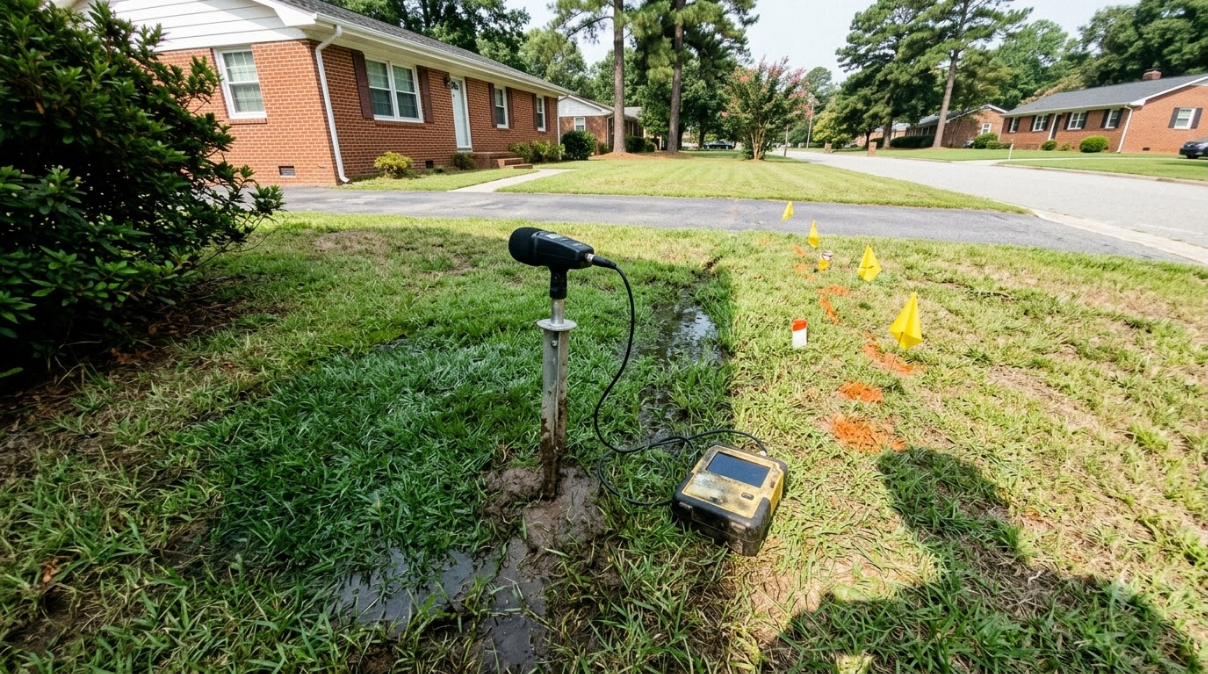
Underground and Yard Leak Detection
Soggy ground, unusually green patches, and a meter that never quite rests all point at the service line. Correlation and listening equipment locate the break precisely before any excavation is planned.
METER
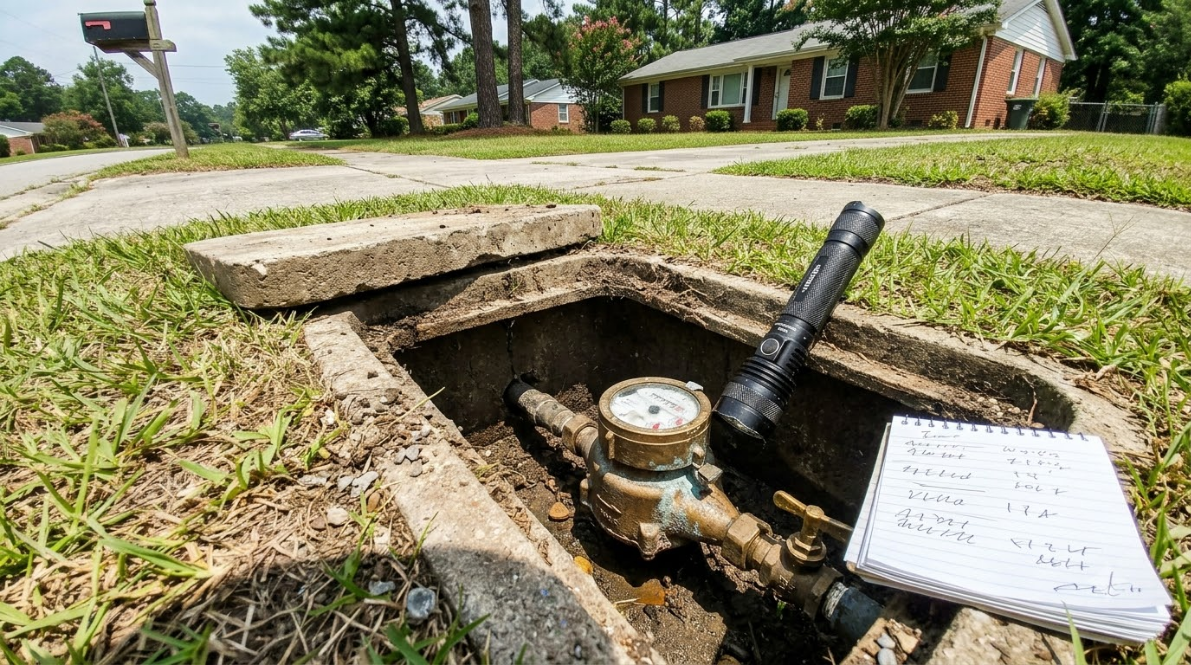
Water Meter Leak Testing
Shutting everything down and watching the meter proves whether water is escaping and roughly how fast. It is the simplest test available and the right place to begin every investigation.
FIXTURES
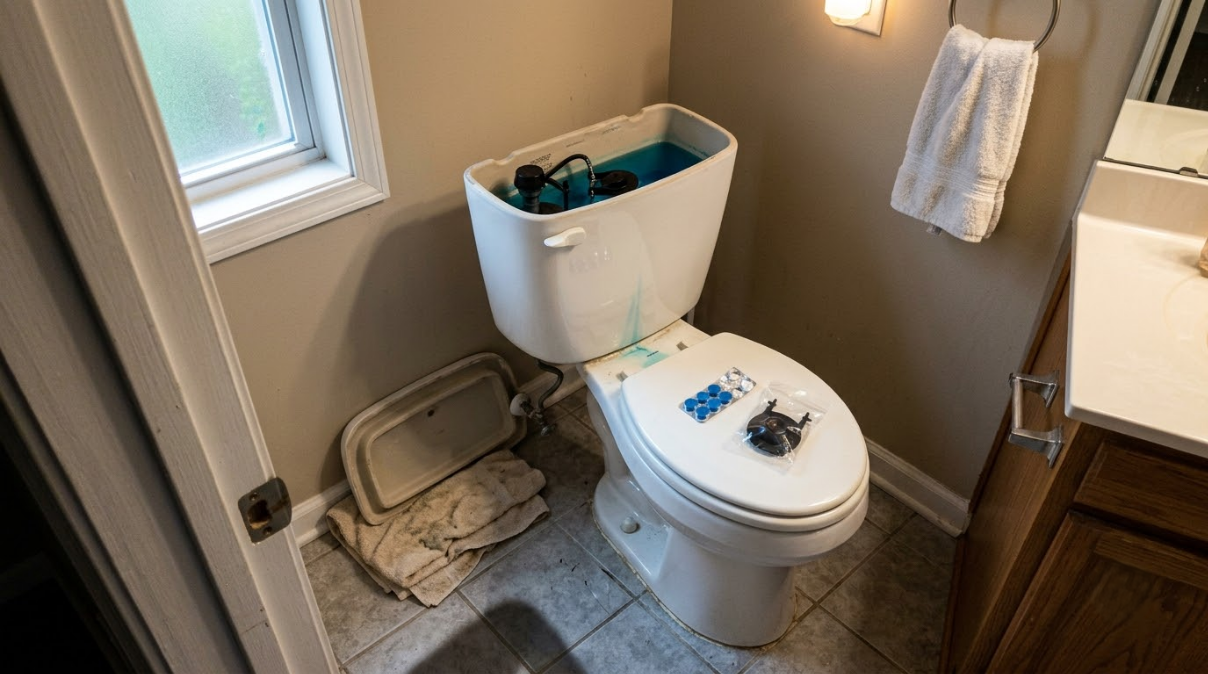
Fixture and Toilet Leak Testing
Silent toilet leaks waste enormous volumes of water without making any sound at all. Dye testing and flapper inspection identify them quickly, and they explain a great many otherwise baffling water bills.
THE WORD ON OUR WORK
WHAT OUR CLIENTS SAY.
Customers tell us the relief is mostly about certainty. Knowing where the water is escaping, rather than guessing at it, changes an alarming situation into a manageable repair, and several have mentioned how little of the wall ended up being opened.
Common Questions
FREQUENTLY ASKED QUESTIONS.
Questions homeowners ask about hidden leaks, covering how detection works, how long it takes, what a rising water bill really indicates, and whether a leak can exist without visible damage.
How do I know if I have a plumbing leak in my home?
Shut every fixture and appliance, then watch the water meter for 15 minutes. Any movement means water is escaping. Rising bills, damp odors, warm floor spots, and running sounds all support that finding.
How long does it take to find a leak?
Most leaks are located within 1 to 2 hours of arriving on site. Complicated slab runs, multi-story homes, and properties with several suspected leaks occasionally take longer than a single visit.
Why do I see water damage but my water meter is not moving?
The leak is likely on the drain side rather than the supply side, since drainage carries no constant pressure. A drain, a shower pan, or a failed seal produces damage without any meter movement.
How accurate is acoustic leak detection?
Under reasonable conditions, acoustic equipment regularly pinpoints a leak within an inch or two. Noise, deep burial, and certain pipe materials reduce that accuracy, which is why pressure testing is used alongside it.
Can a leaking toilet raise my water bill?
Considerably. A stuck flapper can pass over 200 gallons an hour without a sound, and toilet leaks are among the most common causes of a bill that suddenly makes no sense.
Do all water leaks rise to the surface?
No, and that assumption causes real damage. Water follows framing, pipe runs, and soil paths, so it may travel a long way before appearing, or simply drain away underground without ever surfacing.
What should I do if I hear water running and no fixtures are on?
Shut the main and see whether the sound stops. If it does, the leak is on the pressurized side of the system, and locating it before more water escapes is genuinely urgent.
Why should I choose Just Right Plumbing for leak detection?
We locate before we cut, using acoustic gear and pressure isolation rather than guesswork. Homeowners across Smithfield, NC call us because the repair afterward is usually far smaller than they feared.
HOW WE WORK
FROM RISING BILL TO MARKED SPOT, HERE IS HOW.
STEP 01
Confirm there is a leak at all
The meter test settles that question quickly. Watching for movement with everything shut off proves whether water is genuinely escaping, and it also gives a rough sense of how quickly it is going.
STEP 02
Narrow it to a system
Isolating the hot side, the cold side, the irrigation, and the service line establishes which part of the plumbing is actually losing water. That single step alone eliminates most of the house from consideration.
STEP 03
Listen along the run
Acoustic equipment follows the sound of escaping water through structure, soil, and even concrete. Moving along the suspected line and comparing signal strength brings the location down to a very small area indeed.
STEP 04
Mark and verify the position
The spot is marked and then cross-checked using a second method wherever that is genuinely possible. Confirming it twice before cutting is exactly what keeps the access opening small and the repair straightforward.
STEP 05
Open access carefully
The opening is cut deliberately and no larger than the repair actually requires. Neat access is much quicker to make good, and it keeps restoration costs down considerably once the plumbing work itself is finished.
STEP 06
Repair and explain the cause
The failed section is repaired properly, and we explain what caused it, whether that is pressure, age, water chemistry, or installation. That conversation matters, because the next leak is often already developing nearby.
Get Your Free Estimate
GET THAT MYSTERY LEAK PINNED DOWN, FREE.
Describe the symptoms, the bill, or the stain and we will tell you at no charge what they usually indicate and what locating the leak properly would involve. Most leaks are found within a couple of hours on site.
WHAT YOUR FREE ESTIMATE COVERS:
✓ Symptoms interpreted over the phone
✓ Meter testing explained step by step
✓ Acoustic and pressure methods described
✓ Slab and underground options covered
✓ Access opening kept as small as possible
✓ The underlying cause investigated