
Tankless Water Heater Installation
Tankless Water Heater Installation in Smithfield, NC
A well-installed tankless unit is rated for around 20 years of service, roughly double a storage tank, and it never floods a hallway ceiling for the simple reason that there is no cylinder standing full of water. Just Right Plumbing, LLC installs tankless water heaters throughout Smithfield, NC with real attention to the parts of the job that decide whether that promise actually holds: honest flow-rate sizing, correctly sized gas supply, code-compliant venting and clearances, and proper condensate handling on condensing units.
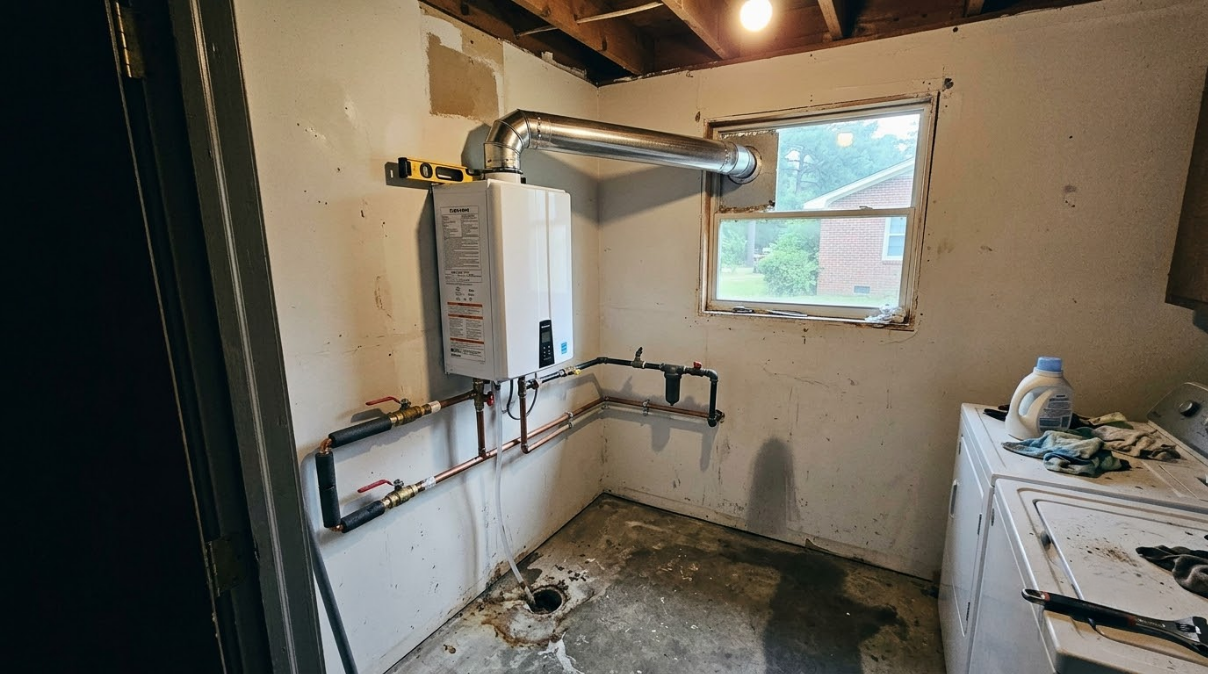
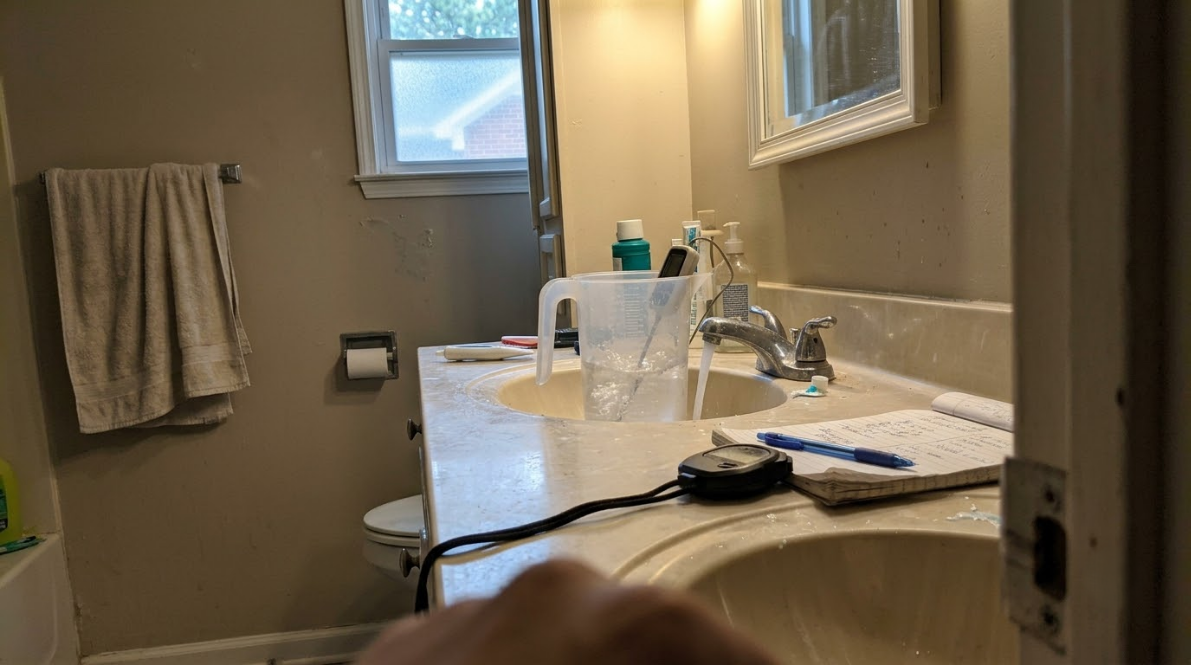
SIZING TANKLESS IS FLOW, NOT GALLONS.
A storage tank is chosen by its capacity. A tankless unit is chosen instead by how many gallons per minute it can raise to temperature at once, and that figure depends on the incoming water temperature just as much as on the appliance. Winter groundwater demands considerably more of the same unit than summer groundwater does.
Get that calculation wrong and the shower cools noticeably every single time the dishwasher fills. Get it right and the unit simply disappears into the background where it belongs.
✓ Flow rate calculated, not estimated
✓ Gas supply sized for real demand
✓ Venting and clearances to code
✓ Permit and inspection coordinated
TANKLESS WATER HEATER INSTALLATION
THE GAS LINE DECIDES MORE THAN THE UNIT DOES.
Tankless heaters fire hard and briefly, which means they ask for far more gas at once than the tank they replaced. A half-inch line that comfortably fed a 40 gallon heater will often starve a tankless unit, producing lockouts, temperature swings, and a homeowner convinced the appliance is faulty. We calculate the load, measure the run, and upsize the supply where the arithmetic says it is necessary rather than hoping.
JANUARY GROUNDWATER CHANGES THE MATH.
Incoming water here is noticeably colder in January than in July, and a tankless unit has to raise that water further to reach the same shower temperature. Sizing on summer conditions is how homes end up disappointed every winter. We size on the cold-month reality, then confirm that the fixtures you actually run at the same time are covered by the flow rate we specify.
VENTING IS WHERE TANKLESS JOBS GO WRONG.
Termination clearances, distances from air inlets, door swings, and the difference between a condensing and a non-condensing appliance are the details that fail inspections and generate complaints months later. Across 7+ years in the trade we have learned to plan the vent route before anything else gets decided, because a beautiful installation in an impossible location is still a rework. Shall we look at where yours would go?
WHY CHOOSE US FOR TANKLESS INSTALLATION.
FLOW RATE CALCULATED HONESTLY
We work out what your household genuinely runs at once, in winter conditions, then specify accordingly. That is why our tankless installs do not disappoint people in January.
GAS SUPPLY SIZED CORRECTLY
Load, pipe diameter, and run length all get calculated. Upsizing the line when the math demands it prevents the lockouts and temperature swings that undersized supply always produces.
VENTING PLANNED FIRST
Termination points, clearances, and routing are settled before installation begins. That sequence avoids the awkward compromises that come from deciding where the vent goes afterward.
CONDENSATE HANDLED PROPERLY
Condensing units produce acidic condensate that needs correct drainage and frequently neutralizing. Getting that right protects both your drain lines and the appliance itself over time.
HONEST ABOUT SUITABILITY
Not every home is a good tankless candidate. Where the gas supply, venting route, or usage pattern argues against it, we will say so rather than sell you something unsuitable.
COMMISSIONED, NOT JUST CONNECTED
Temperature setting, flow testing across multiple fixtures, and error-free operation get verified before we leave, along with a walkthrough of the maintenance the warranty depends on.
WHAT WE INSTALL
OUR TANKLESS INSTALLATION WORK
Six installation scenarios cover most tankless projects we take on. Each begins with sizing and a vent route, and each ends with the unit commissioned and tested across several fixtures at once.
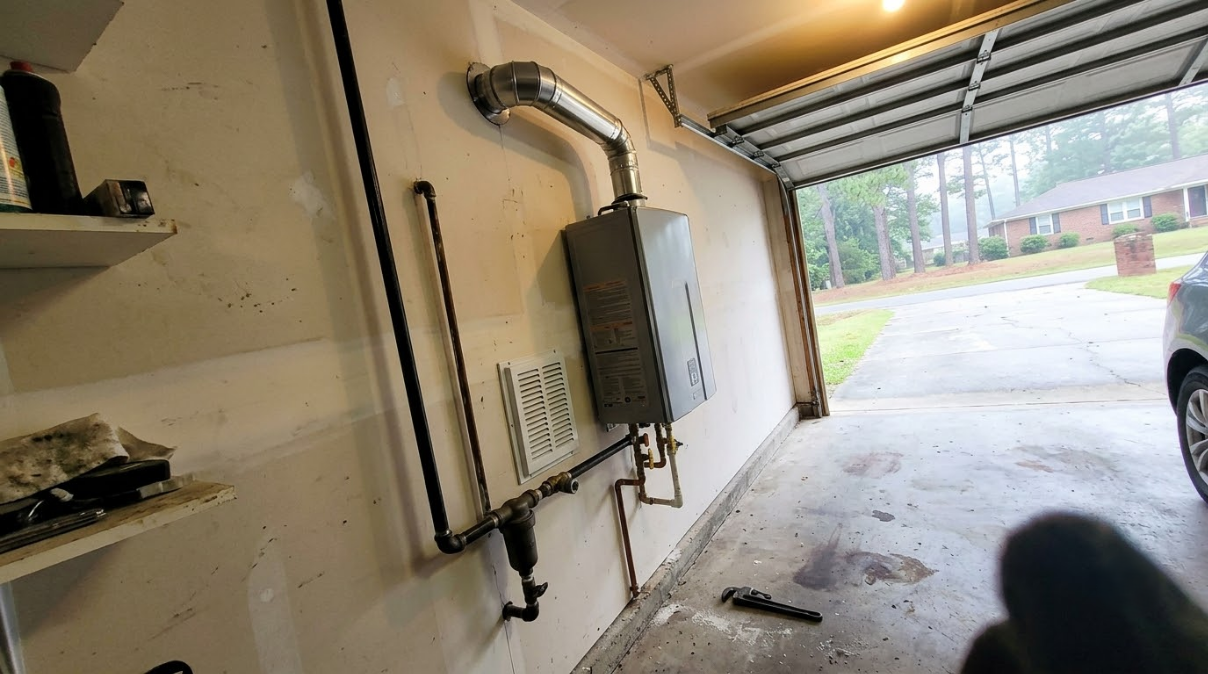
GAS UNITS
Gas Tankless Water Heater Installation
Natural gas and propane units are installed with the supply line sized for actual burner demand, venting routed to meet clearance requirements, and combustion air accounted for in whatever space the unit occupies.
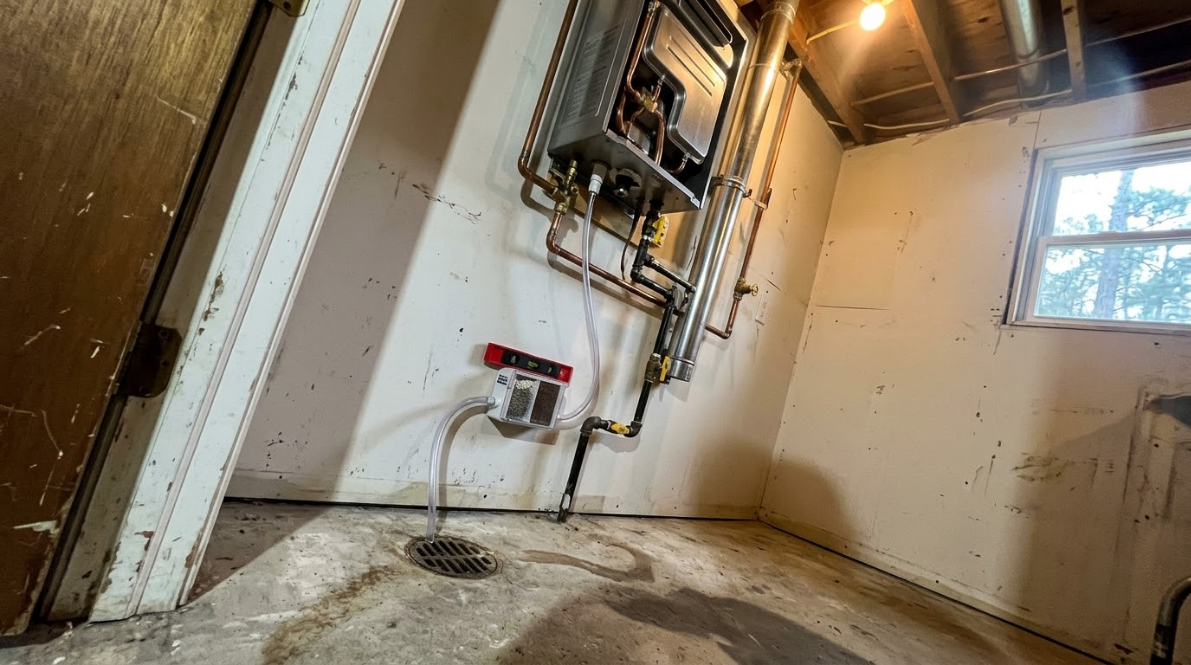
CONDENSING
Condensing Tankless Installation
High-efficiency condensing models recover more heat and therefore need condensate drainage, often with neutralization as well. We plan that drain route alongside the vent so neither one compromises the other during installation.
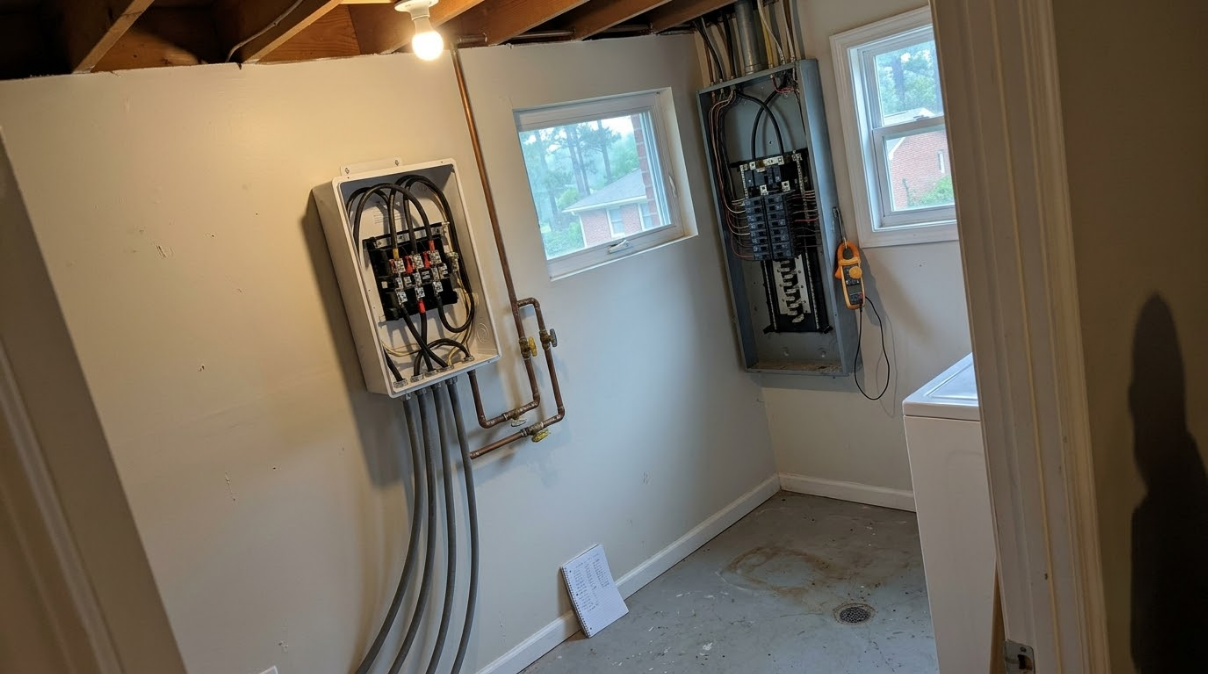
ELECTRIC
Electric Tankless Installation
Whole-home electric units draw heavily and need serious circuit capacity, while point-of-use models suit a single distant fixture instead. We confirm the panel can genuinely support whatever is being proposed before ordering.
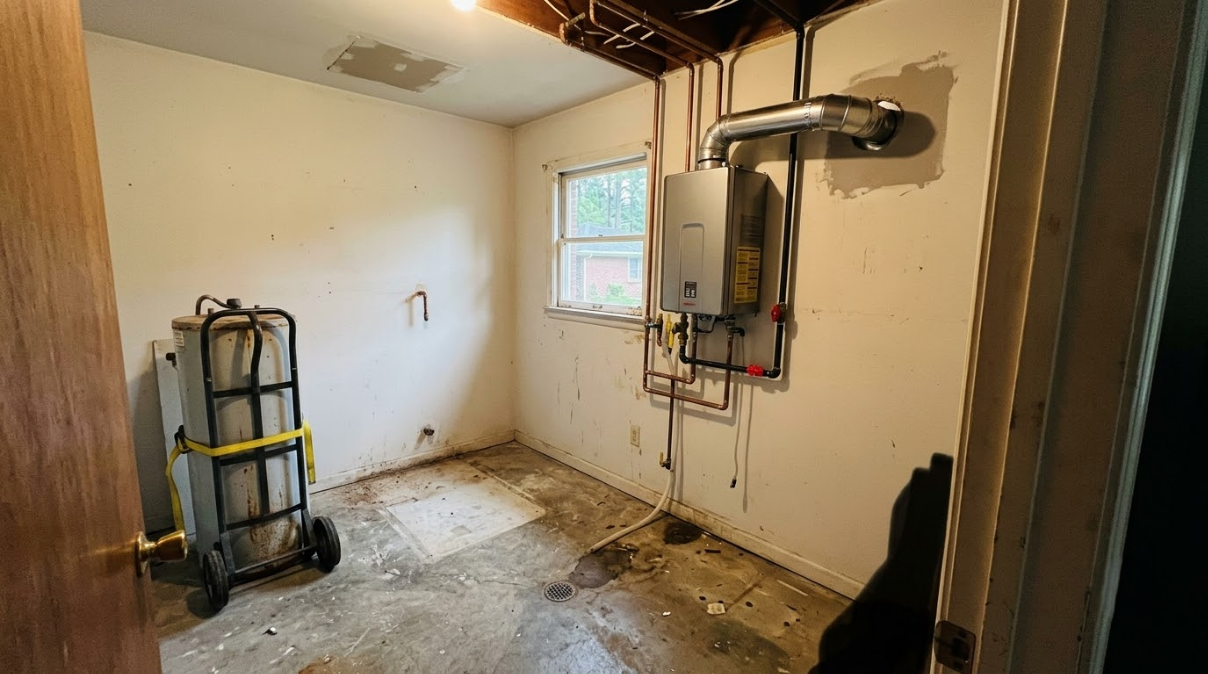
CONVERSION
Tank to Tankless Conversion
Replacing a storage tank means new gas sizing, a new vent path, and commonly relocating the unit entirely. Planning that properly is what separates a clean conversion from a permanent compromise.
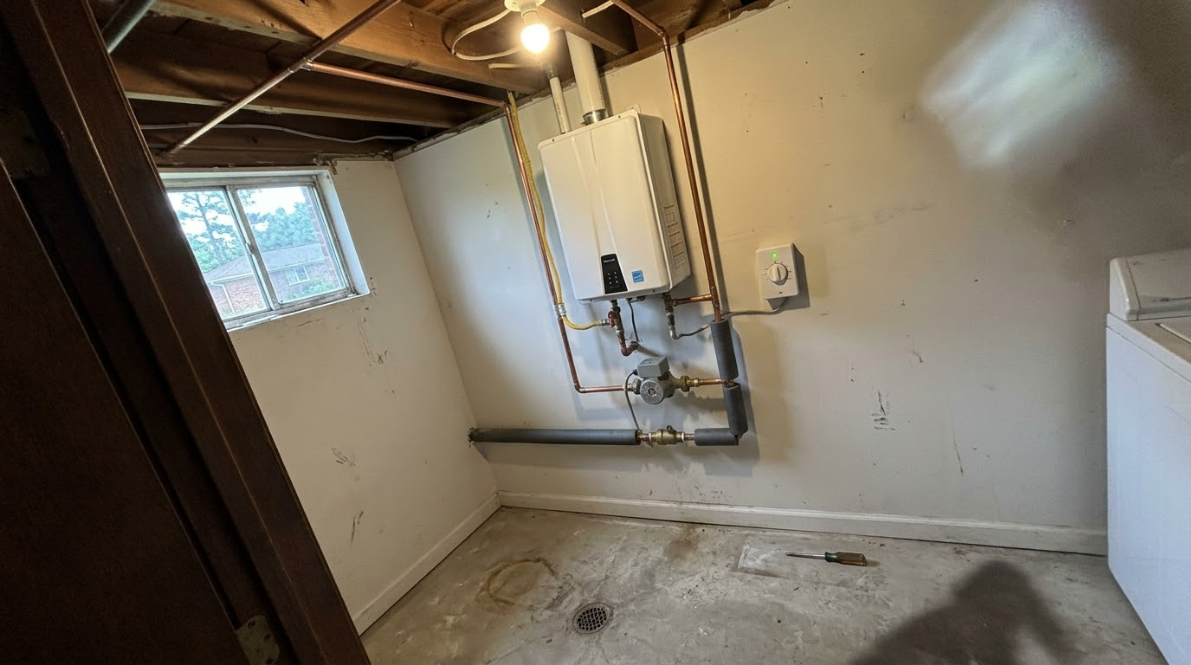
RECIRCULATION
Recirculation and Comfort Systems
Long runs to a distant bathroom still waste water while you wait. A recirculation loop or a built-in pump shortens that delay considerably without giving up the endless hot water.
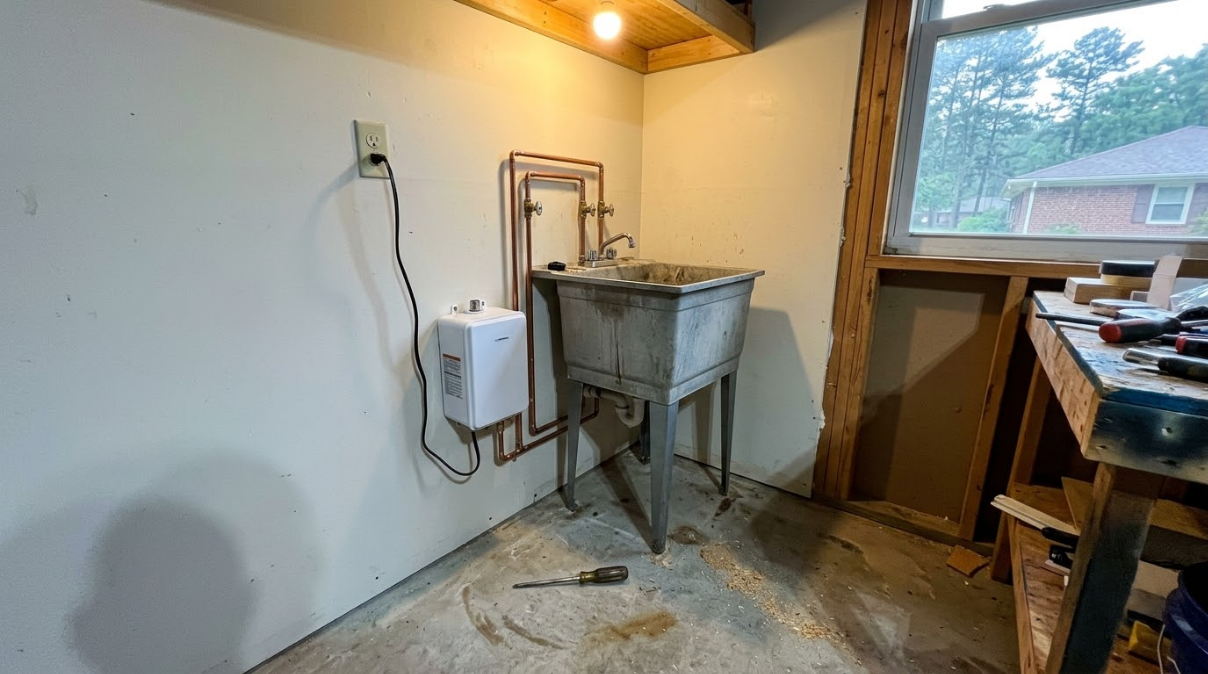
POINT OF USE
Point-of-Use Tankless Installation
A small dedicated unit at a remote sink, a workshop, or a new addition avoids running a long hot line across the whole building. Sized correctly, it solves one problem cleanly and inexpensively.
THE WORD ON OUR WORK
WHAT OUR CLIENTS SAY.
Customers who have gone tankless comment most often on never running out of hot water during back-to-back showers, on the floor space freed up where a cylinder used to stand, and on being told upfront exactly what the gas and venting work would involve.
Common Questions
FREQUENTLY ASKED QUESTIONS.
Common questions about tankless installation, covering sizing, gas requirements, venting rules, expected lifespan, and how to judge whether a home is genuinely suited to going tankless.
What size tankless water heater do I need?
Add the flow rates of the fixtures you realistically run together, then check the unit can raise winter groundwater to shower temperature at that combined flow. Sizing on summer conditions is the classic mistake.
How much GPM does a tankless heater need?
A single shower needs roughly 2 gallons per minute, a kitchen faucet about 1.5. Two showers at once therefore demands a unit rated well above 4 gallons per minute in winter.
Does a tankless water heater need venting?
Gas units always do, and the venting rules are strict. Terminations must clear grade and decks, stay clear of air inlets, and respect door swings, which is why the route is planned before installation.
Do tankless water heaters need a gas line upgrade?
Frequently, yes. Tankless burners demand far more gas at once than the tank they replace, so a line that served the old heater adequately regularly needs upsizing to prevent lockouts and temperature swings.
Can a tankless gas water heater be installed in a garage?
Yes, with conditions. Garage installations need the ignition source raised above the floor and protection from vehicle impact, and a vent termination that clears the doors and any nearby air inlets.
How long does a tankless water heater last?
Around 20 years is the accepted expectation, roughly double a storage tank, provided the unit is descaled on schedule and the filter screen is kept clear of debris and sediment.
Is a tankless hot water system worth it?
For households that run out of hot water, want the floor space back, or plan to stay in the home long term, generally yes. For a small household with a young tank, often not yet.
Why should I choose Just Right Plumbing for tankless installation?
We size on winter conditions, calculate the gas load properly, and plan the vent route first. Homeowners across Smithfield, NC appreciate being told honestly when tankless is not the right fit.
HOW WE WORK
FROM FLOW RATE TO FIRST SHOWER, HERE IS HOW.
STEP 01
Establish the real demand
We list the fixtures you run at the same time, apply their flow rates, and factor in winter groundwater temperature. That number, not the square footage, determines which unit belongs in your home.
STEP 02
Survey gas, venting, and power
The existing gas line, the available vent routes, the electrical supply, and the mounting location all get assessed together in one visit, because a decision about any one of them constrains the other three considerably.
STEP 03
Price the complete project
Quotes cover the unit, the gas work, the venting, condensate handling, the permit, and labor as one single figure. Tankless projects go wrong financially when the associated work gets discovered halfway through the installation.
STEP 04
Prepare the supply and the route
Gas piping is upsized wherever the load calculation requires it, the vent penetration is cut and sealed cleanly, and condensate drainage is run before the appliance is ever lifted into its final position.
STEP 05
Mount, connect, and inspect
The unit is secured, connected, and finished to both the North Carolina State Plumbing Code and the manufacturer's own instructions, with the county inspection coordinated wherever a permit happens to cover the work involved.
STEP 06
Commission across multiple fixtures
We run several outlets together at once, confirm the temperature holds steady under combined flow, check for error codes, and then show you the descaling ports and the maintenance the warranty depends upon.
Get Your Free Estimate
SEE WHETHER TANKLESS SUITS YOUR HOME, FREE.
Tell us how many bathrooms you run, what your gas supply looks like, and where a unit could sit. We will calculate the flow rate you actually need and price the whole project honestly, including the gas and venting work.
WHAT YOUR FREE ESTIMATE COVERS:
✓ Flow rate calculated for winter conditions
✓ Gas line capacity assessed
✓ Vent routes identified in advance
✓ Condensate handling included
✓ One price covering the whole project
✓ A frank answer on suitability