Pipe Leak Repair
Pipe Leak Repair in Smithfield, NC
The plumbing code caps building water pressure at 80 pounds per square inch for a reason, and chronic pressure above that figure is one of the most reliable producers of pinhole leaks in copper. Just Right Plumbing, LLC repairs pipe leaks throughout Smithfield, NC in copper, CPVC, PEX, and galvanized steel, and checks the pressure and pipe condition behind every repair, because on an over-pressured system the second leak is very often already on its way toward you.
ONE PINHOLE IS RARELY A ONE-OFF.
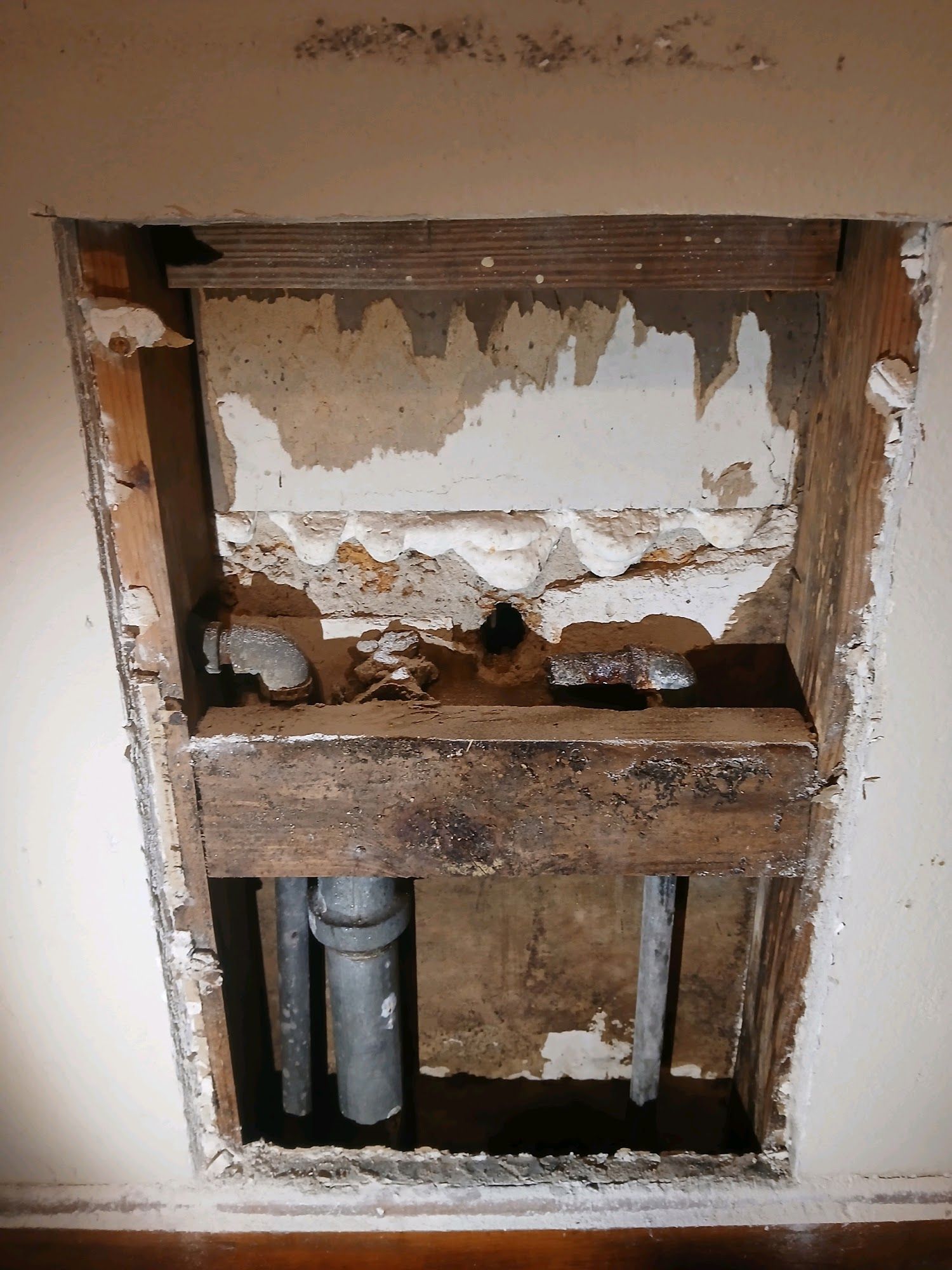
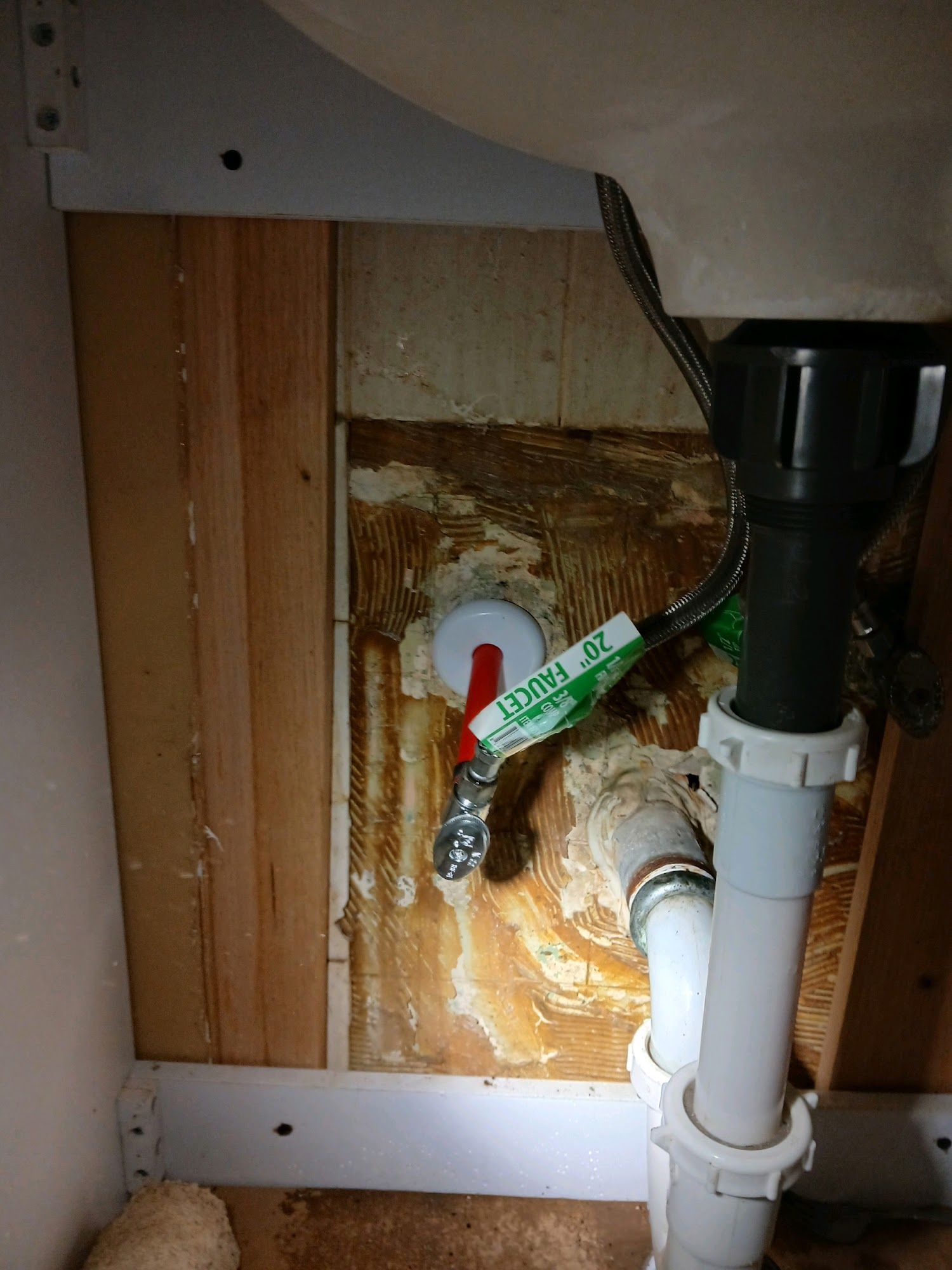
A single failed fitting can genuinely be bad luck. A pinhole in the middle of a straight run of copper is usually telling you something about the whole system instead: the pressure it lives at every day, the water moving through it, or simply how many years the pipe has already quietly given you.
That is why we gauge the static pressure and look at the pipe condition either side of the repair. Fixing the leak takes an hour. Understanding it takes 10 more minutes and often saves a wall.
✓ Copper, CPVC, PEX, and galvanized
✓ Static pressure checked every time
✓ Repair or reroute, explained honestly
✓ Licensed P1 plumber on every visit
PIPE LEAK REPAIR
PIPES FAIL FOR REASONS YOU CAN MEASURE.
Nothing about a leak is mysterious once you look at the right things. Excessive pressure stresses every joint continuously. Water velocity through undersized pipe erodes the inside of elbows. Poor original workmanship leaves a joint that was always going to weep. Galvanized steel simply corrodes from the inside until the wall gives out. Each of those has a different answer, and only one of them is solved by replacing a short length of pipe.
SOFT WATER CUTS BOTH WAYS ON COPPER.
Surface water from the Neuse River arrives with low mineral content and a pH close to neutral. That is excellent news for water heaters and fixtures, since scale builds slowly. It is less kind to older copper, because soft, slightly aggressive water does not lay down the protective scale layer that harder water does. Pinholes in copper are consequently more common here than the age of the pipe alone would suggest.
WET DRYWALL IS A SYMPTOM, NOT THE PROBLEM.
Homeowners understandably focus on the damage, because that is the visible and alarming part of it. Our attention goes instead to what put the water there and whether the rest of the run is in the same condition. 7+ years of opening walls has taught us that the pipe on either side of a failure usually tells you far more than the failure itself ever does. Shall we take a proper look?
WHY CHOOSE US FOR PIPE LEAK REPAIR.
THE CAUSE GETS INVESTIGATED
Pressure, pipe condition, and water velocity all get checked alongside the repair. Understanding why a pipe failed is what stops you calling about the next one.
REPAIRS THAT MATCH THE MATERIAL
Copper, CPVC, PEX, and galvanized each need the correct approach and correct fittings. Mixing materials carelessly creates its own corrosion problems a few years down the line.
ACCESS OPENED CAREFULLY
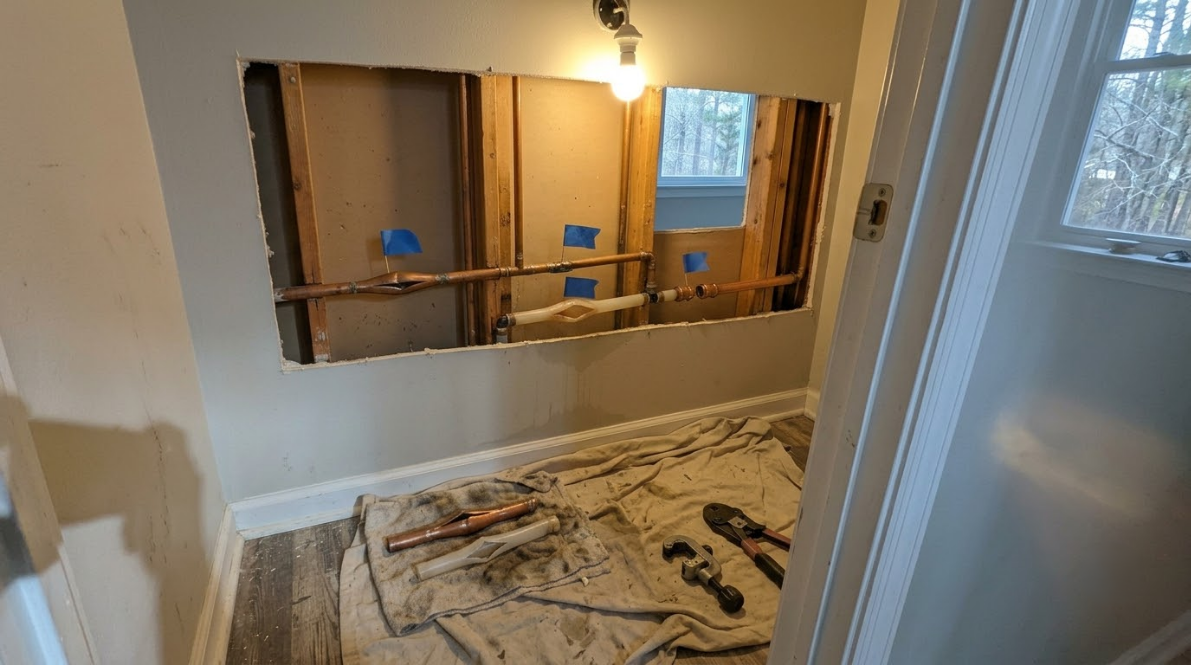
Walls and ceilings are cut deliberately and no wider than necessary. A tidy opening keeps your restoration cost down and makes the plumbing work considerably easier as well.
HONEST ABOUT REPIPING
Where a run has clearly reached the end, we will say so rather than repairing the same pipe three times. That conversation saves money even though it costs us work.
PRESSURE CORRECTED WHERE NEEDED
If static pressure is over 80 psi, fitting or adjusting a pressure-reducing valve protects everything downstream. It is a small job that prevents a long series of large ones.
TESTED BEFORE CLOSING UP
Every repair is brought back to full pressure and checked before anything is covered. Nobody should discover a weeping joint after the drywall has already gone back on.
WHAT WE REPAIR
OUR PIPE LEAK REPAIR WORK
Six repair types cover the pipe failures we see most often across homes and small commercial properties. Each one includes a pressure check and an honest assessment of the surrounding pipework.
PINHOLES
Copper Pinhole Leak Repair
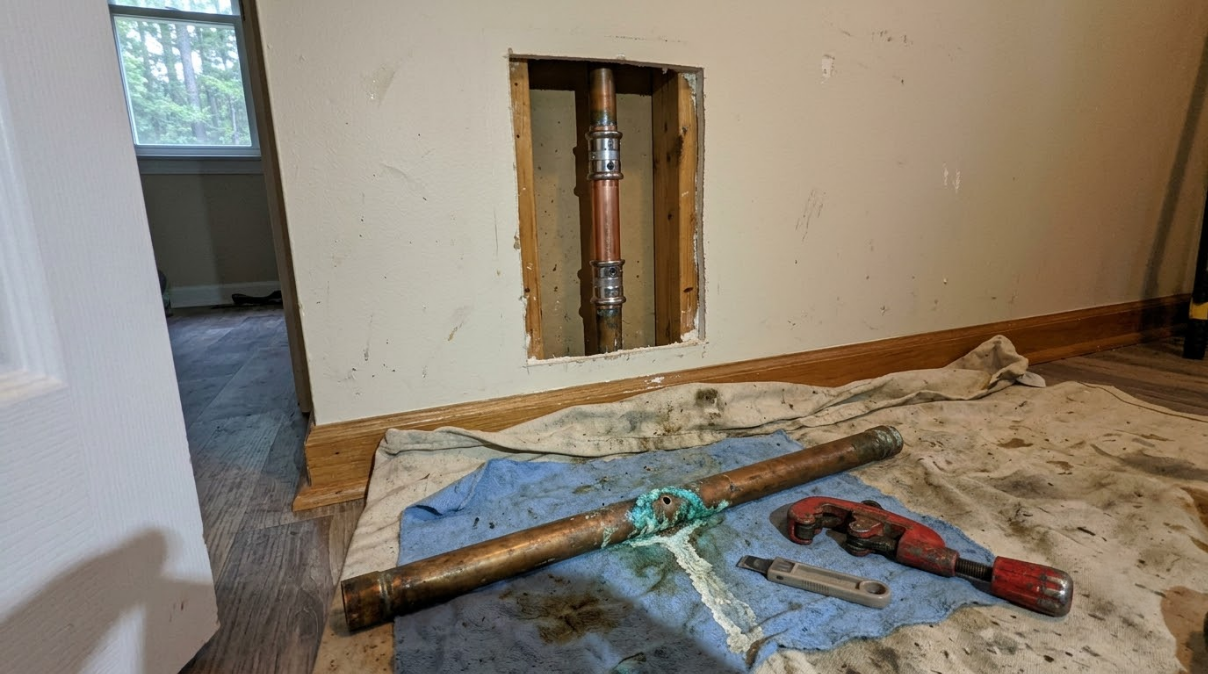
Small perforations in copper appear where pressure, velocity, or water chemistry have worked against the pipe. We cut back to sound material, rejoin correctly, and assess the rest of the run honestly.
JOINTS
Failed Joint and Fitting Repair
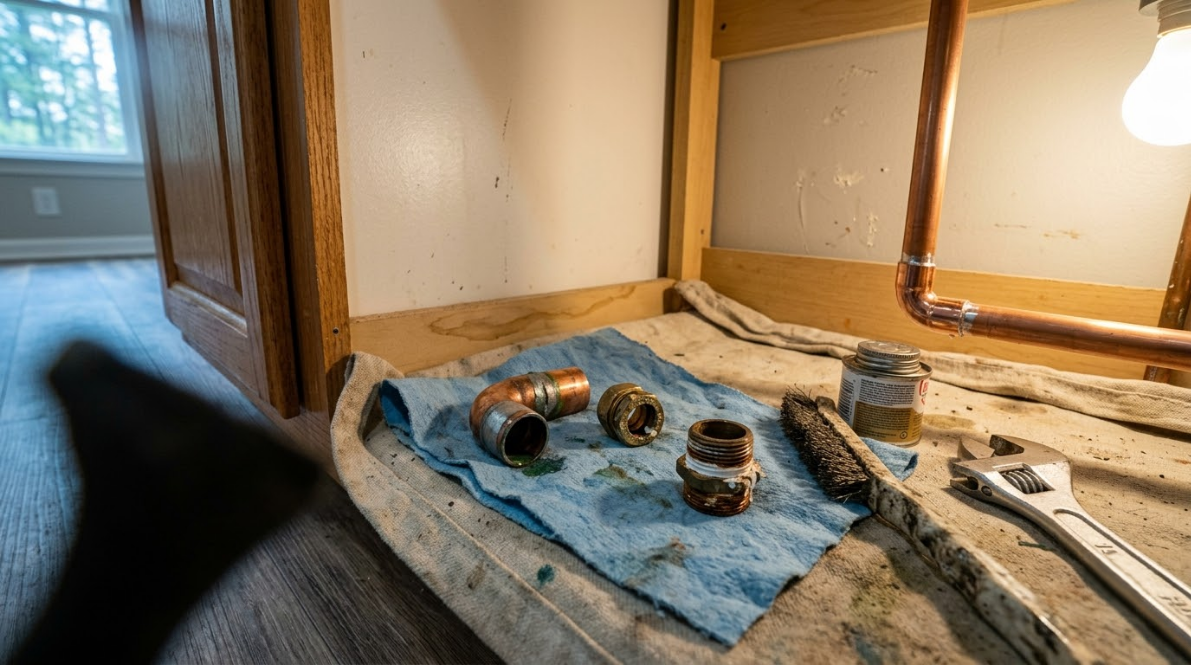
Soldered joints, compression fittings, and threaded connections all fail in their own way. The failed connection is remade properly rather than sealed over, and the cause is identified before we finish.
SLAB
Slab Leak Repair and Rerouting
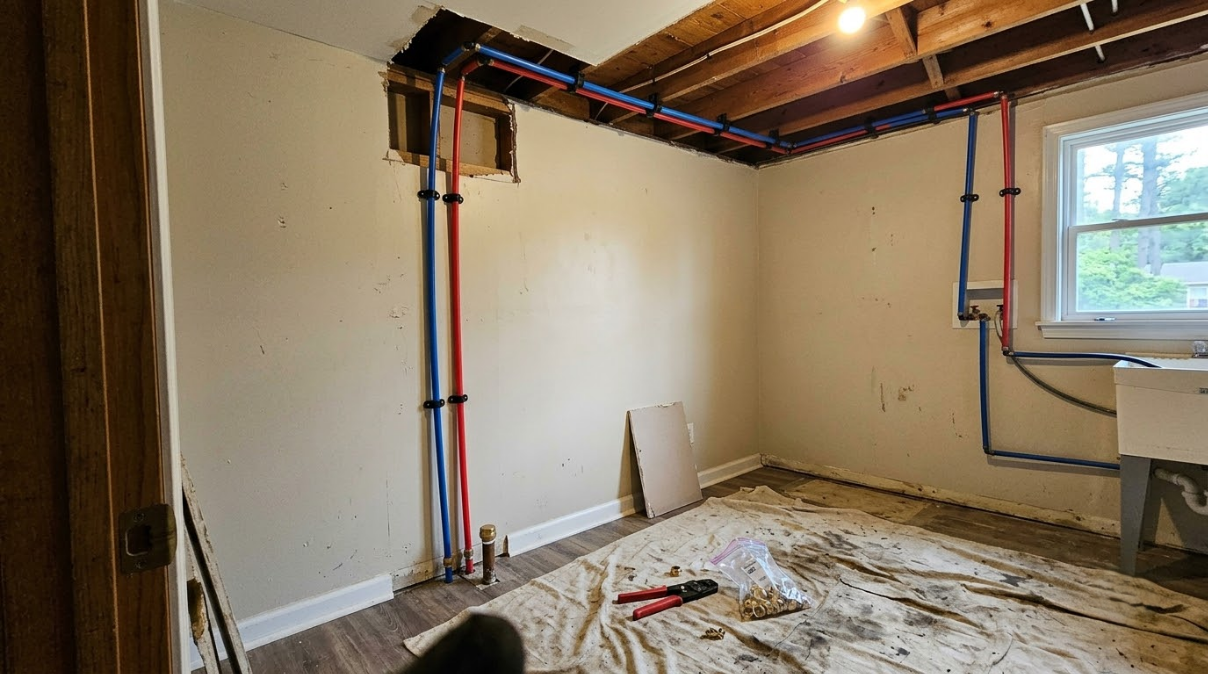
A supply line failing under concrete can sometimes be repaired in place, but rerouting the run overhead instead is frequently cheaper and considerably less disruptive than breaking open a slab.
GALVANIZED
Galvanized Pipe Leak Repair
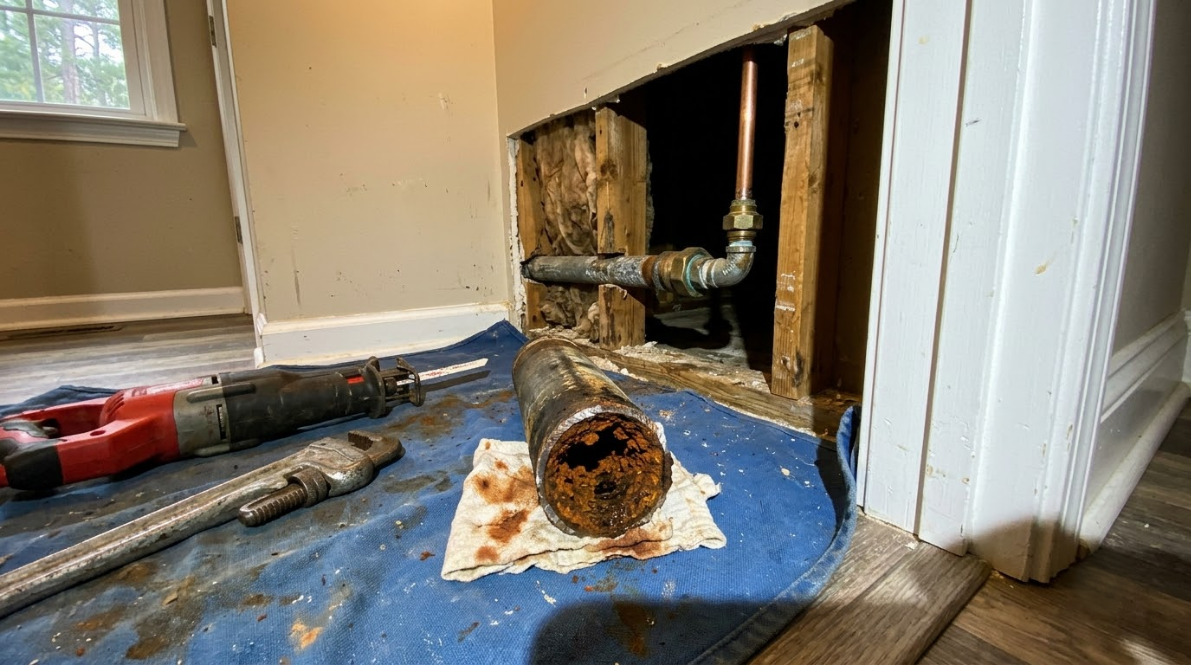
Old galvanized steel corrodes from the inside out, so one leak usually means the whole run is thinning. We repair what needs repairing while telling you honestly how much life remains.
PLASTIC
PVC and PEX Repair
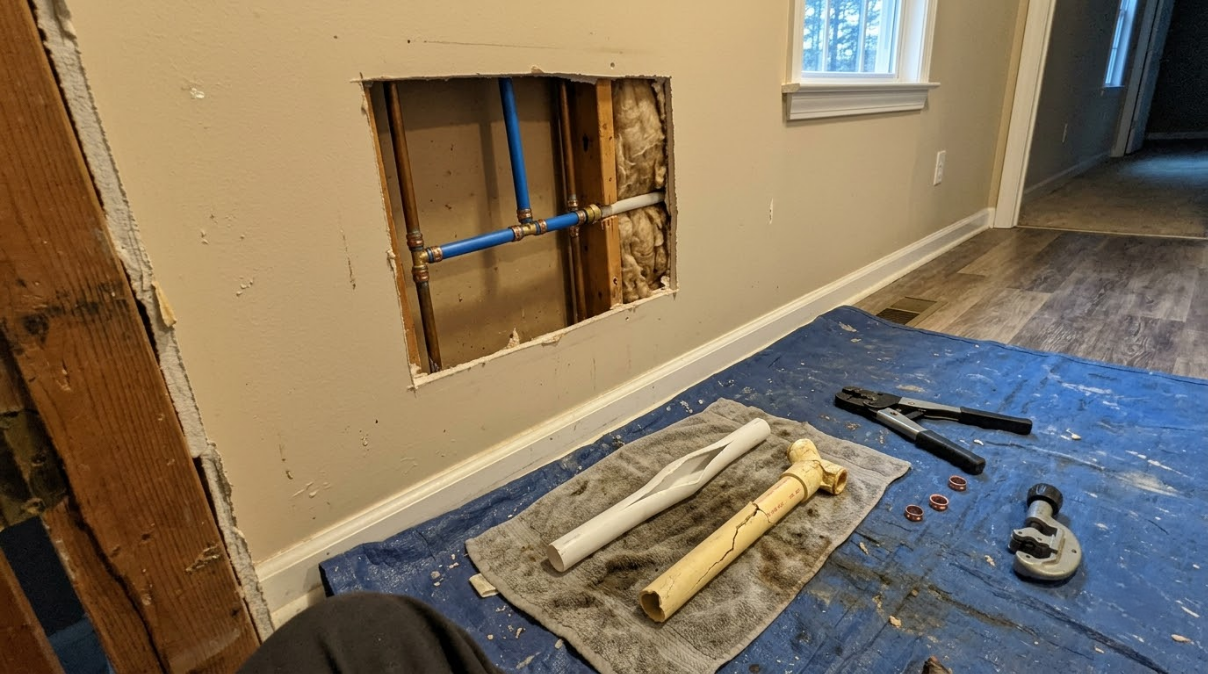
Plastic supply fails at fittings, from freeze damage, or from ultraviolet exposure where it was left uncovered. Repairs always use matching materials and the correct fittings for the system already installed.
FREEZE
Freeze Damage Repair
Split pipe from a hard freeze often reveals itself only when the ice thaws. We locate every affected section rather than repairing the first break and leaving three more waiting.
THE WORD ON OUR WORK
WHAT OUR CLIENTS SAY.
The feedback that comes back most often is about scale. Customers expected a major disruption to their home and got a neat opening instead, a same-day repair, and a clear explanation of whether the rest of their pipework was likely to follow it.
Common Questions
FREQUENTLY ASKED QUESTIONS.
Questions homeowners ask about pipe leaks, covering causes, whether a temporary fix is acceptable, how leaks hide inside walls, and when repeated repairs point toward repiping instead.
What causes pipes to leak?
Excessive water pressure, corrosion, freeze damage, physical impact, poor original workmanship, and simple age. In copper, aggressive water chemistry and high velocity through undersized pipe produce the classic pinhole failures.
Is a leaking water pipe an emergency?
Treat it as one. Pressurized water escapes continuously and tracks along framing, so damage compounds quickly. Shut the main, then arrange the repair rather than waiting to see how bad it becomes.
Will I need to replace a temporarily fixed pipe?
Almost always. Clamps and epoxy hold water back briefly but do not restore the pipe wall, and the material around a patched section is generally in a similar condition to the failure.
How do I find hidden leaks inside a wall?
Stains, bubbling paint, warm or damp patches, musty odors, and a meter that moves with everything shut off. Acoustic equipment then narrows the position enough to open a small access panel.
What causes pinhole leaks in copper pipe?
Chronic high pressure, water velocity through undersized pipe, aggressive water chemistry, and flux residue left sitting inside joints during the original installation. They rarely appear singly, which is the important part.
Can leaks get bigger if they are ignored?
Steadily, yes. The opening enlarges as water erodes the edges, and the surrounding material weakens further. Structural damage, mold growth, and ruined finishes all cost far more than the plumbing repair.
Should I repair or repipe if leaks keep happening?
Two or three failures in the same run within a few years usually means the material is finished. At that point repiping that section costs less overall than continuing to chase individual leaks.
Why should I choose Just Right Plumbing for pipe leak repair?
We repair the leak, check the pressure behind it, and tell you honestly what the rest of the run looks like. Homeowners in Smithfield, NC value that second part most.
HOW WE WORK
FROM DAMP PATCH TO DRY WALL, HERE IS HOW.
STEP 01
Stop the water and assess
We talk you to the nearest shut-off valve first, because reducing the damage matters more than anything else in the first 10 minutes. Then we establish what is most likely leaking and roughly where.
STEP 02
Locate the failure precisely
Acoustic listening, pressure isolation, and moisture tracing all narrow the position down before anything is opened. Water travels a long way along framing, so the wet patch is rarely directly beneath the actual failure.
STEP 03
Open access neatly
The opening is cut cleanly at the confirmed location and kept no larger than the work genuinely requires. Neat access saves you money twice over, once now and then again during the restoration afterward.
STEP 04
Repair with matching materials
The damaged section is cut back to sound pipe and rejoined using the correct fittings for that particular material. Dissimilar metals are always separated properly to prevent galvanic corrosion forming at the new joint.
STEP 05
Check pressure and the surrounding run
Static pressure is gauged and the pipe on either side of the repair is examined closely. Where the reading sits over 80 psi, or the material is clearly failing, you hear about it straight away.
STEP 06
Test under pressure and explain
The system is brought back up and the repair watched under full pressure before anything is closed up. Then you get a plain account of the cause and the condition of the rest of the run.
Get Your Free Estimate
FIND OUT WHY THAT PIPE FAILED, FREE.
Describe the leak, the pipe material, and how old the plumbing is, and we will explain over the phone what most likely caused it and whether the rest of the run is likely to follow.
WHAT YOUR FREE ESTIMATE COVERS:
✓ Likely cause discussed at no charge
✓ Shut-off guidance straight away
✓ Repair or reroute options compared
✓ Static pressure checked on site
✓ Access opening kept small and neat
✓ An honest view on repiping