Water Heater Repair
Water Heater Repair in Smithfield, NC
A temperature and pressure relief valve is built to open at 210 degrees or 150 psi, whichever arrives first, so a valve that quietly weeps is a warning about the system behind it rather than a nuisance to be ignored. Just Right Plumbing, LLC repairs gas and electric water heaters throughout Smithfield, NC: elements, thermostats, relief valves, sediment buildup, ignition faults, and leaks. A licensed P1 plumber diagnoses the actual fault properly before anybody starts talking about a replacement tank.
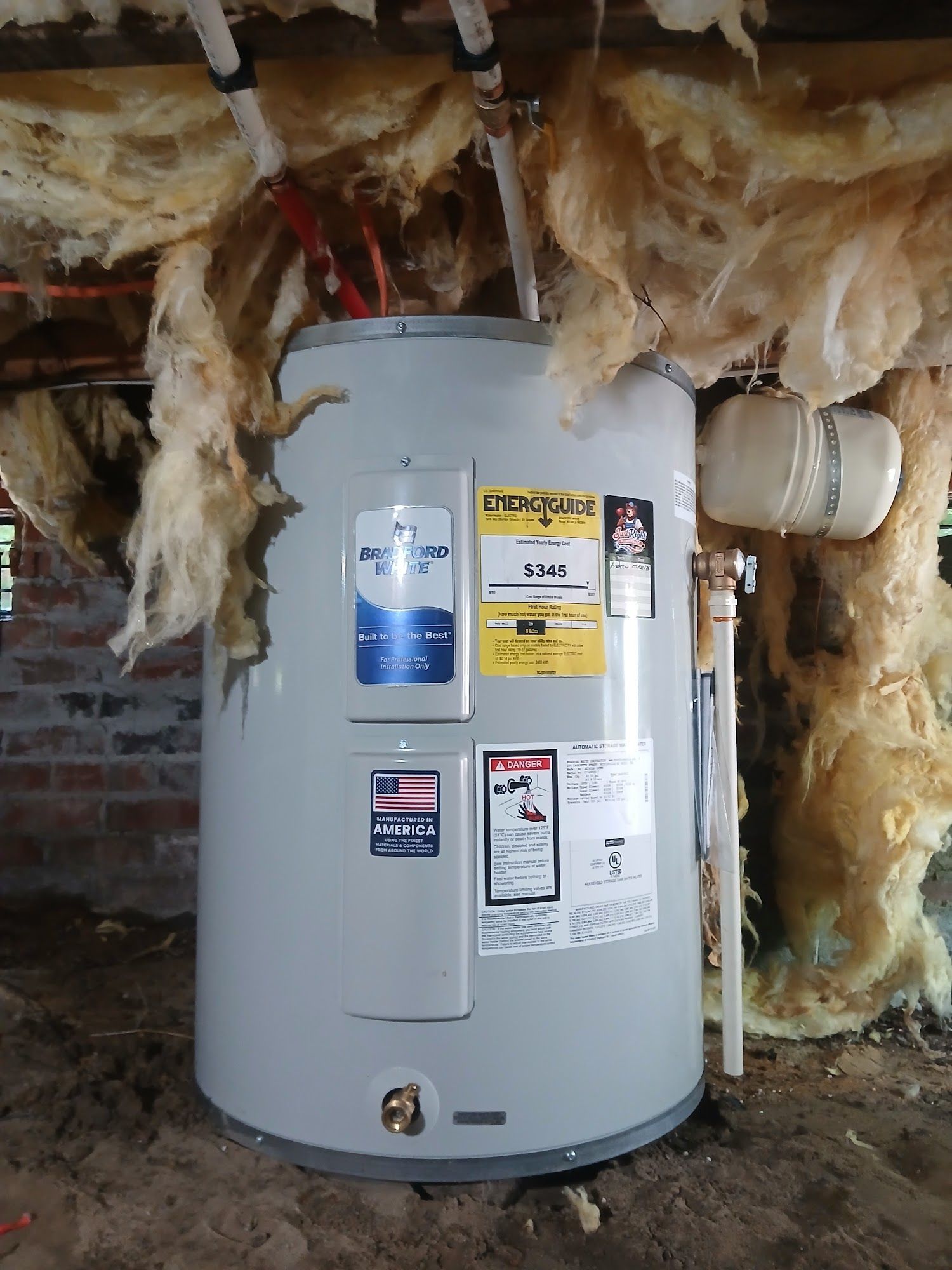
MOST TANKS GET REPLACED TOO EARLY.
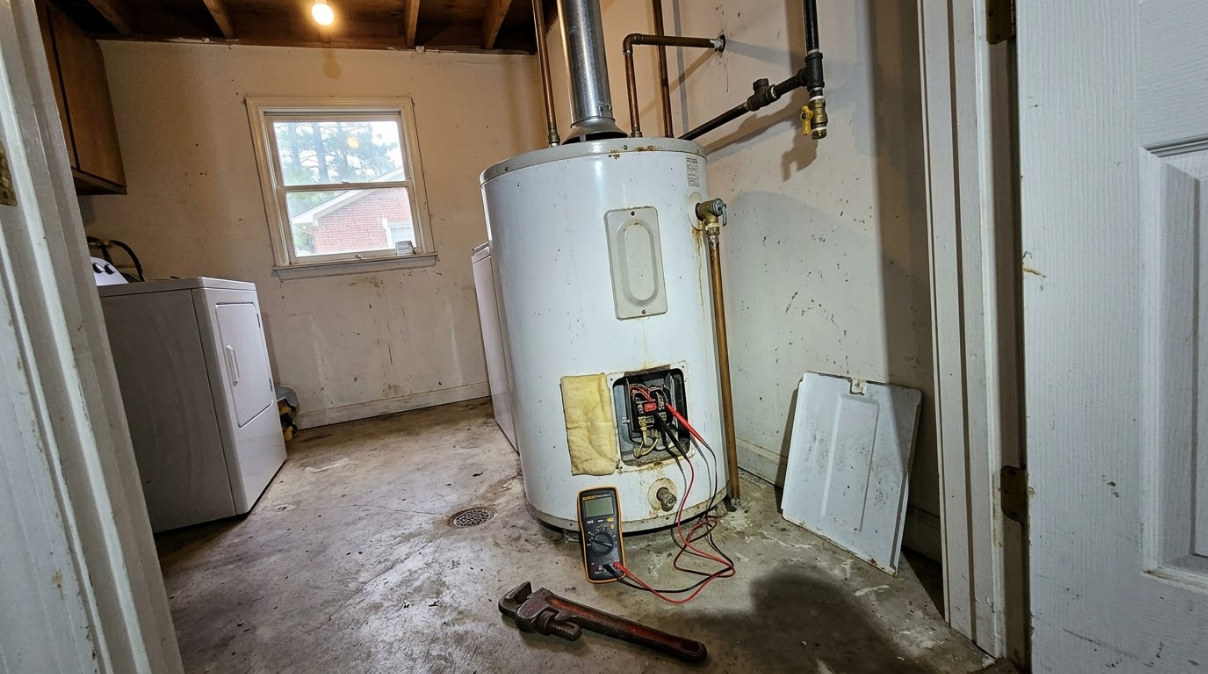
A rumbling tank is usually sediment rather than failure. No hot water on an electric unit is often an upper element or simply a tripped high-limit switch. A pilot that will not stay lit is frequently a thermocouple. None of those faults require a new water heater, and all of them get quoted as one somewhere in town.
We test before we quote. Where the tank itself has genuinely gone, we will say so plainly, show you the evidence, and explain exactly what it was that we found.
✓ Fault diagnosed before any quote
✓ Gas and electric units both
✓ Repair recommended where it holds
✓ Licensed P1 plumber on the job
WATER HEATER REPAIR
A TANK TELLS YOU EXACTLY WHAT IS WRONG.
Water heaters are unusually honest appliances. Rusty hot water suggests an exhausted anode rod or a failing liner. Popping and rumbling means sediment boiling underneath. Lukewarm water that never quite recovers usually implicates a lower element or a dip tube. Water at the base can be the tank, but it is often the relief line or a fitting instead. Reading those signals correctly is most of the repair.
NEUSE RIVER WATER IS EASY ON TANKS.
Municipal supply here comes from the Neuse River, treated and delivered relatively soft, which means scale builds more slowly than it does on well water. That is good news for element life and heat transfer. It also means a tank failing early in town typically points at something else: excessive pressure, a missing expansion control, or a thermostat that has been running far hotter than it needs to.
EVERY NOISE A TANK MAKES MEANS SOMETHING.
Popping, ticking, a low rumble, a hiss at the relief line, the sharp click of a limit switch resetting itself. After 7+ years around these units, most of those sounds are diagnostic long before the access cover ever comes off. That shortcut matters, because it decides which tools come off the truck and how long you go without hot water. Describe the noise and we will usually name it.
WHY CHOOSE US FOR WATER HEATER REPAIR.
TESTED, NOT ASSUMED
Elements, thermostats, and thermocouples get checked with a meter rather than swapped hopefully. That is faster, cheaper, and it means the part we replace is genuinely the part that failed.
REPAIR BEFORE REPLACEMENT
A tank under 10 years old with a bad element is a repair, not a project. We only recommend replacement when the tank itself has actually reached the end.
SAFETY CHECKED TOO
While we are there, relief discharge, pan drainage, expansion control, and combustion clearances get looked at. Those details are commonly wrong and rarely noticed until something goes badly.
HOT WATER BACK QUICKLY
Common failure parts ride on the truck, so most repairs finish in one visit. Describing the symptoms on the phone is what makes that possible more often than not.
STRAIGHT TALK ON LIFESPAN
If your tank has 3 years left, you deserve to know before spending on a repair. We give you the honest arithmetic and let you make the call yourself.
NO SURPRISE ADD-ONS
The price you agree to is the price on the invoice. If something else turns up mid-repair, we stop, explain it, and wait for your answer before continuing.
WHAT WE FIX
OUR WATER HEATER REPAIR WORK
Six repair areas account for very nearly every water heater call we take. Most are resolved inside a single visit, once the fault has been identified correctly rather than simply guessed at.
ELECTRIC
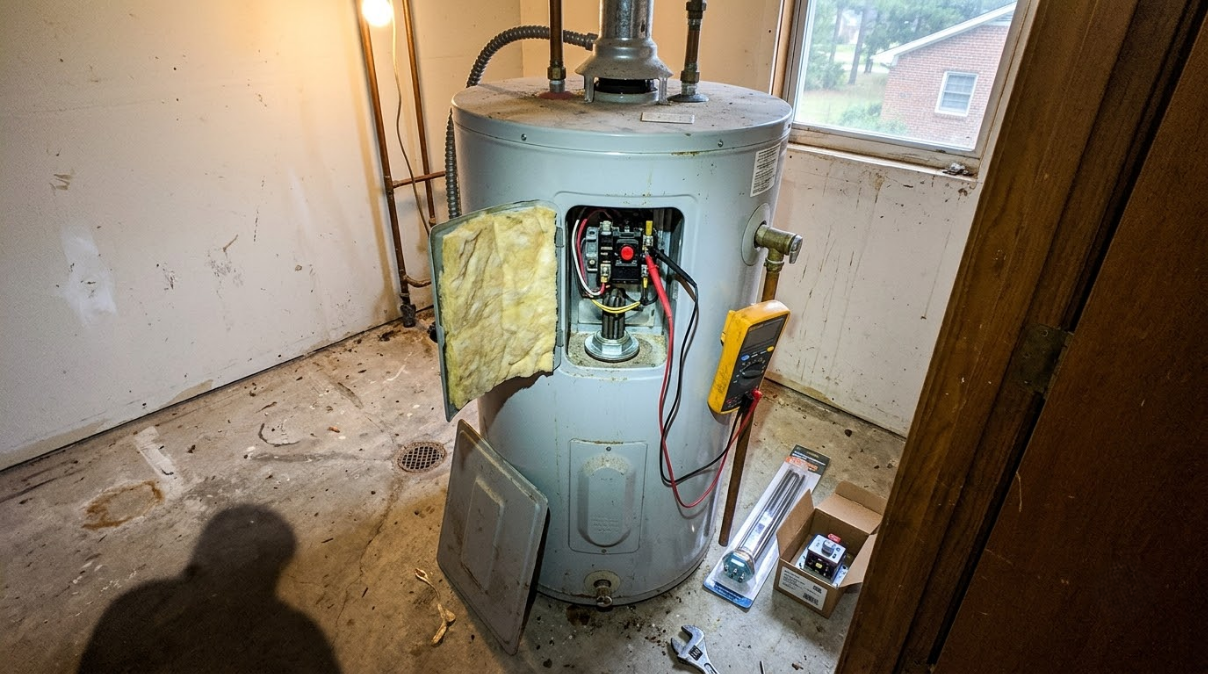
Element and Thermostat Repair
No hot water, lukewarm water, or a tank that recovers slowly commonly traces to an element or thermostat. Both get tested under power, replaced as needed, and the high-limit reset is investigated rather than simply pressed.
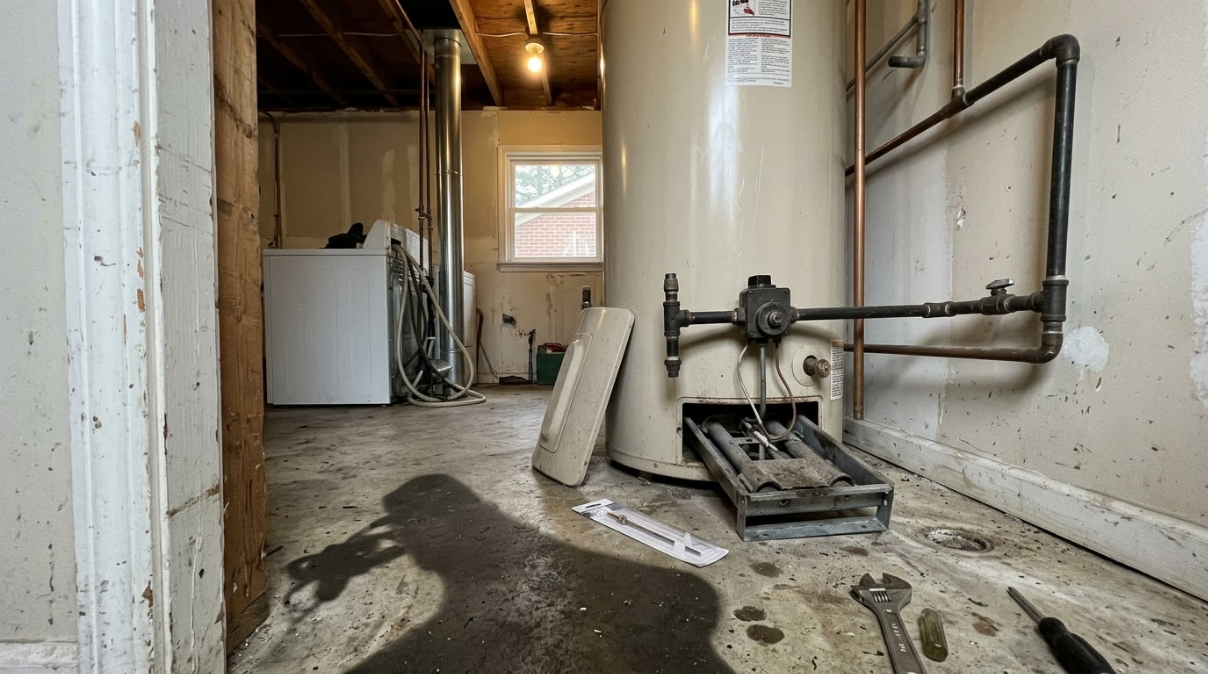
GAS
Pilot and Ignition Repair
Thermocouples, igniters, gas control valves, and blocked burner assemblies stop gas units cold. We diagnose the ignition sequence properly instead of relighting a pilot that will fail again within the week.
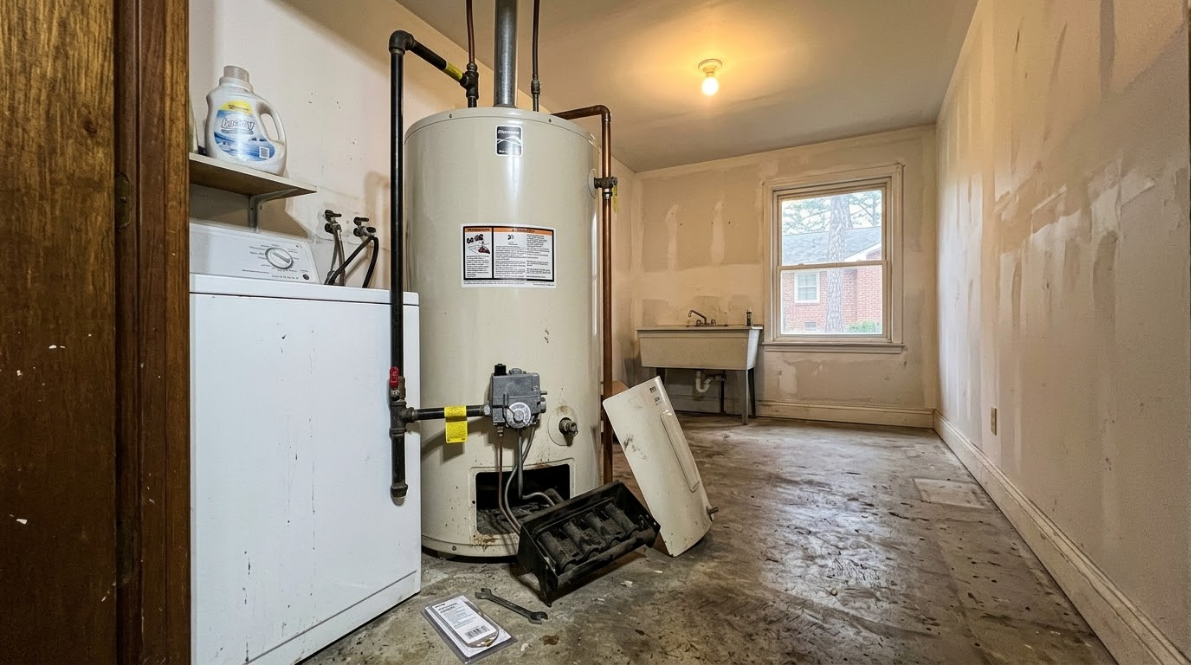
SEDIMENT
Flushing and Sediment Removal
Popping and rumbling mean minerals are baking against the tank bottom, stealing efficiency and quietly shortening the unit's life. A proper flush restores heat transfer and settles the noise down noticeably.
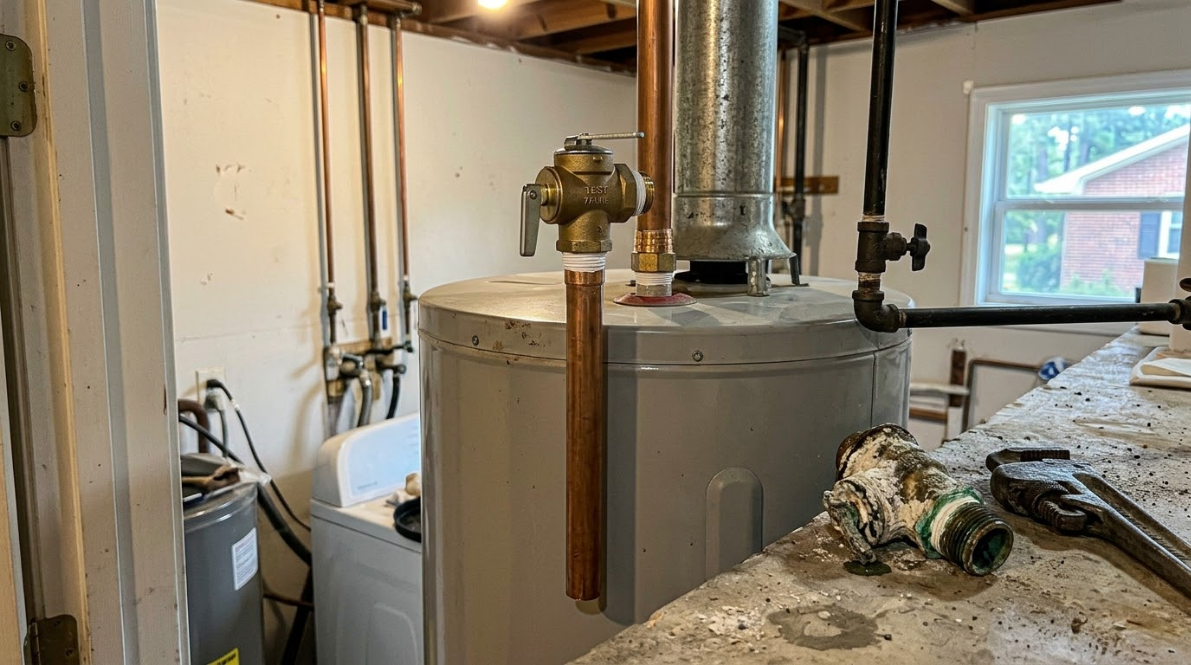
RELIEF VALVE
Relief Valve and Discharge Repair
A dripping relief valve signals excess pressure, excess temperature, or a tired valve. We identify which, replace the valve when needed, and correct discharge piping that fails to meet code.
LEAKS
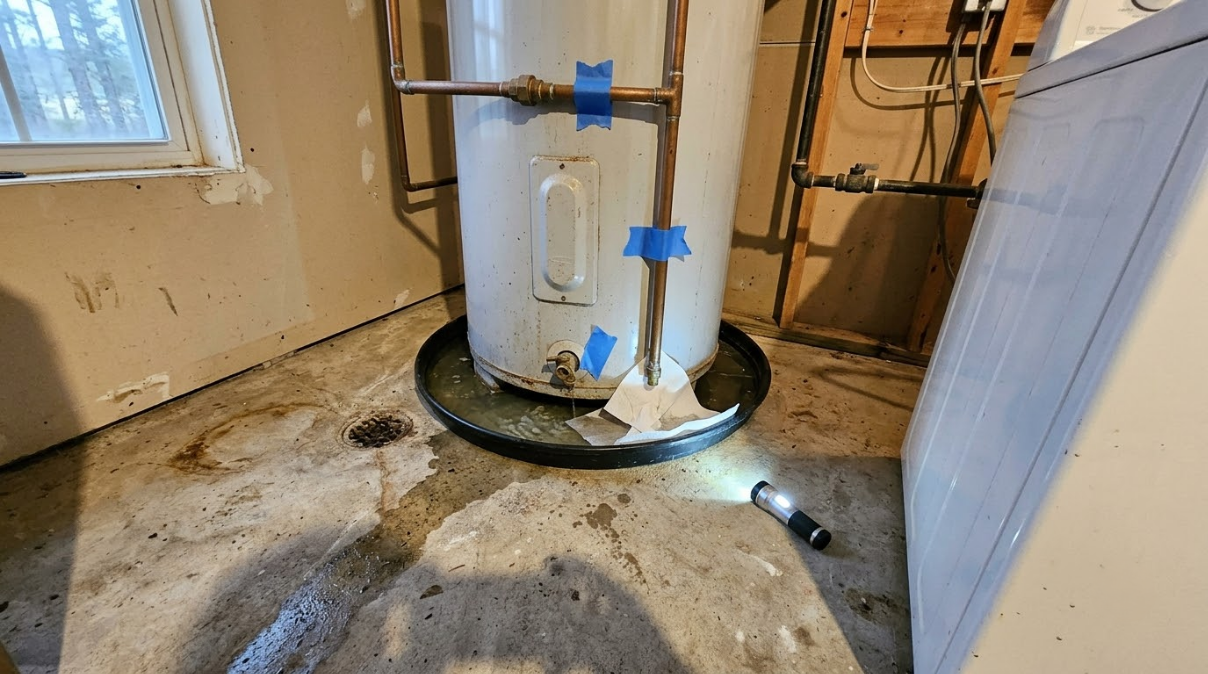
Leak Diagnosis and Repair
Water at the base is not automatically a dead tank. Fittings, the relief line, the drain valve, and condensation all produce the same puddle, and each has a very different answer.
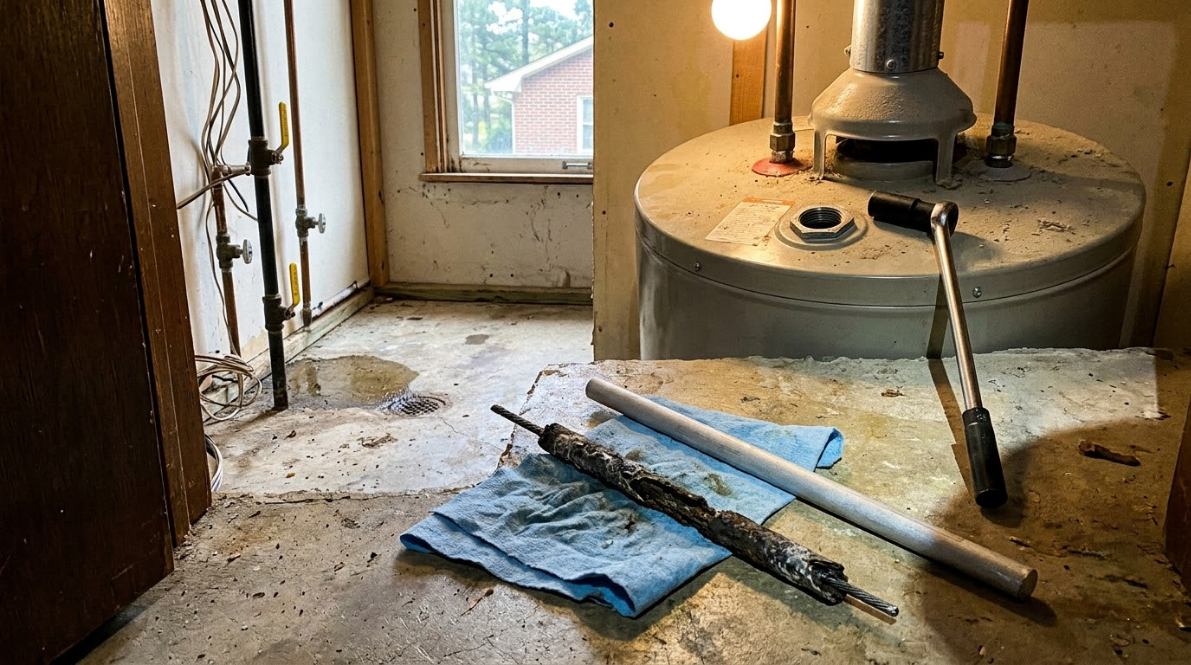
ANODE
Anode Rod Inspection and Replacement
The anode rod corrodes so the tank does not. Once it is consumed, the liner starts its own countdown, and replacing it is one of the cheapest ways to extend a heater's life.
THE WORD ON OUR WORK
WHAT OUR CLIENTS SAY.
Customers frequently mention hot water restored the same day, a clear explanation of what had failed, and being told honestly when a repair made more sense than a replacement. Several describe water heater work completed alongside other repairs in one visit.
Common Questions
FREQUENTLY ASKED QUESTIONS.
The questions homeowners ask most about water heater repair, from strange noises and leaking relief valves to flushing intervals and how to tell repair from replacement.
Why is my water heater making a popping sound?
Sediment has settled on the tank bottom and water is boiling underneath it. The popping is steam escaping through that layer. Flushing usually stops it and restores the efficiency the sediment was stealing.
Why is my water heater leaking?
Check the source before assuming the worst. Drain valves, relief lines, inlet and outlet fittings, and condensation all produce puddles. Water seeping from the tank seam itself is the one failure repair cannot solve.
Why is my T&P valve leaking?
Either the system pressure or the temperature has climbed past the valve's setting, or the valve seat has worn. Closed systems without thermal expansion control are the most frequent cause of repeated weeping.
Why is my water heater pilot light not working?
A failing thermocouple is the usual answer, followed by a dirty pilot orifice, a faulty gas control valve, or restricted combustion air. Relighting without addressing the cause simply postpones the same call.
How often should you flush a water heater?
Once a year suits most homes on municipal water. Flushing removes accumulated sediment before it insulates the tank bottom, quiets rumbling, and adds meaningful years to the unit's working life.
Why is my electric water heater not working?
Start with the breaker, then the high-limit reset button behind the upper access panel. Beyond those, a failed upper element, a bad thermostat, or corroded wiring at the terminals are the usual culprits.
Can a water heater be repaired instead of replaced?
Very often, yes. Elements, thermostats, thermocouples, gas valves, relief valves, and anode rods are all serviceable parts. Only a leaking tank shell genuinely forces replacement, since the liner cannot be repaired.
Why should I choose Just Right Plumbing for water heater repair?
We test the fault before quoting anything and carry common failure parts on the truck. Homeowners across Smithfield, NC call us because we repair tanks that others quote as replacements.
HOW WE WORK
FROM COLD SHOWER TO HOT WATER, HERE IS HOW.
STEP 01
Tell us the symptoms
Describe the noise, the water temperature, the age of the unit, and whether the change happened gradually or overnight. That free conversation normally narrows the fault before we arrive and decides which parts travel with us.
STEP 02
Test the unit properly
Power, thermostats, elements, ignition sequence, gas supply, and the relief valve all get checked with proper instruments. Guessing at water heater faults wastes parts and leaves you without hot water for considerably longer.
STEP 03
Explain what failed and why
You hear which component gave out and, just as importantly, what caused it to go, whether that is pressure, sediment, plain age, or a setting nobody bothered to adjust correctly when the unit was first installed here.
STEP 04
Weigh repair against replacement
Age, tank condition, and the cost of parts together decide the recommendation. When a repair genuinely buys years, we repair it. When it only buys a few months, you deserve to hear that plainly instead.
STEP 05
Complete the repair and flush
The failed part is replaced with a correct match, sediment is flushed out wherever it is present, and both the relief valve and its discharge piping are verified against what the code actually requires.
STEP 06
Confirm recovery and set the temperature
We run the unit through a full cycle, confirm it recovers correctly, and set the thermostat to a safe temperature. Then you get a plain account of the work done and what is worth watching next.
Get Your Free Estimate
HEAR WHAT YOUR TANK IS TELLING YOU, FREE.
Describe what your water heater is doing and we will tell you honestly whether it is a part or the tank. Most repairs finish in one visit, and the phone conversation that starts it costs nothing at all.
WHAT YOUR FREE ESTIMATE COVERS:
✓ Symptoms discussed at no charge
✓ An honest repair or replace opinion
✓ Common parts carried on the truck
✓ Relief and discharge safety checked
✓ Sediment flush where it is needed
✓ A price agreed before work starts