
Sewer Line Repair
Sewer Line Repair in Smithfield, NC
Sewer laterals typically run between 2 and 6 feet below ground, and cast iron, clay, and cement lines all reach the end of their useful lives somewhere between 50 and 100 years. Just Right Plumbing, LLC repairs sewer lines throughout Smithfield, NC by locating the defect on camera, marking its depth and position precisely, and then opening up only the ground that the repair genuinely requires rather than trenching the whole length of a yard purely on speculation.
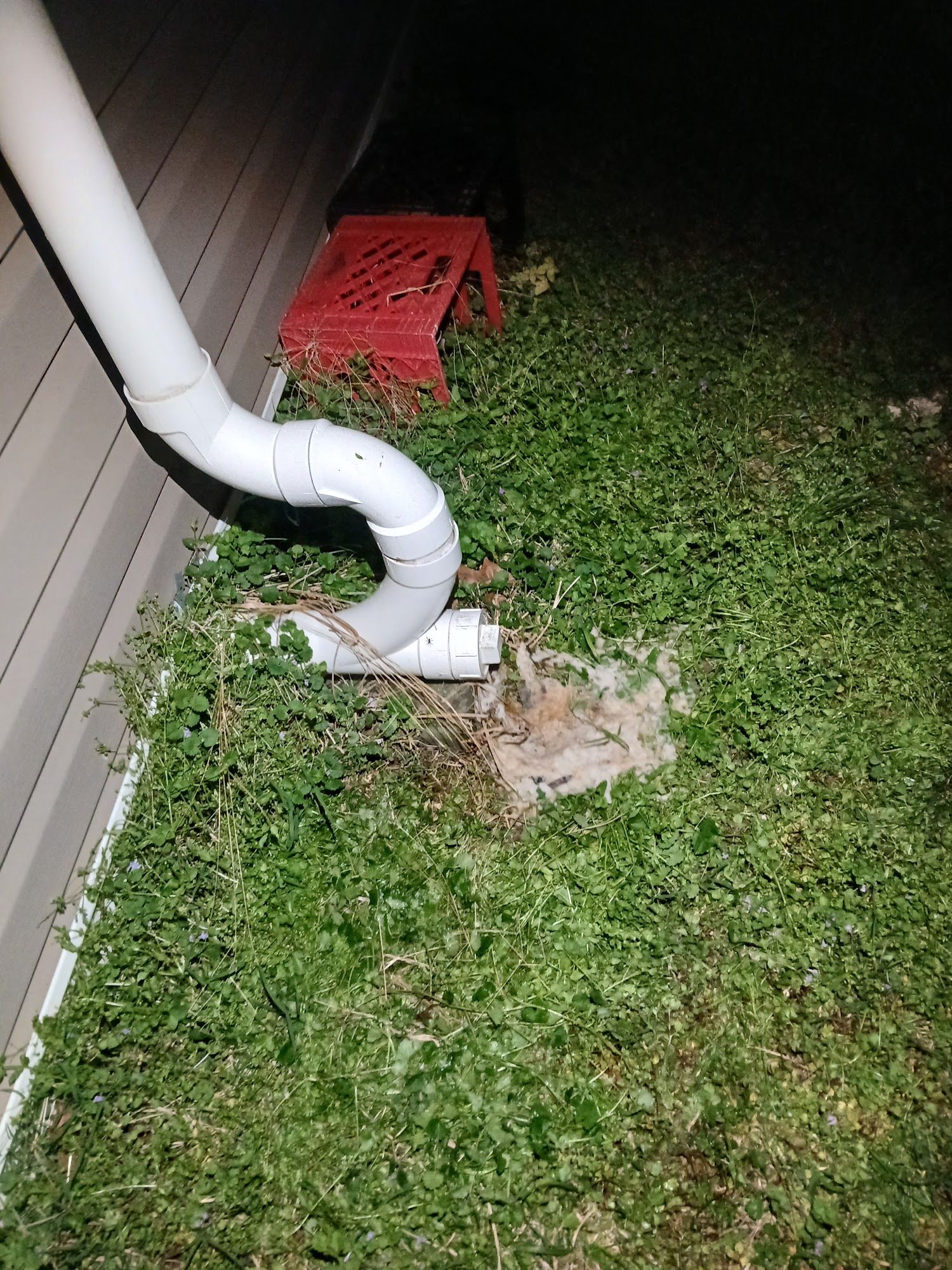
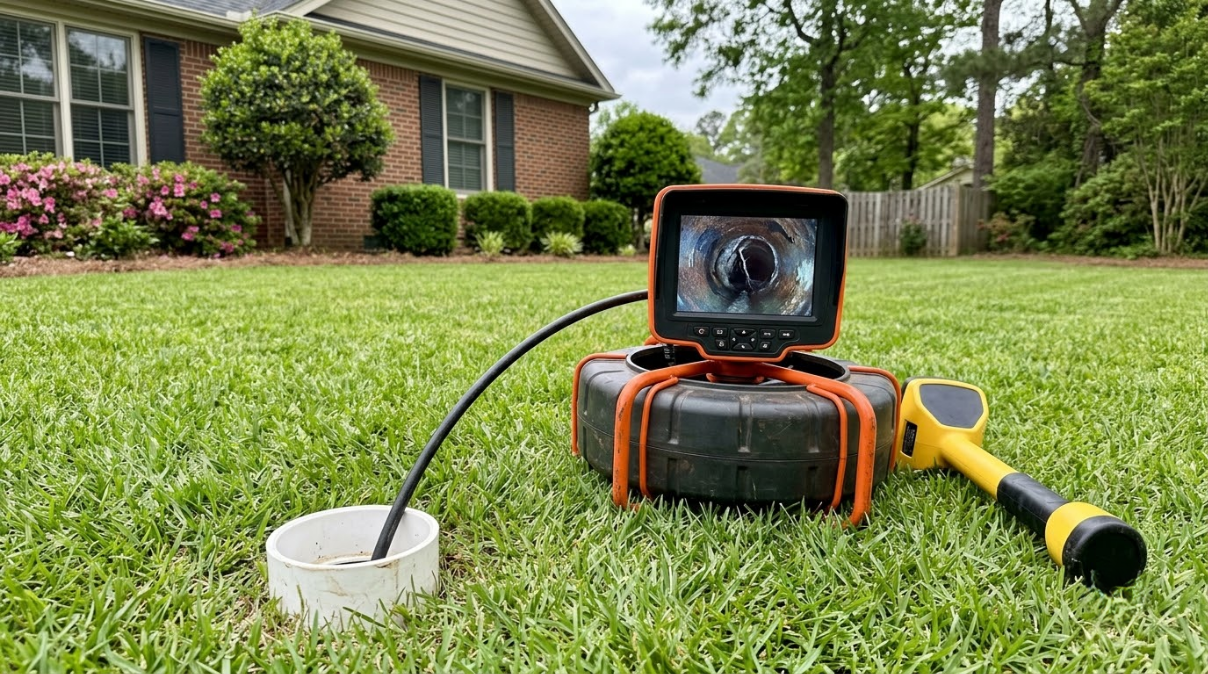
THE CAMERA COMES BEFORE THE SHOVEL.
Digging a sewer line without knowing exactly where the fault sits is expensive guesswork, and it is the reason so many homeowners end up with a yard opened in the wrong place. A camera survey paired with a locator turns a vague problem into a clearly marked point on the surface, at a known depth, before anything is dug.
From that point onward, the conversation changes completely. You are deciding between two or three clearly defined options rather than authorizing an open excavation and quietly hoping for the best.
✓ Camera survey and locating first
✓ Depth and position marked on site
✓ Spot repair wherever it is sufficient
✓ Licensed P1 plumber on every job
SEWER LINE REPAIR
A LATERAL FAILS IN A FEW PREDICTABLE WAYS.
Sewer lines do not deteriorate randomly. Clay joints separate and admit roots. Cast iron scales from the inside until the bore closes, then thins until the crown collapses. Orangeburg deforms into an oval. Ground movement creates bellies that hold water and catch solids. Each of those has a characteristic appearance on camera, and each points toward a different repair, which is exactly why the survey decides the method.
CLAY SOIL AND OLD HARDWOODS DO THE DAMAGE.
Johnston County's clay-heavy soils shrink and swell with the seasons, and that movement is unkind to rigid pipe with mortared or gasketed joints. Add the mature hardwoods common in older parts of town, and root intrusion through a slightly opened joint becomes the leading cause of sewer failure here. Knowing that pattern tells us where on a run to look first, well before anything gets excavated.
THE CAMERA GOES IN BEFORE THE SHOVEL DOES.
There is no substitute for seeing the pipe. A locator gives a position within a few percent of the true depth, and that accuracy is the whole difference between a neat excavation and a ruined lawn. After 7+ years in this trade we have never once regretted spending an extra half hour on the survey, and we have frequently regretted watching somebody else skip it. Shall we take a look at your line?
WHY CHOOSE US FOR SEWER LINE REPAIR.
SURVEY BEFORE ANY QUOTE
Nothing gets priced until the defect has been seen and located. That order protects you from paying for an excavation that turns out to be in the wrong place entirely.
THE SMALLEST DIG THAT WORKS
Accurate locating means opening a small, precise excavation rather than a long exploratory trench. Less disturbance means faster work, lower cost, and considerably easier restoration afterward.
TRENCHLESS WHERE IT SUITS
Lining and pipe bursting avoid opening the ground along the run. We explain honestly when your line is a good candidate and, just as importantly, when it is not.
CLEANOUTS PUT BACK PROPERLY
Code requires a cleanout at the junction of the building drain and the building sewer. Any repair we complete restores that access rather than burying it under new backfill.
YOU SEE THE EVIDENCE
Camera footage is shown and explained before decisions are made. Sewer work is expensive enough that nobody should be authorizing it based on a verbal description.
GROUND RESTORED AFTERWARD
Backfill is compacted properly and the surface made good. A repaired sewer line should not leave a settling scar across your yard for the next 2 years.
WHAT WE REPAIR
OUR SEWER LINE REPAIR WORK
Six repair approaches cover the defects that actually occur in residential laterals. The camera survey decides which one applies, and a second survey confirms the result before the ground goes back.
SPOT REPAIR
Sectional Sewer Repair
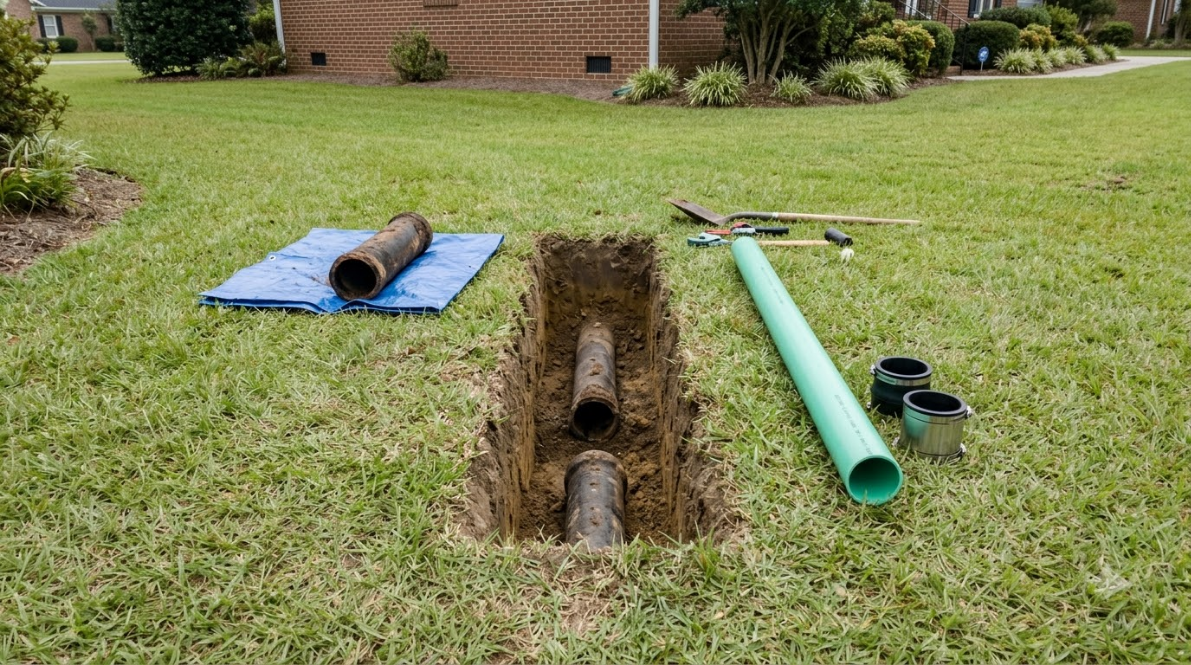
Where a single joint, crack, or crushed length has failed, only that section needs replacing. A precise excavation, a new length of pipe, and correct couplings restore the run without touching the rest.
ROOTS
Root Intrusion Sewer Repair
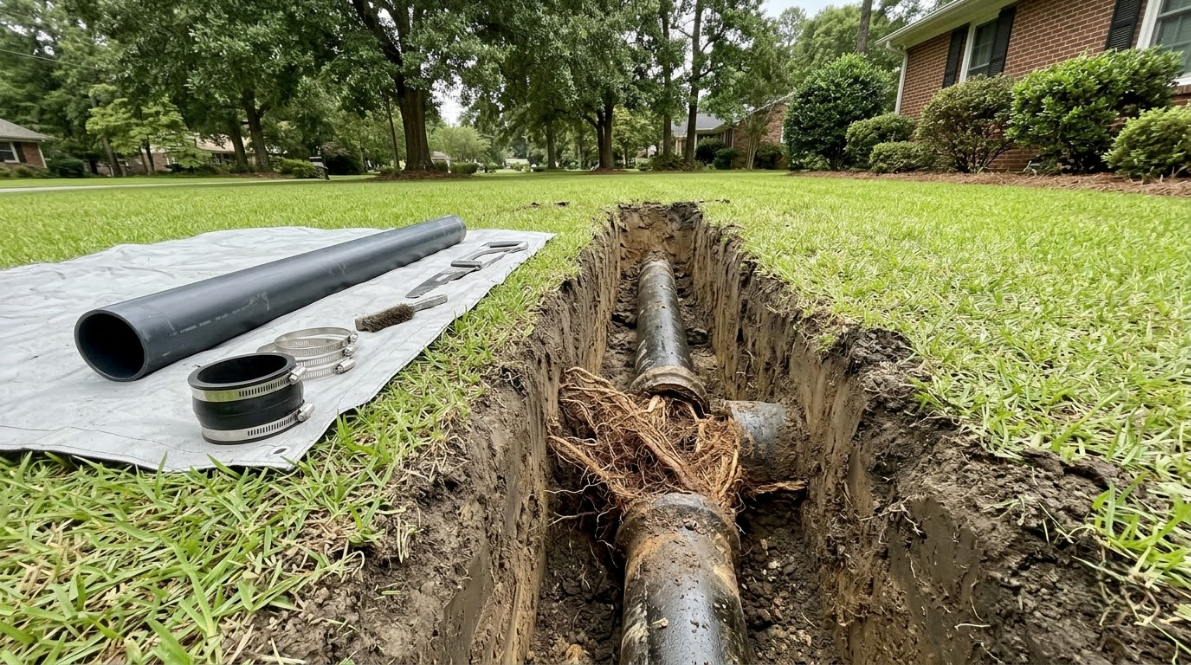
Roots enter through an opened joint and rebuild within a year or 2 of being cut. Sealing or replacing the entry point is the only measure that genuinely stops the cycle repeating.
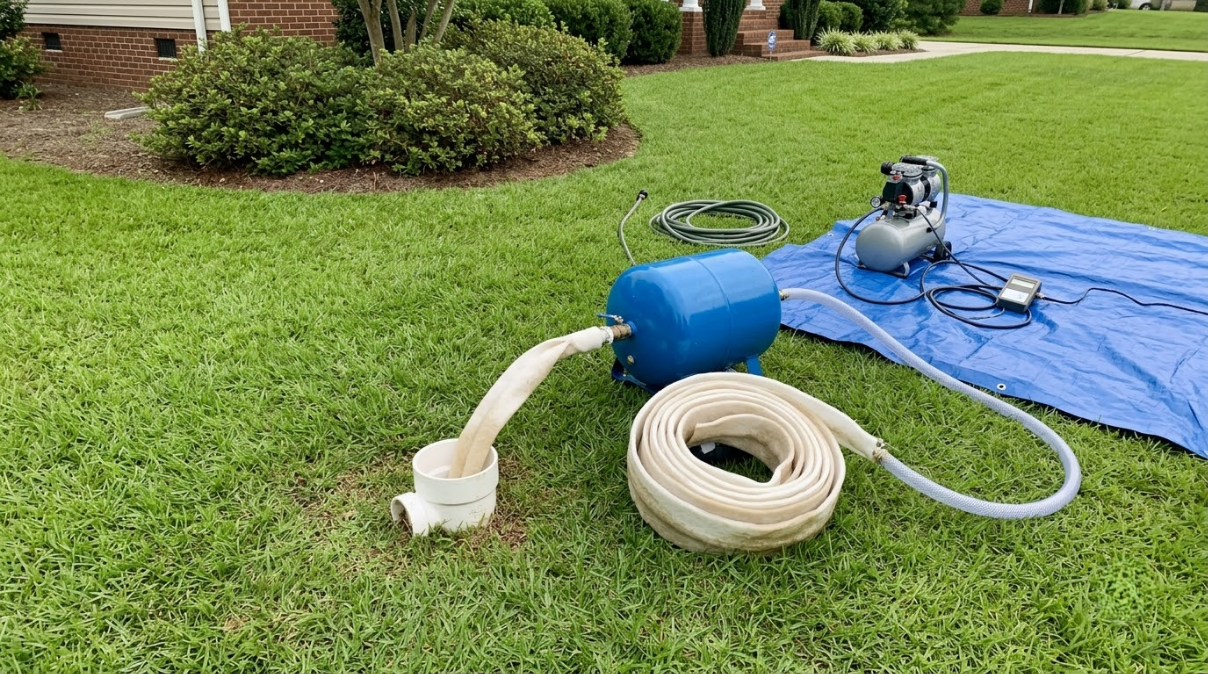
LINING
Cured-In-Place Pipe Lining
A resin liner cured inside the existing pipe creates a new jointless wall without excavation. Where slope is sound and the host pipe holds shape, liners are commonly rated around 50 years.
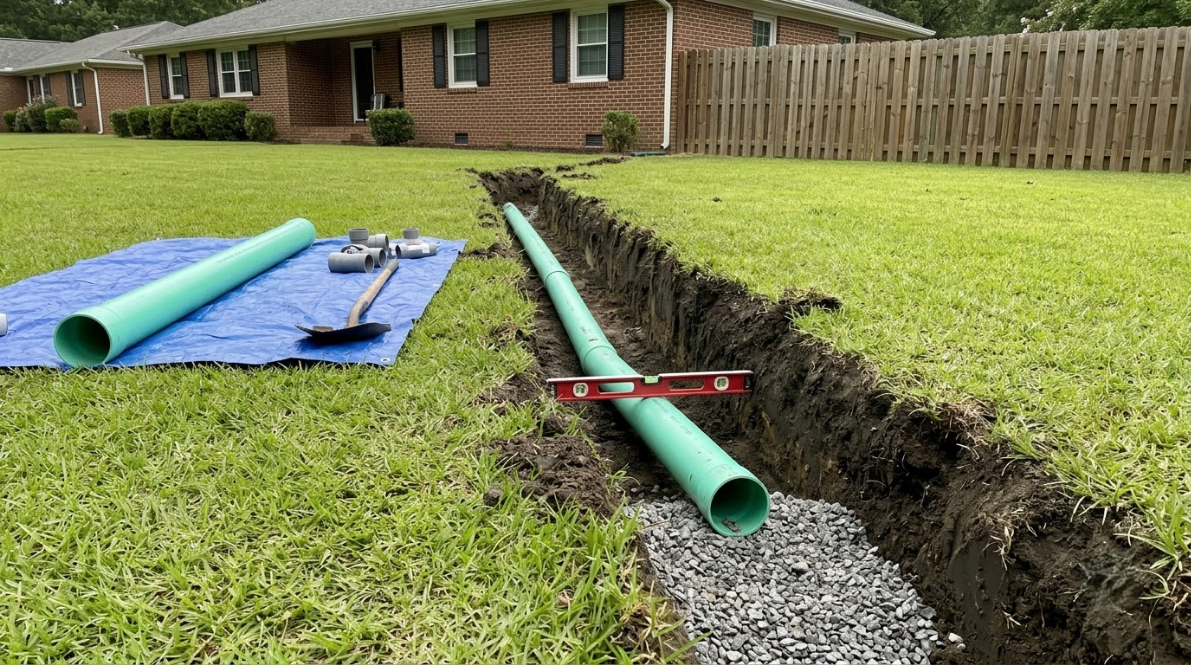
BELLIES
Sag and Slope Correction
Standing water sitting in a low section catches solids and effectively guarantees repeat blockages. Correcting slope means excavating that length and relaying it with the fall that the plumbing code specifies.
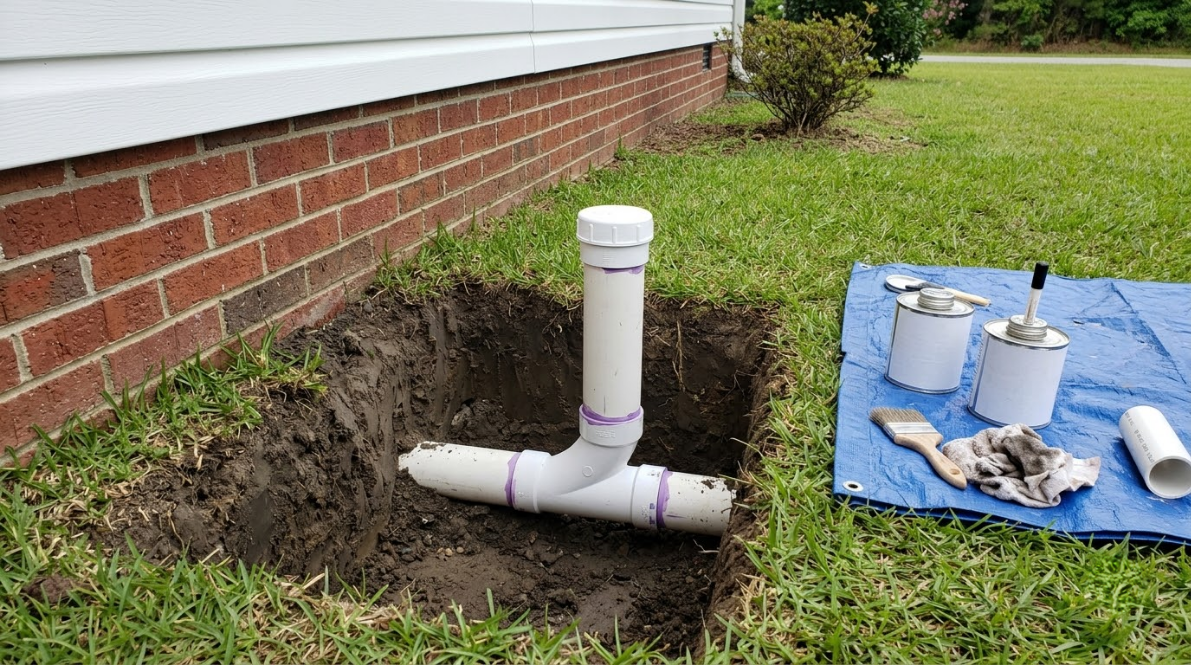
CLEANOUTS
Cleanout Installation and Repair
Missing or buried cleanouts make every future service call harder and more expensive. Installing accessible cleanouts at the right points pays for itself the first time the line needs attention.
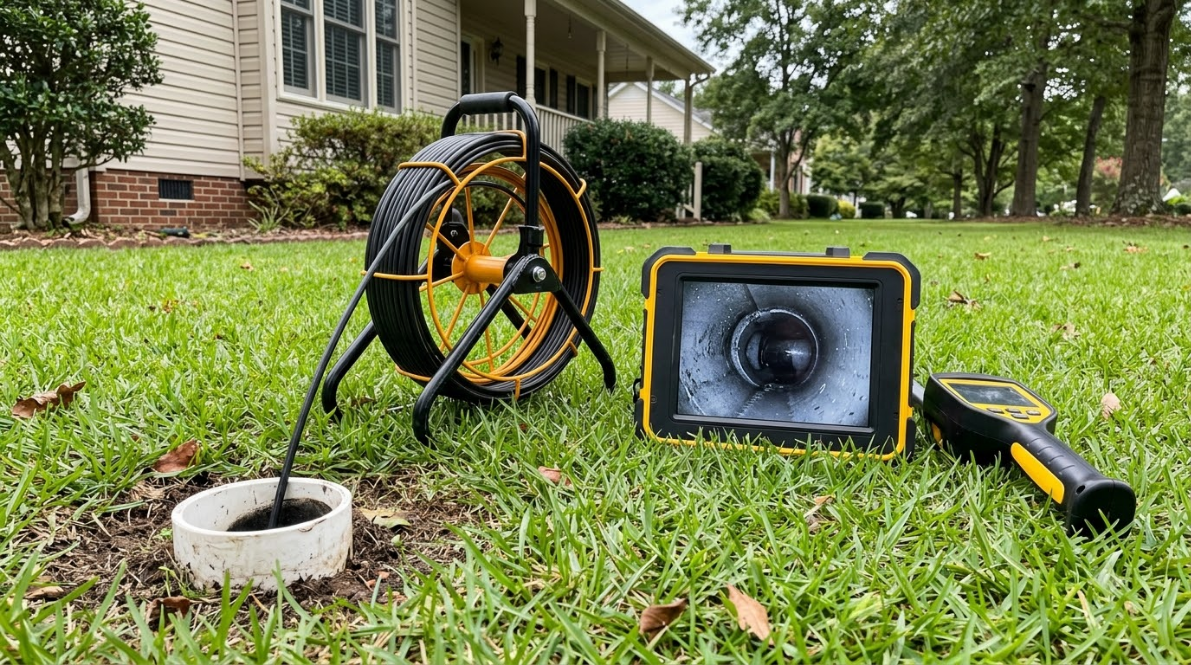
CAMERA
Sewer Camera Inspection and Locating
A recorded survey with surface locating shows the pipe material, its condition, any defects, and the depth. Most residential inspections take well under an hour and remove the guesswork entirely from any decision.
THE WORD ON OUR WORK
WHAT OUR CLIENTS SAY.
Homeowners who have been through sewer work with us mention the same things repeatedly: knowing exactly where the digging would happen before it started, seeing the fault on screen first, and a yard that looked close to normal again within a week.
Common Questions
FREQUENTLY ASKED QUESTIONS.
Common questions about sewer line repair, covering how faults are located, what trenchless methods can and cannot do, expected pipe lifespans, and how repair decisions are actually made.
How long will a sewer line last?
Cast iron typically gives 75 to 100 years, clay and cement about a century, Orangeburg around 50, and modern PVC well over 100. Soil movement and roots shorten all of those figures.
How do plumbers determine the appropriate sewer repair method?
The camera survey decides it. Pipe material, the type and extent of the defect, the depth, the slope, and what sits above the line all narrow the options to one or two sensible approaches.
What is trenchless sewer repair?
Repair methods that renew a pipe without excavating its full length, principally cured-in-place lining and pipe bursting. Access pits are still needed at each end, but the run between stays undisturbed.
How long does trenchless sewer line repair last?
Cured-in-place liners are generally rated at around 50 years, and burst-in HDPE replacement pipe lasts considerably longer than that. Both compare very well against an open-cut replacement using conventional jointed pipe.
Can you use trenchless technology on a bellied line?
No, and this is the important limitation. Lining follows the shape of the host pipe, so it renews the wall but preserves the sag. Correcting slope always requires excavating that section.
What is a sewer camera inspection?
A waterproof camera on a flexible rod is fed through the line and recorded, while a locator tracks the head from the surface. It reveals material, condition, defects, and the depth at any point.
How often should sewer lines be inspected?
Every 3 to 5 years for older clay or cast iron laterals, and before buying any property with mature trees nearby. An inspection is far cheaper than discovering a collapsed line afterward.
Why should I choose Just Right Plumbing for sewer repair?
We locate the fault precisely, show you the footage, and dig only where the repair requires it. Property owners across Smithfield, NC value knowing exactly what they are paying for.
HOW WE WORK
FROM SUSPECT LINE TO SETTLED GROUND, HERE IS HOW.
STEP 01
Understand the symptoms
Backups at the lowest fixtures, gurgling toilets, soggy patches above the run, and repeat blockages each suggest quite different faults. That history shapes what we look for once the camera actually goes in.
STEP 02
Clear access and survey the line
The lateral is cleared just enough for the camera to pass through, then recorded from end to end. The footage identifies the defect, the pipe material, and the general condition of everything around it.
STEP 03
Locate and mark the defect
A locator tracks the camera head so that the fault's position and depth can be marked on the surface above. Accurate marking is what keeps the excavation small and the restoration straightforward afterward.
STEP 04
Review the options together
Spot repair, lining, and full replacement each get explained with their real limits made clear. You see the footage, hear what each approach would involve, and decide with genuine information in front of you.
STEP 05
Notify utilities and complete the repair
NC811 is notified before any excavation begins, since state law requires 3 full working days of notice first. The repair then follows the plumbing code exactly, with cleanouts reinstated wherever they are required.
STEP 06
Re-survey and restore the surface
A second camera run confirms that the line now flows correctly through the repaired section. The excavation is backfilled in compacted layers and the surface is restored as closely as ground conditions will allow.
Get Your Free Estimate
PUT A CAMERA ON THE PROBLEM, FREE.
Describe the backups, the smells, or the soft ground and we will explain over the phone what those symptoms usually mean, what a camera survey would settle, and what the realistic repair options look like.
WHAT YOUR FREE ESTIMATE COVERS:
✓ Symptoms interpreted at no charge
✓ Camera survey scope explained
✓ Spot repair, lining, and replacement compared
✓ Excavation footprint estimated honestly
✓ NC811 notification handled by us
✓ Ground restoration included