
Water Heater Installation
Water Heater Installation in Smithfield, NC
Code requires a drain pan at least 1.5 inches deep, fitted with a 3/4 inch indirect drain, wherever a leak could cause damage, and no valve of any kind between the relief valve and the end of its discharge pipe. Just Right Plumbing, LLC installs gas and electric water heaters across Smithfield, NC to those details exactly, sizing the unit to real household demand and coordinating permits and inspection through Johnston County rather than leaving that to you.
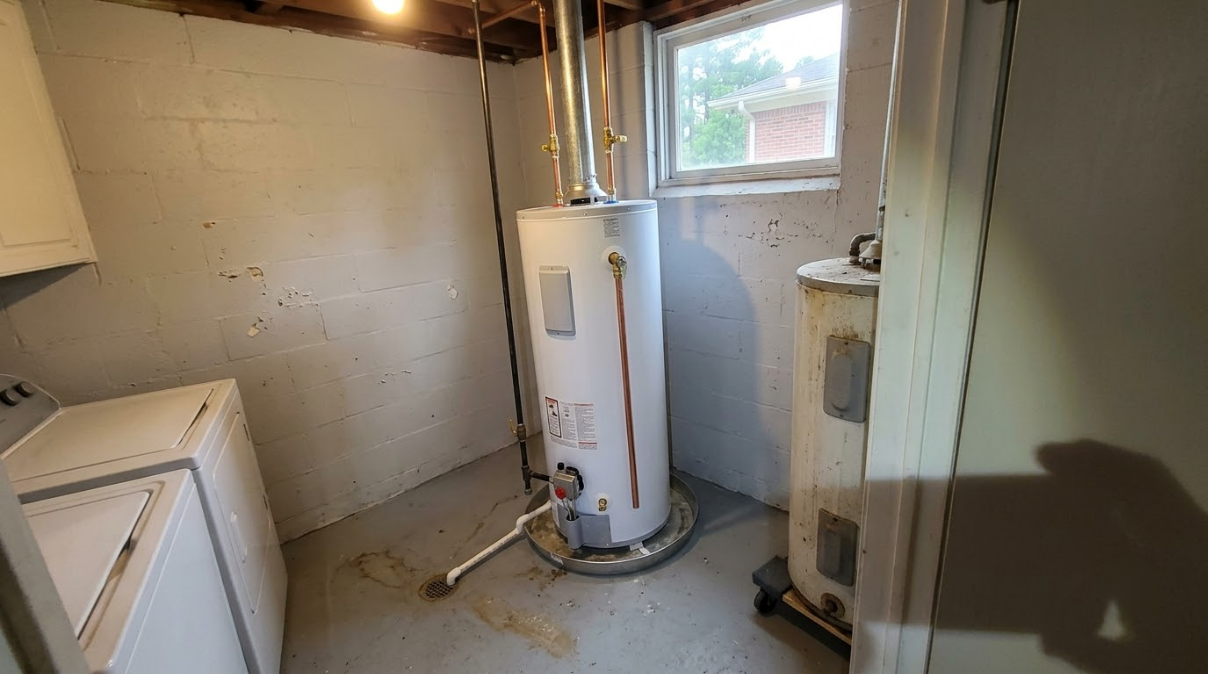
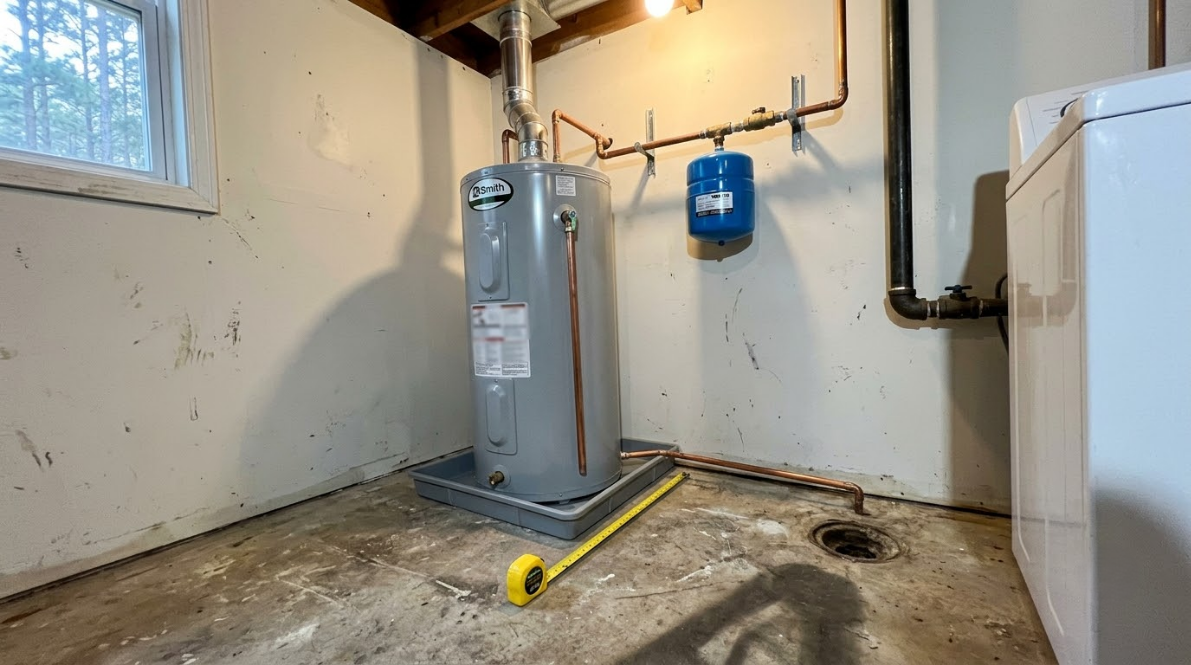
AN INSTALLATION IS MOSTLY THE DETAILS.
Setting a tank in place and connecting two pipes to it takes about an hour. Getting the pan drain terminated correctly, the relief discharge sized and left unthreaded at the end, the expansion control fitted where a check valve has created a closed system, and the combustion air clearances properly respected takes considerably longer than that.
Those details are exactly what an inspector looks at, and they are also what decides whether the unit quietly reaches the end of its warranty or leaks through a hallway ceiling first.
✓ Correctly sized for your household
✓ Pan, drain, and relief piping to code
✓ Permit and inspection coordinated
✓ Old unit removed and hauled away
WATER HEATER INSTALLATION
SIZING IS THE DECISION THAT LASTS 10 YEARS.
Gallon capacity alone does not decide whether you run out mid-shower. First hour rating, recovery rate, and how your household actually staggers its hot water use matter far more than the number printed on the label. We ask about bathroom count, laundry habits, and the morning routine before recommending anything, because an oversized tank wastes money standing by and an undersized one guarantees an argument every winter weekend.
WHERE THE TANK SITS CHANGES THE JOB.
Garages, crawl spaces, closets, and attics all bring their own rules. A gas unit in a garage needs its ignition source raised at least 18 inches above the floor. Anything above a finished ceiling needs a pan and a drain that terminates somewhere visible. Plastic pans cannot sit under gas-fired units. We work out those constraints before ordering, not after the truck arrives.
OUR INSTALLS PASS INSPECTION THE FIRST TIME.
Failed inspections cost days, and they almost always fail on the same short handful of items: discharge piping terminated in the wrong place, a missing expansion tank, an unstrapped nonmetallic drain line, or a shut-off valve that serves more than just the heater. 7+ years of setting these units has made that checklist automatic rather than something anybody needs to look up. Would you like the whole installation handled end to end?
WHY CHOOSE US FOR WATER HEATER INSTALLATION.
SIZED FOR YOUR ACTUAL HOUSEHOLD
We ask how your family really uses hot water before recommending a capacity. That conversation prevents both the cold shower and the oversized tank quietly burning money in a closet.
INSTALLED THE WAY CODE INTENDS
Pan depth, drain routing, relief discharge, expansion control, and clearances all get done properly. None of it is visible once the job is finished, and all of it matters enormously.
PERMITS HANDLED FOR YOU
Where the work requires a permit and inspection through Johnston County, we arrange it. That paperwork protects your insurance position and any future sale of the property.
THE OLD TANK DISAPPEARS
Removal and disposal are part of the job. You are not left with a rusting cylinder in the garage waiting for a trip to the transfer station that never quite happens.
ONE VISIT, START TO FINISH
Most standard replacements are completed the same day, including removal, fitting, filling, purging, and testing. Hot water is usually back before the afternoon is over.
HONEST FUEL AND TYPE ADVICE
Gas, electric, tank, or tankless all suit different homes. We explain the real tradeoffs for your building rather than steering you toward whatever carries the better margin.
WHAT WE INSTALL
OUR WATER HEATER INSTALLATION WORK
Six installation types cover almost every situation we are called for. Each one is sized to the household, fitted to current code, and tested under load before we consider the job complete.
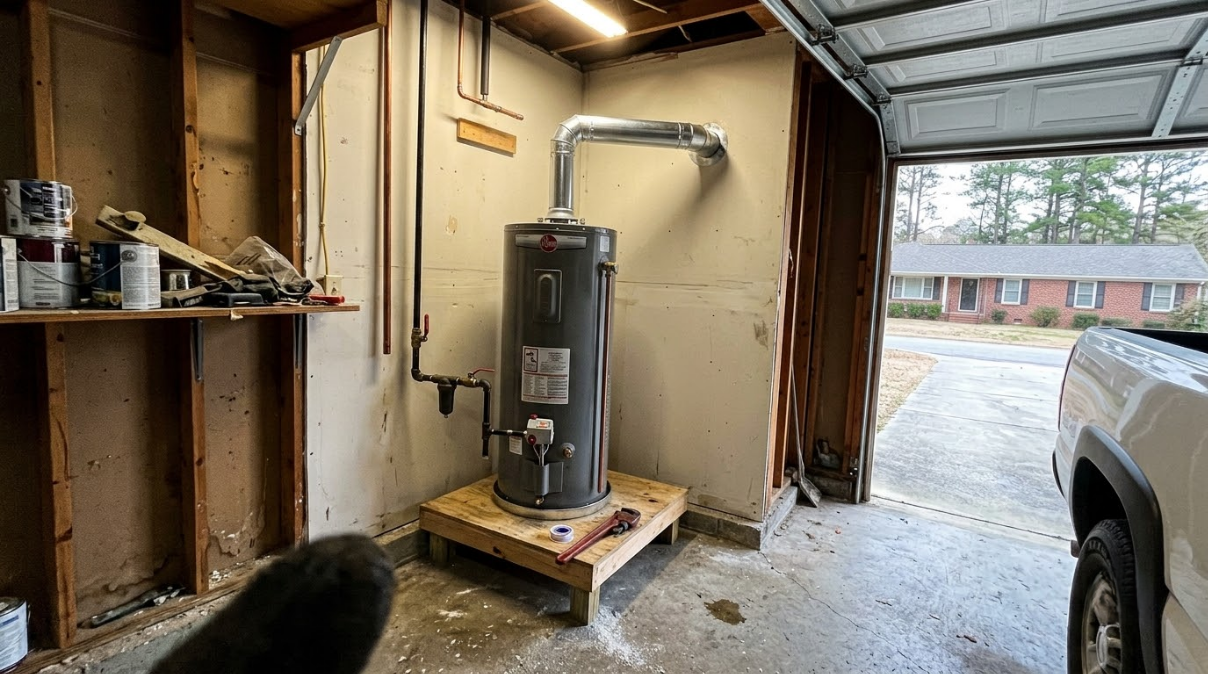
STANDARD TANK
Gas Water Heater Installation
Atmospheric and power-vented gas units are installed with correct gas sizing, proper venting, and combustion air accounted for. Ignition source elevation in garages and clearance to combustibles both get respected without exception.
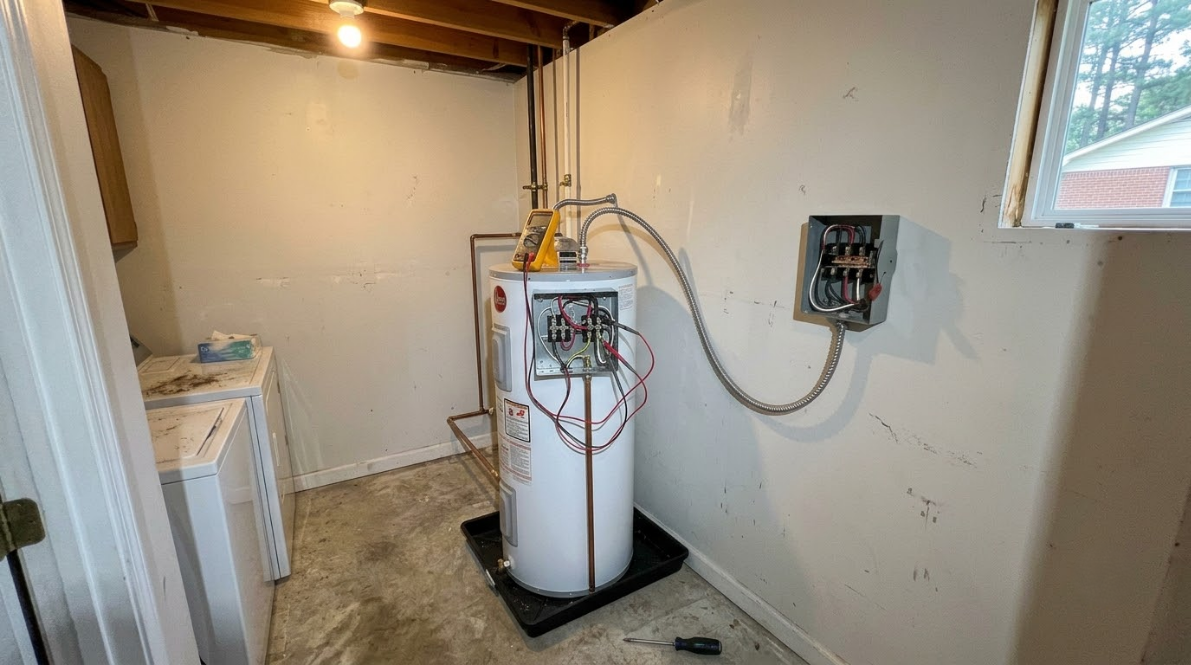
ELECTRIC
Electric Water Heater Installation
Electric units need correct breaker sizing, sound wiring at the terminals, and a dedicated shut-off within reach. We check the existing circuit rather than assuming the old unit was wired correctly to begin with.
HIGH EFFICIENCY
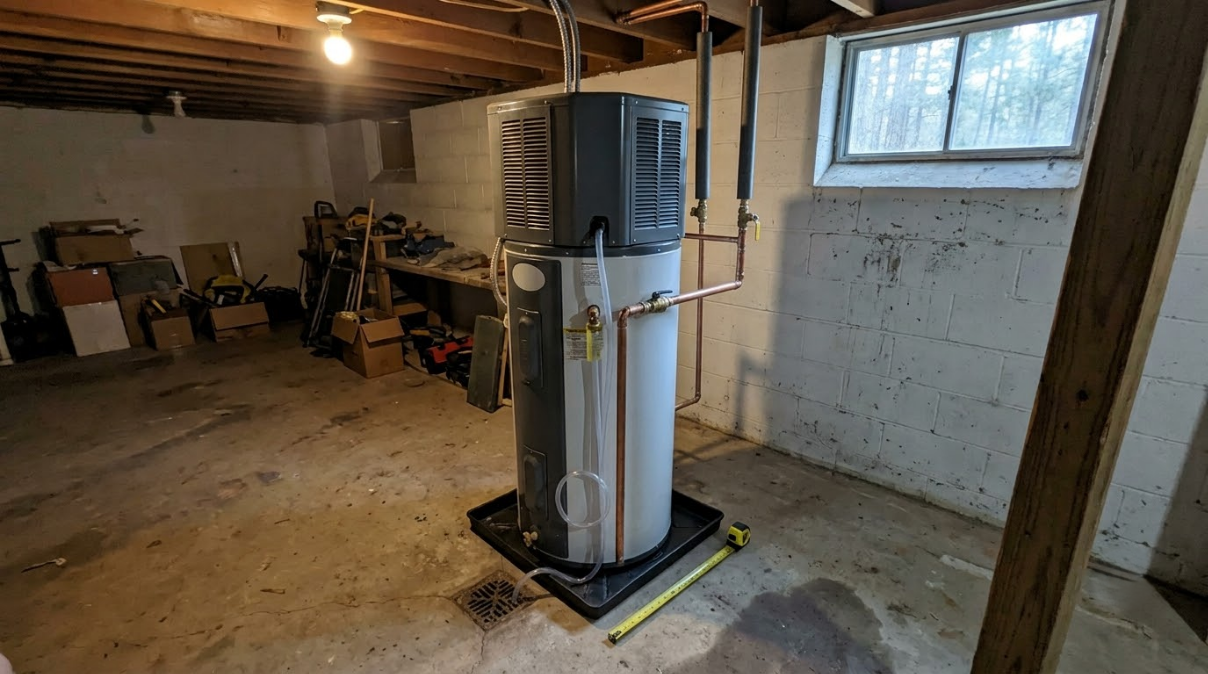
Heat Pump Water Heater Installation
Hybrid units cut electric water-heating costs sharply, but they need air volume, condensate drainage, and sensible placement to work well. We confirm the space genuinely suits one before recommending it, never afterward.
RELOCATION
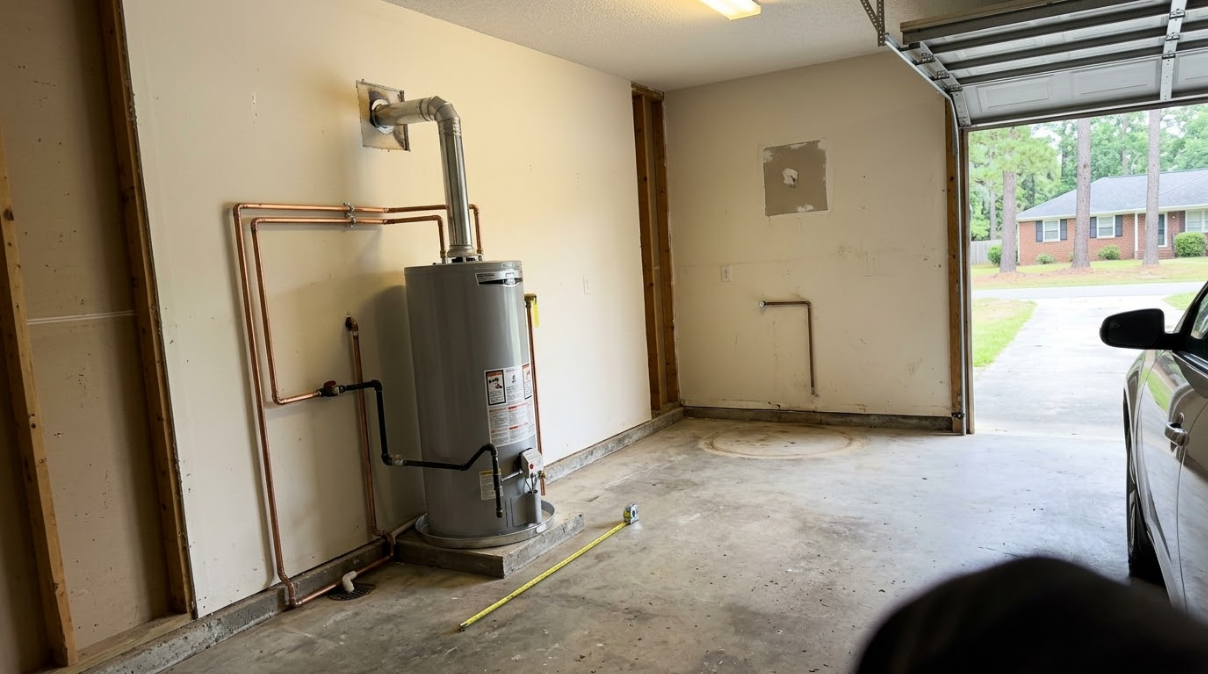
Water Heater Relocation
Moving a unit to a garage, crawl space, or utility room changes venting, piping, and drainage requirements. Routing is planned first so the new location works permanently rather than merely fitting.
EXPANSION
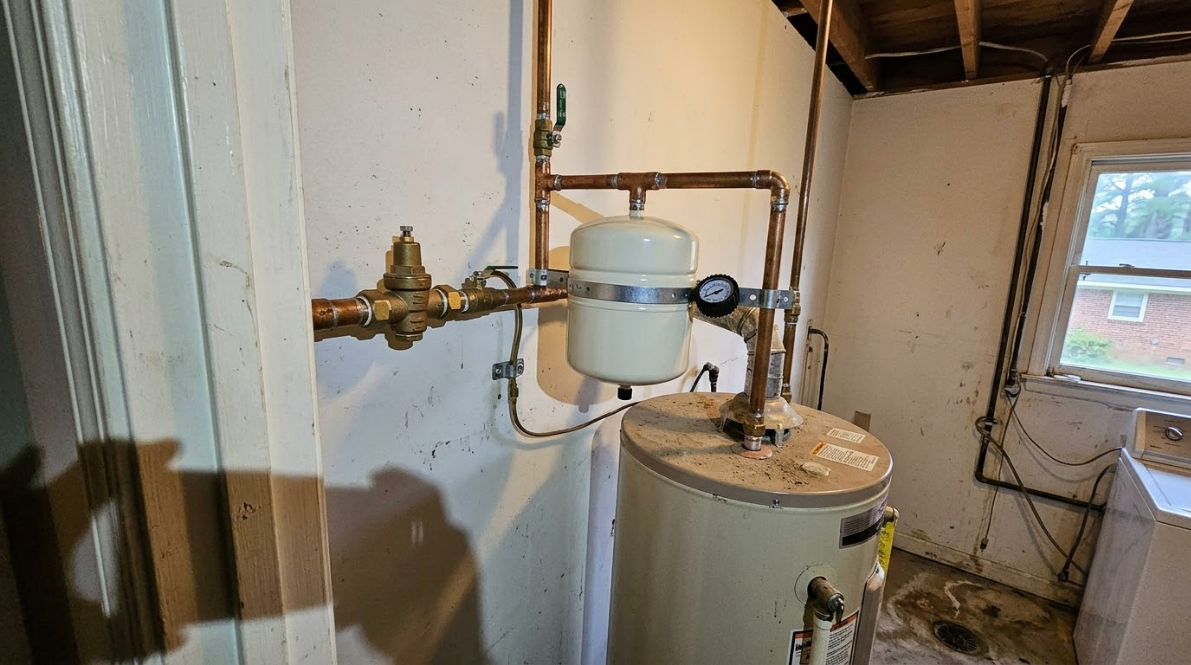
Thermal Expansion Tank Installation
A check valve, pressure-reducing valve, or backflow preventer creates a closed system, and closed systems need somewhere for heated water to expand. Fitting a properly charged tank stops relief valves weeping.
NEW BUILD
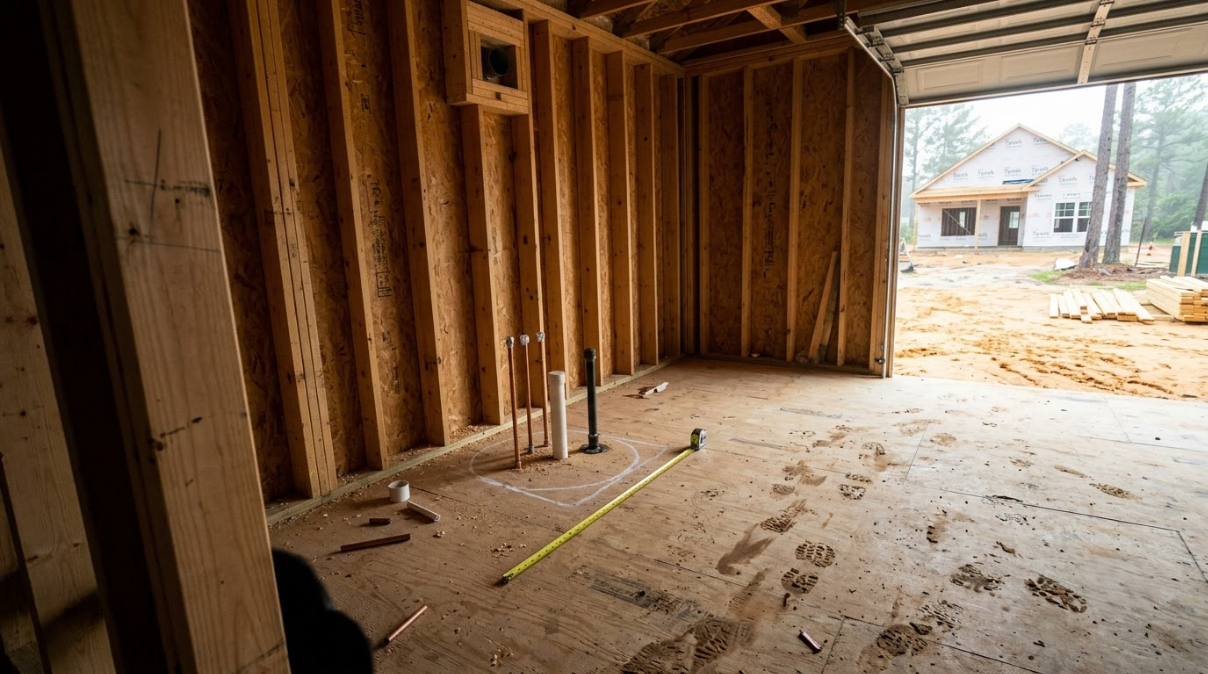
New Construction Rough-In and Set
New builds and additions get the supply, gas, venting, and drainage all roughed in at exactly the right stage, then the unit set, filled, and commissioned thoroughly once the space around it is finished.
THE WORD ON OUR WORK
WHAT OUR CLIENTS SAY.
Customers regularly comment on installations finished the same day, old units taken away without being asked, and a straightforward explanation of why one size or fuel type suited the house better. Several mention peace of mind from having a licensed technician do the work.
Common Questions
FREQUENTLY ASKED QUESTIONS.
The questions homeowners ask most before a water heater installation, covering sizing, permits, pans, expansion tanks, timing, and the practical differences between gas and electric units.
How long does it take to install a water heater?
A straightforward like-for-like replacement usually takes 2 to 4 hours, including draining, removal, fitting, filling, purging the air, and testing. Changing the fuel type, the capacity, or the location extends that timeline considerably.
Do I need a permit to replace a water heater?
Usually yes. In North Carolina, water heater replacement is licensed plumbing work, and a permit with inspection is normally required, handled through Johnston County Building Inspections for properties in and around Smithfield.
What size water heater do I need?
Bedrooms and bathrooms give a rough starting point, but first hour rating matters more. Two bathrooms with staggered showers behave very differently from two bathrooms running at the same time each morning.
Do I need a water heater expansion tank?
If a check valve, pressure-reducing valve, or backflow preventer sits on your incoming water, the system is closed and code requires thermal expansion control. Without it, relief valves weep and fittings fail early.
Is a drain pan necessary for a water heater?
A pan is required wherever a leak would cause damage, including attics, above occupied space, and unventilated crawl spaces. It must drain by an indirect waste pipe rather than simply sitting there full.
Should you buy a gas or electric water heater?
Gas recovers faster and usually costs less to run where a gas line already exists. Electric is simpler to install, needs no venting, and pairs with heat pump models that cut operating costs sharply.
Can I install a water heater myself?
North Carolina treats water heater installation as licensed plumbing work for good reason. Gas, venting, relief piping, and expansion control all carry genuine safety consequences when they are approximated rather than done correctly.
Why should I choose Just Right Plumbing for installation?
Every unit is sized to the household and installed to pass inspection first time, with the old tank hauled away. Homeowners across Smithfield, NC value the permits being handled for them.
HOW WE WORK
FROM SIZING TO FIRST HOT SHOWER, HERE IS HOW.
STEP 01
Work out what you actually need
We ask about household size, bathroom count, appliance use, and how your mornings actually run. That one conversation decides capacity, recovery rate, and fuel type long before any equipment gets ordered for the job.
STEP 02
Check the space and the connections
Clearances, venting, gas or electrical supply, drainage, and access all get assessed properly on site. Finding a constraint now is considerably cheaper than discovering it with a new tank already sitting on the driveway.
STEP 03
Quote the whole job in writing
The price covers equipment, labor, removal, the permit, and any code corrections the existing setup happens to need. Nothing gets discovered later and quietly added, because it was all identified during the assessment.
STEP 04
Remove and dispose of the old unit
The existing heater is drained, disconnected safely, and taken away with us the same day. Gas is shut and capped or power isolated right, and the space is cleaned out before the new unit goes in.
STEP 05
Install to current code
Pan, drain, relief discharge, expansion control, venting, clearances, and shut-off placement all follow the North Carolina State Plumbing Code without shortcuts, and we coordinate the county inspection wherever a permit applies to the work.
STEP 06
Fill, purge, test, and explain
The tank is filled, the air purged, the temperature set safely, and every connection checked under full pressure. Then we show you the shut-offs and explain the simple maintenance that keeps the warranty valid.
Get Your Free Estimate
GET YOUR NEW UNIT SIZED AND PRICED, FREE.
Tell us about your home and your hot water habits, and we will recommend a capacity and fuel type that suits both, then price the whole installation including removal, permit, and any code corrections needed.
WHAT YOUR FREE ESTIMATE COVERS:
✓ Sizing based on real household use
✓ Gas, electric, and hybrid compared
✓ Removal and disposal included
✓ Permit and inspection coordination
✓ Code corrections identified upfront
✓ One written price, no additions