
Sewer Line Replacement
Sewer Line Replacement in Smithfield, NC
A full residential sewer line replacement usually runs three to five working days, and high-density polyethylene replacement pipe carries an expected service life beyond 100 years. Just Right Plumbing, LLC replaces sewer laterals across Smithfield, NC when a line is genuinely finished: collapsed sections, end-to-end root intrusion, deformed Orangeburg, and slope that no lining can correct. Every project here starts with a recorded camera survey and an NC811 notification, well before a single shovel touches the ground on your property.
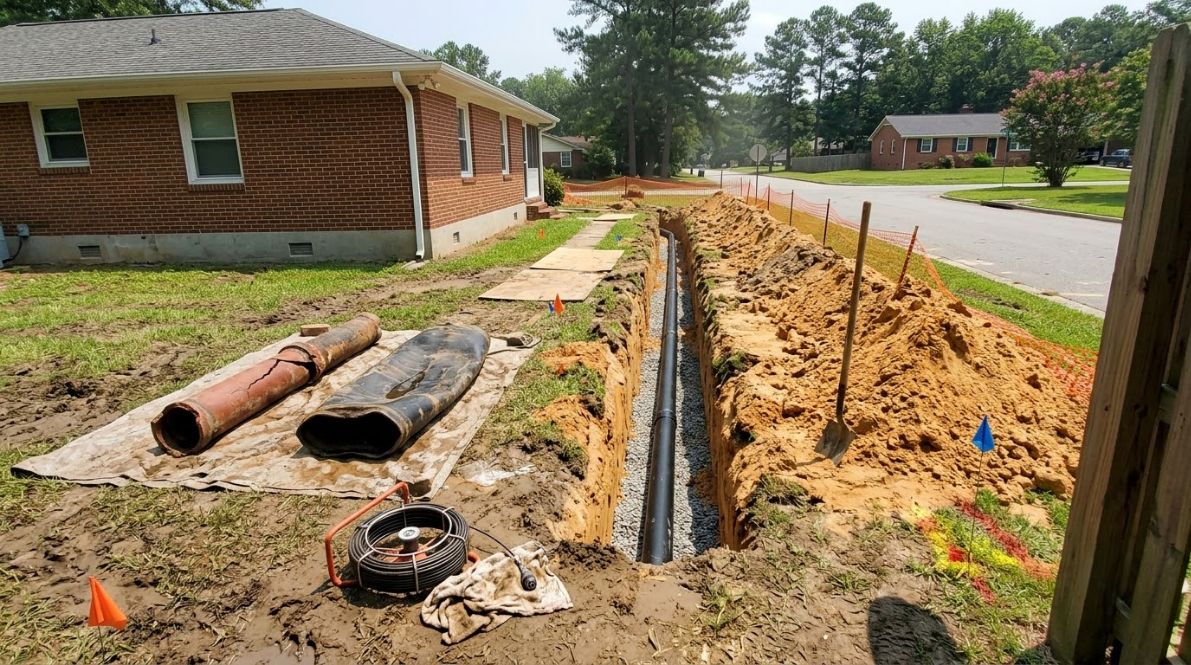
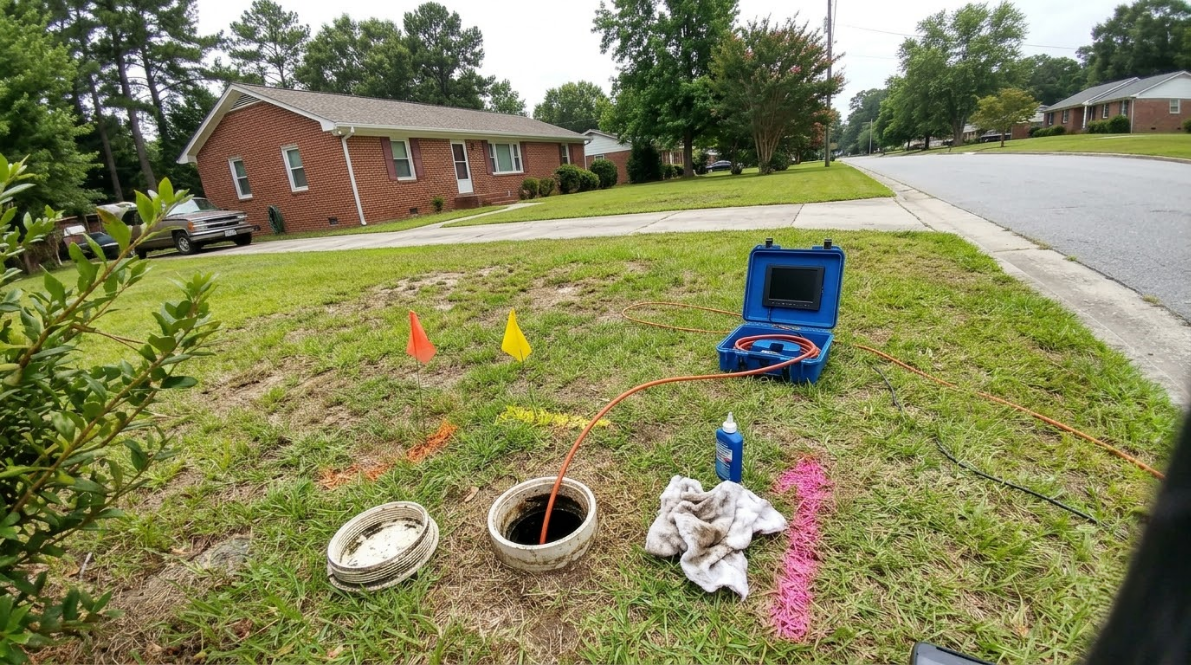
REPLACEMENT IS NOT ALWAYS THE ANSWER.
Plenty of failing laterals need a single section replaced rather than the whole run. We say so, even though the smaller job is worth considerably less. Replacement earns its place when the pipe has lost shape along its length, when the slope is wrong end to end, or when repeated repairs have simply stopped holding.
When that point does finally arrive, doing the job once and doing it properly works out far cheaper than spending another 3 years patching the same tired old line.
✓ Camera survey before recommending it
✓ Sectional repair offered where it suffices
✓ NC811 notified before excavation
✓ Correct slope and cleanouts restored
SEWER LINE REPLACEMENT
FUSED PIPE HAS NO JOINTS TO FIND.
Modern replacement materials change the arithmetic completely. PVC and high-density polyethylene do not corrode, do not scale, and carry far fewer joints for roots to find. Fusing HDPE produces a continuous pipe with no joints at all across the run, which removes the single most common failure point in older laterals. Done correctly, with proper bedding and the fall the code requires, a replacement should never be your problem again.
ACCESS SHAPES EVERY SMITHFIELD REPLACEMENT.
Driveways, mature trees, utility runs, and how far the lateral travels to the main all determine what a replacement actually involves. Some properties suit trenchless pipe bursting, which pulls a new line through the old path from two access pits. Others need open-cut excavation because the slope has to change. We work that out on site rather than quoting a method before seeing the ground.
DIG ONCE, AND DIG IN THE RIGHT PLACE.
Nothing about a sewer replacement is cheap, so the worst possible outcome is doing it twice, or digging it considerably wider than the job ever needed. Careful locating, an honest assessment of what can stay in the ground, and a plan agreed before the machine arrives are what keep the project contained. 7+ years of this work has made us fairly obsessive about that planning stage. Want your line assessed properly first?
WHY CHOOSE US FOR SEWER LINE REPLACEMENT.
REPLACEMENT ONLY WHEN JUSTIFIED
If a section repair will hold, that is what we recommend. Full replacement gets proposed when the camera shows a line that genuinely has nothing left to give.
TRENCHLESS CONSIDERED FIRST
Pipe bursting can renew a lateral from two small pits instead of a trench across your yard. Where the path and the slope permit it, that is almost always the better answer.
SLOPE RESTORED TO CODE
A replacement is only worth doing at the correct fall. Bedding, grade, and alignment are set to the plumbing code so the new line drains the way it should permanently.
UTILITIES LOCATED FIRST
NC811 is notified before any excavation, and state law requires 3 full working days of notice. Marked utilities protect your property, your neighbors, and everybody working on site.
MATERIALS BUILT TO LAST
PVC and fused HDPE resist corrosion, scaling, and root intrusion. Choosing the right one for your ground conditions is what turns a replacement into a permanent solution.
THE YARD PUT BACK PROPERLY
Backfill is compacted in layers rather than tipped in, and the surface is restored carefully. A replacement should not leave a sunken line across your lawn next spring.
WHAT WE REPLACE
OUR SEWER LINE REPLACEMENT WORK
Six replacement approaches cover the situations that actually arise on residential laterals around here. The camera survey and the site conditions together decide which one genuinely suits your property and your budget.
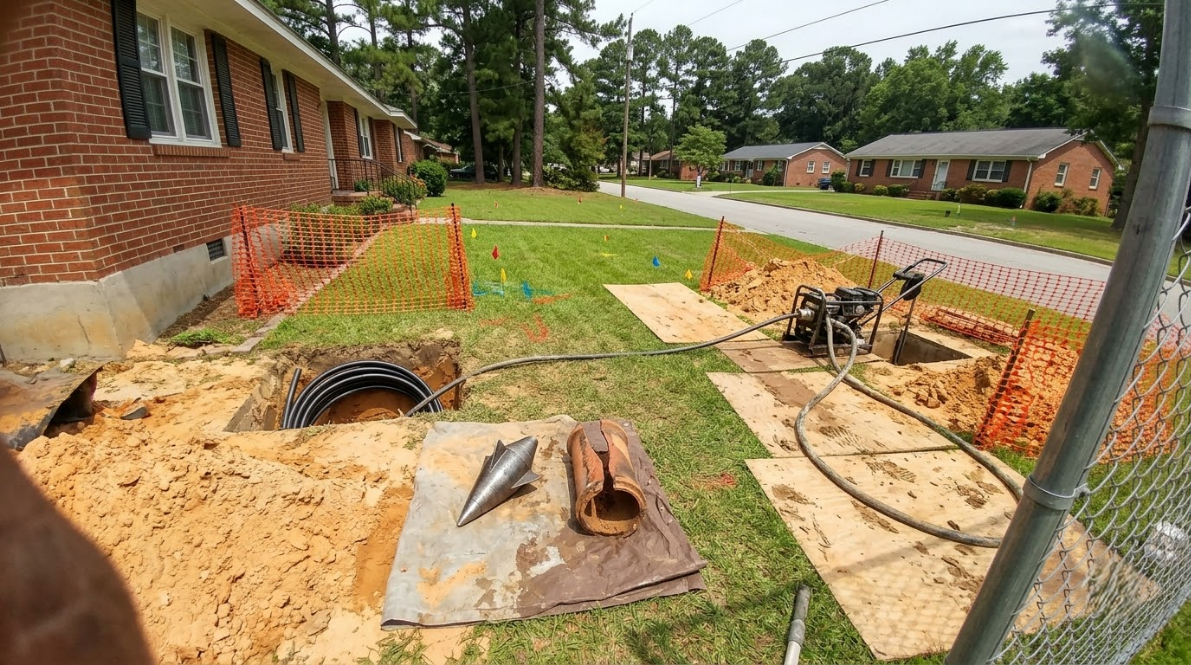
TRENCHLESS
Pipe Bursting Replacement
A bursting head fractures the old pipe outward while pulling new HDPE through the same path. Two access pits replace a full trench, and the new fused line has no joints along its length.
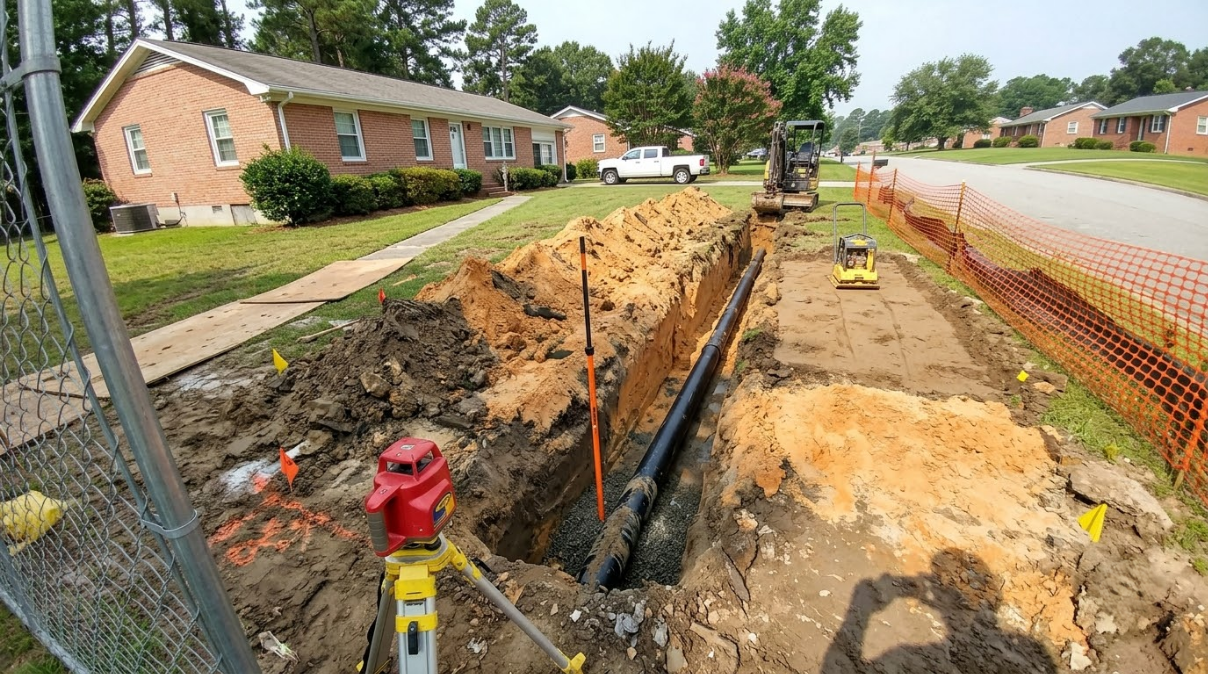
OPEN CUT
Full Excavation Replacement
Where slope must change or the path is obstructed, open-cut replacement remains the right method. The trench is kept as narrow as the work allows and backfilled in properly compacted layers.
PARTIAL
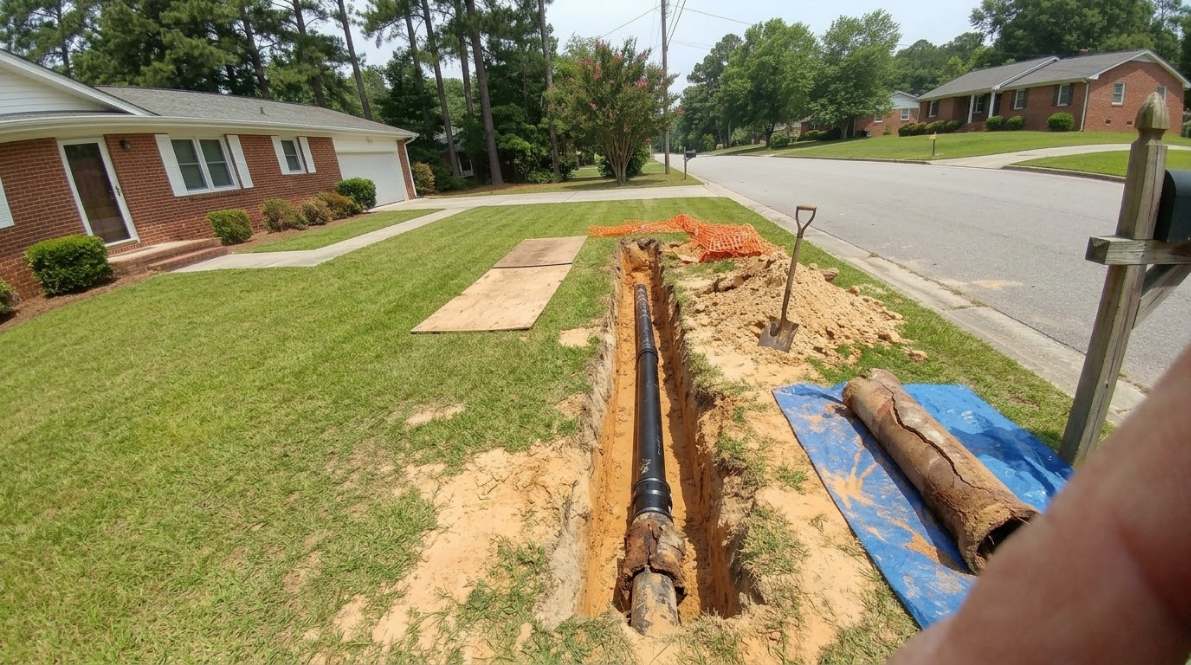
Partial Lateral Replacement
Often only the outer portion of a run has failed while the section under the house remains sound. Replacing what has actually gone keeps the disruption and the cost proportionate.
ORANGEBURG
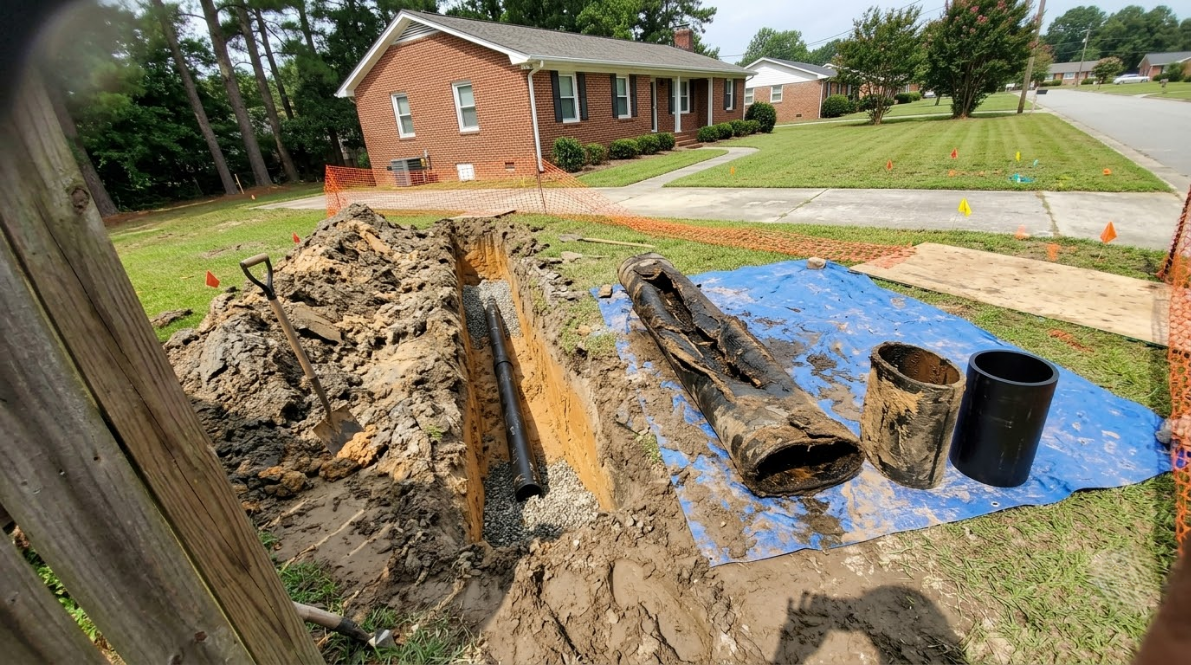
Orangeburg Pipe Replacement
Bituminous fiber pipe deforms into an oval and eventually collapses, and it cannot be repaired or lined. Homes still carrying it need full replacement, and the sooner that happens the better.
CLEANOUTS
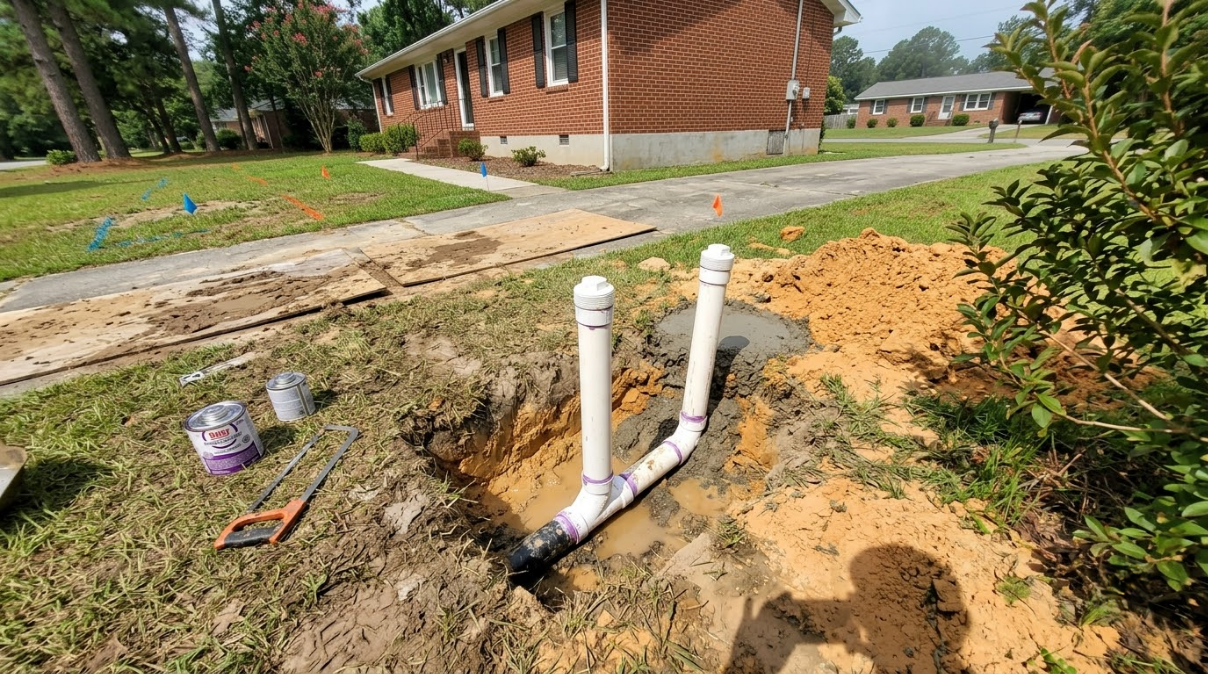
Cleanout and Access Installation
Code requires a cleanout at the junction of the building drain and the building sewer. A replacement is the ideal moment to add accessible cleanouts wherever future service will need them.
BACKWATER
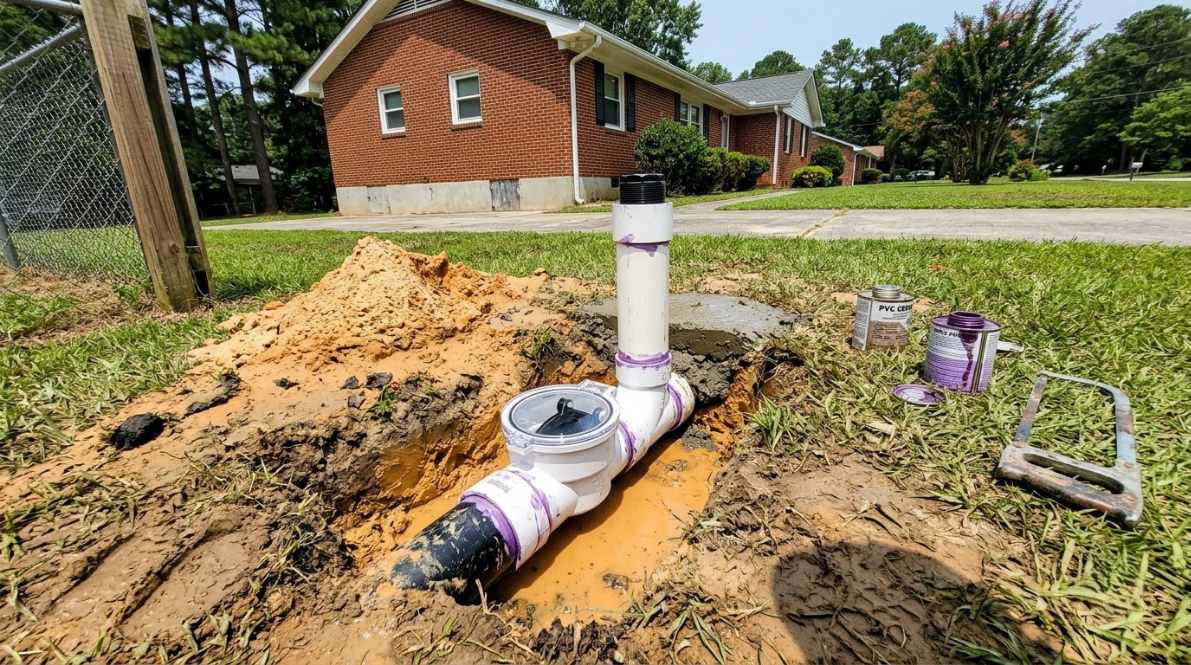
Backwater Valve Installation
Properties with fixtures sitting below the upstream manhole rim benefit greatly from a backwater valve. This gravity-operated check valve stops sewage traveling back into the building during a main line surge.
THE WORD ON OUR WORK
WHAT OUR CLIENTS SAY.
Property owners who have had a lateral replaced mention the planning as much as the work itself: knowing where the excavation would run, how many days it would take, and finding the ground genuinely restored rather than roughly filled in afterward.
Common Questions
FREQUENTLY ASKED QUESTIONS.
The questions homeowners ask most often before a sewer replacement, covering timescales, trenchless methods, permits, materials, and how a full replacement is actually distinguished from a sectional repair.
How long does it take to replace a sewer line?
Most residential replacements take 3 to 5 working days, including the excavation, pipe installation, inspection, backfill, and surface restoration. Trenchless pipe bursting frequently compresses all of that into 1 or 2 days.
Do I need a permit to replace my sewer line?
Yes. Sewer replacement is licensed plumbing work requiring a permit and inspection, coordinated through Johnston County Building Inspections. Just Right Plumbing, LLC arranges that paperwork for properties across Smithfield, NC.
Does pipe bursting actually work?
It does, and it has been standard practice for decades. A bursting head fractures the old pipe outward into the surrounding soil while simultaneously pulling the new line into the space created.
What kind of pipe is used for pipe bursting?
High-density polyethylene, fused into a continuous length with no joints. That absence of joints removes the entry points roots exploit, and HDPE carries an expected life well beyond a century.
Can you pipe burst any existing sewer material?
Clay, cast iron, and Orangeburg all burst readily. PVC is more difficult because it tends to deform rather than fracture, and concrete or steel usually rules the method out entirely.
What signs indicate a sewer line needs replacing rather than repairing?
Multiple failures along the length, an oval or collapsed cross-section, roots throughout the run, or slope that is wrong end to end. Camera footage makes that distinction obvious very quickly.
Will my yard be destroyed by a sewer replacement?
Not with careful planning. Trenchless work needs only two access pits, and open-cut trenches are kept narrow and restored in compacted layers, though established planting directly over the line rarely survives.
What happens in serious cases like a total collapse?
A collapsed line stops flow entirely and often causes a surface depression above it. That situation requires excavation at the collapse and usually full replacement, since the surrounding pipe is rarely sound.
HOW WE WORK
FROM FAILED LATERAL TO NEW LINE, HERE IS HOW.
STEP 01
Survey and confirm the diagnosis
The camera establishes whether this is genuinely a replacement or simply a sectional repair dressed up as one. You see the footage yourself before any recommendation is made about the scale of the work.
STEP 02
Assess the site and the route
Depth, path, driveways, mature trees, buried utilities, and the connection point at the main all get examined carefully. Those constraints together decide between trenchless pipe bursting and conventional open-cut excavation on your property.
STEP 03
Permit, notify, and schedule
The permit is arranged through the county, and NC811 is notified with the full 3 working days of statutory notice required. Dates are then set around site access, your schedule, and the weather forecast
STEP 04
Excavate access and install the line
Either two small access pits for pipe bursting, or one narrow trench for open-cut work. New PVC or fused HDPE is then installed on proper bedding, at exactly the fall the plumbing code requires.
STEP 05
Connect, test, and inspect
The new lateral is tied into the building drain and the public main, cleanouts are set wherever required, and the work is tested and presented for the county inspection before any backfilling starts.
STEP 06
Backfill and restore the ground
Material goes back in compacted layers to limit future settlement, and the surface is then restored as closely as possible. A final camera run confirms the new line runs correctly end to end.
Get Your Free Estimate
KNOW WHAT YOU ARE PAYING FOR, FREE.
Tell us what your sewer line has been doing and what has already been tried. We will explain what a survey would settle and give you an honest opinion on whether replacement or a section repair is the right call.
WHAT YOUR FREE ESTIMATE COVERS:
✓ Repair and replacement compared honestly
✓ Trenchless suitability assessed
✓ Excavation route planned in advance
✓ Permit and NC811 handled by us
✓ Materials and lifespans explained
✓ Ground restoration included