
Faucet Repair & Replacement
FAUCET REPAIR & REPLACEMENT in Smithfield, NC
Federal standards cap bathroom sink faucets at 2.2 gallons per minute measured at 60 psi, while a single drip per second sends more than 3,000 gallons a year quietly down the drain unnoticed. Just Right Plumbing, LLC repairs and replaces faucets throughout Smithfield, NC: worn cartridges, failed seats and stems, leaks hidden under the sink, seized supply stops, and complete fixture replacement in the cases where the body itself has finally reached the end of its working life.
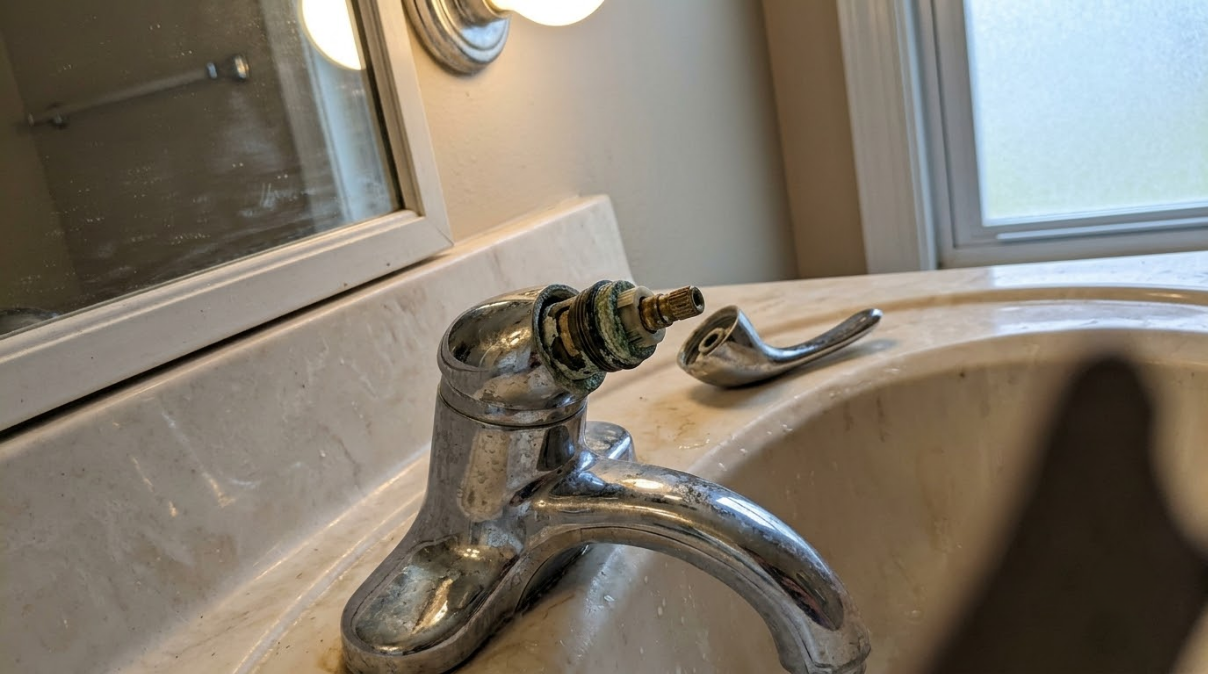
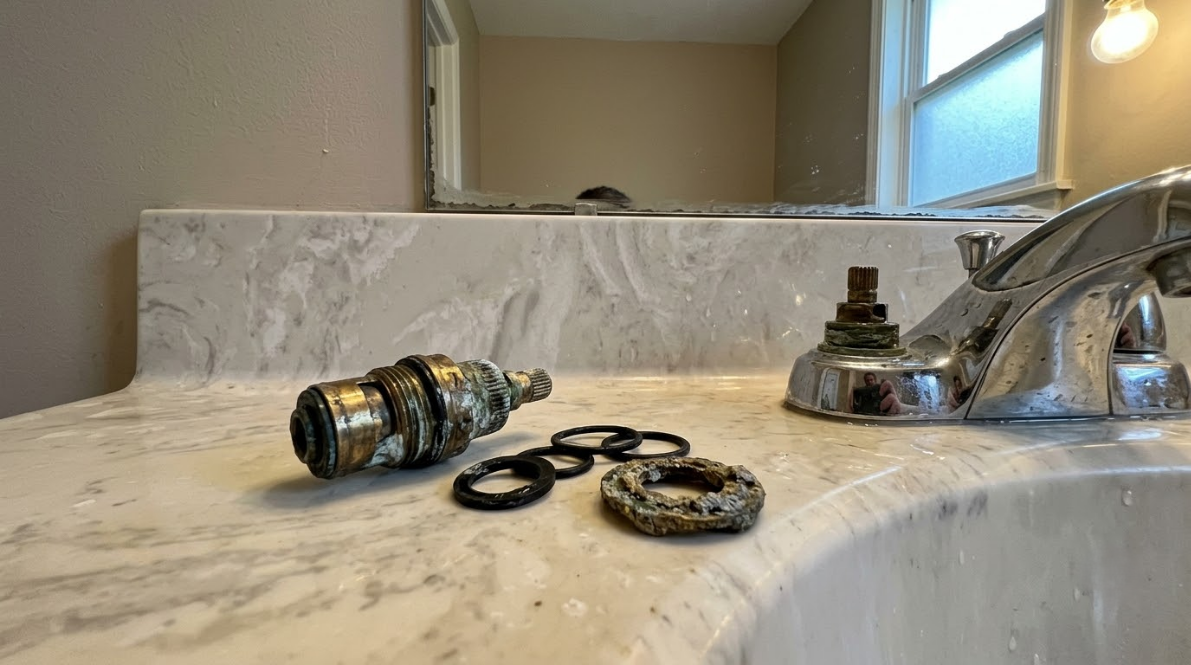
A DRIP IS A WORN PART, NOT A BAD FAUCET.
Nearly every dripping faucet has a cartridge, a seat, or an O-ring inside it that has simply worn out with use, and nearly every one of those is still available as an inexpensive repair part. Replacing an entire fixture simply because a 5 dollar cartridge has failed is common advice, and it is very rarely necessary.
What really decides it is whether parts are still made for that brand and model, and whether the fixture body itself is sound. We check both of those before recommending anything.
✓ Cartridge and stem repairs first
✓ Brand and model identified properly
✓ Supply stops renewed at replacement
✓ Licensed P1 plumber on every visit
FAUCET REPAIR & REPLACEMENT
FAUCET INTERNALS ARE NOT INTERCHANGEABLE.
Faucet internals are simply not interchangeable between makers. A cartridge from one manufacturer will not fit another, ceramic disc mechanisms differ from compression stems entirely, and some brands quietly changed their internals mid-production without ever changing the model name. Identifying exactly what is installed is most of the work here, because once that is known the repair itself is usually straightforward and the part is usually inexpensive and readily available.
HIGH PRESSURE SHORTENS FAUCET LIFE LOCALLY.
Plenty of homes around Smithfield run static pressure above the 80 psi ceiling the code sets, often without anyone realizing it. Cartridges, seals, and supply connectors all wear considerably faster under that constant strain, and a house that seems to eat faucet parts usually has a pressure problem rather than bad luck with fixtures. We gauge the pressure whenever repeat failures are part of the story.
BRAND AND MODEL DECIDE THE WHOLE REPAIR.
Working out what is actually installed, sometimes from a shape rather than any legible label, is a skill that only comes from having taken a great many of them apart. 7+ years across kitchens and bathrooms around here means most fixtures are recognizable on sight, and the correct cartridge is very often already sitting on the truck. Know the brand? Tell us and we will bring the part.
WHY CHOOSE US FOR FAUCET REPAIR AND REPLACEMENT.
REPAIR TRIED BEFORE REPLACEMENT
Most drips are a worn cartridge or seat on an otherwise sound fixture. Where the parts exist and the body is good, repair is faster, cheaper, and entirely sensible.
THE MODEL IDENTIFIED PROPERLY
Getting the right internals means knowing exactly which fixture is installed. That identification is the difference between a lasting repair and a part that nearly fits.
PRESSURE CHECKED ON REPEAT FAILURES
If faucet parts keep failing in your home, we gauge the static pressure. Above 80 psi, the fixtures are victims rather than culprits, and a regulator solves it.
SUPPLY STOPS RENEWED
Old multi-turn valves seize exactly when you need them. Replacing them with quarter-turn stops during a faucet job makes every future repair simpler and much safer.
CLEAN WORK UNDER THE SINK
Cabinet floors get protected, old sealant is removed properly, and the area is left dry and tidy. Faucet work should not leave a cabinet you avoid opening afterward.
HONEST ON WHEN TO REPLACE
Once parts are obsolete or the body is pitted, we say so. Repeating a repair on a fixture with nothing left is not a service we are interested in providing.
WHAT WE HANDLE
OUR FAUCET REPAIR AND REPLACEMENT WORK
Six services cover the faucet problems that arise in kitchens, bathrooms, laundry rooms, and outdoors. Repairs are attempted first wherever parts remain available and the fixture body itself is genuinely sound.
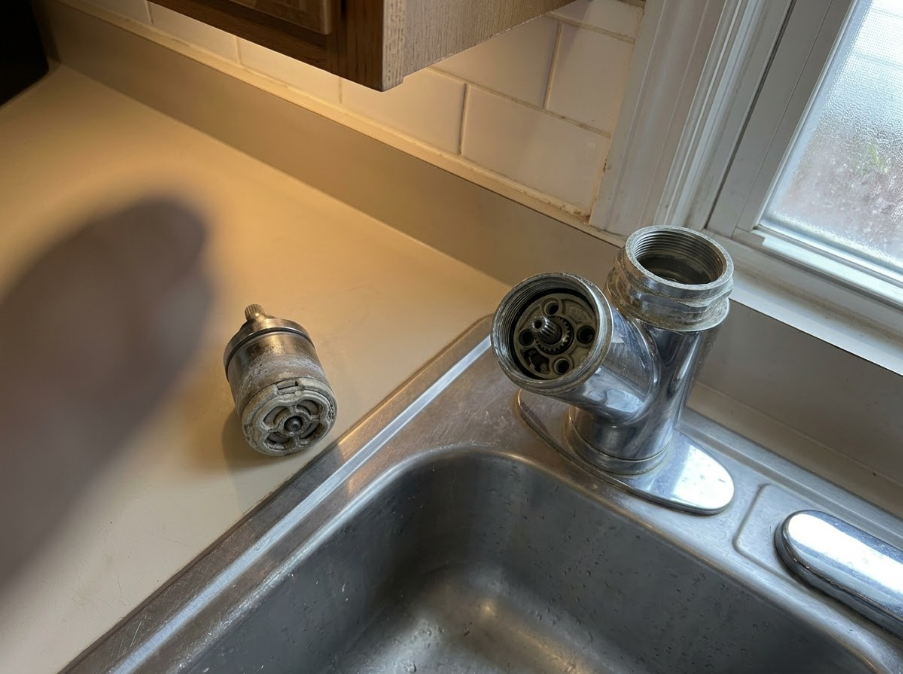
CARTRIDGES
Cartridge and Valve Repair
Dripping spouts and handles that turn without any effect almost always mean a worn cartridge or ceramic disc inside. Identifying the correct replacement for that specific model is by far the important part.
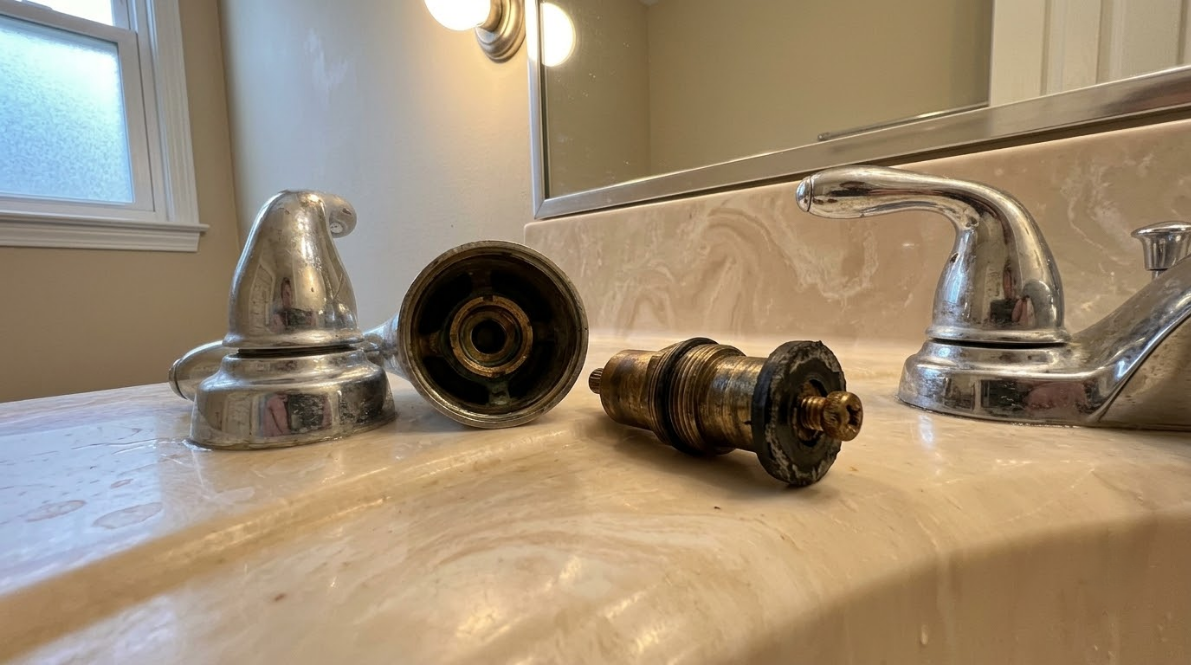
SEATS
Stem, Seat, and Washer Repair
Older compression faucets wear at both the brass seat and the washer, producing a drip that tightening the handle only makes worse. Reseating and rewashering restores the fixture properly for very little money.
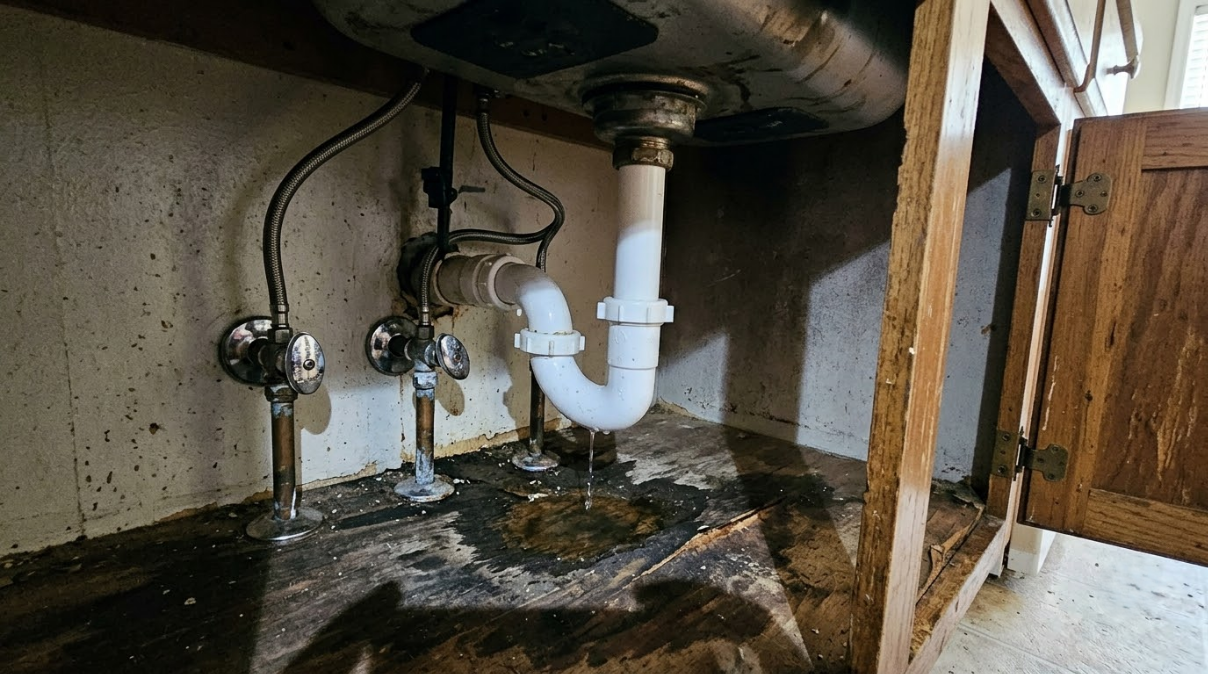
UNDER SINK
Under-Sink Leak Repair
Leaks below the basin come from supply connectors, the faucet shank nut, the drain tailpiece, or the trap. Each looks identical in a wet cabinet and each needs a different repair.
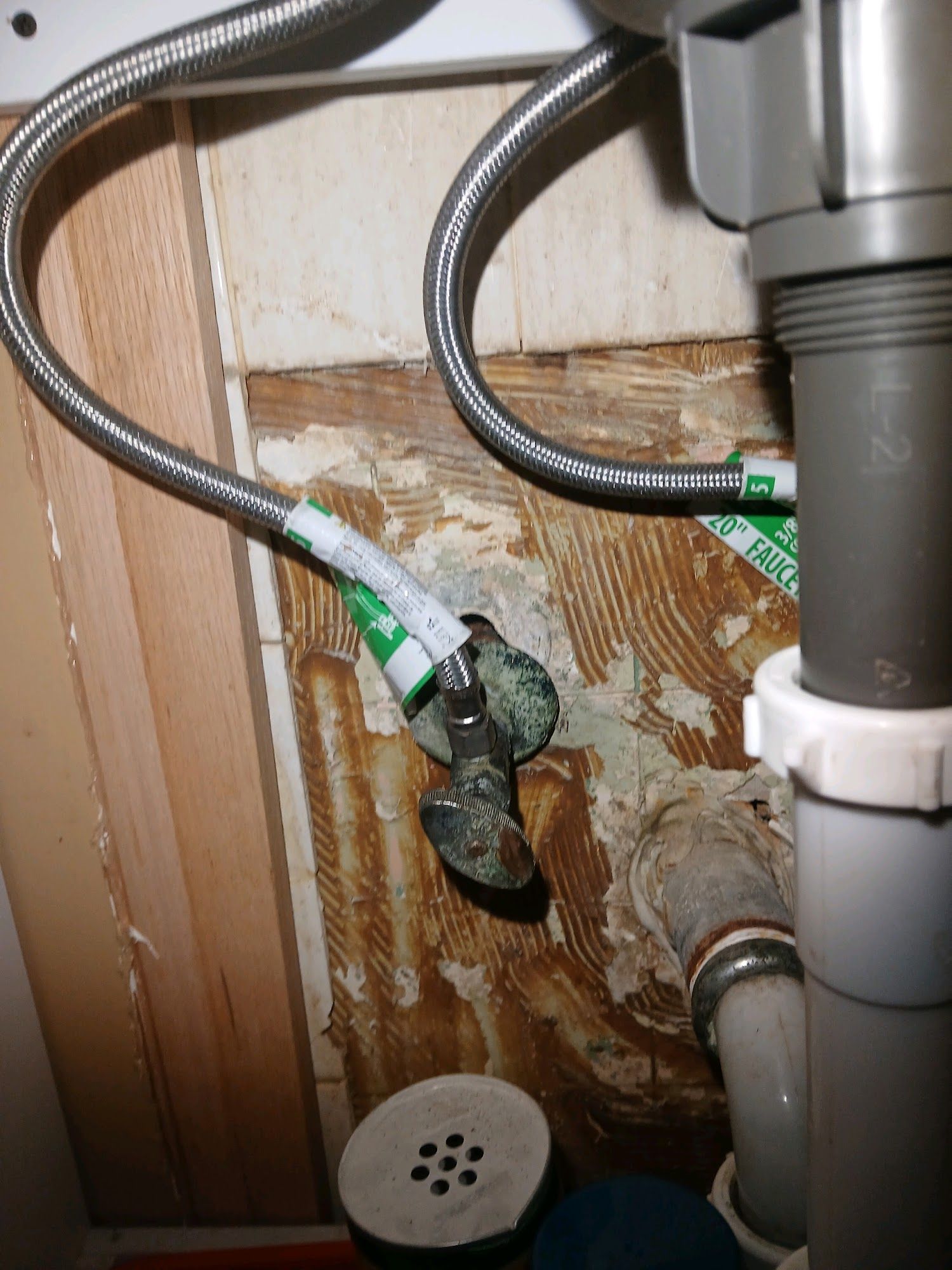
REPLACE
Faucet Replacement and Installation
New fixtures are fitted with fresh supply connectors and renewed angle stops, sealed correctly at the deck, and checked carefully for movement so the base never works loose over time.
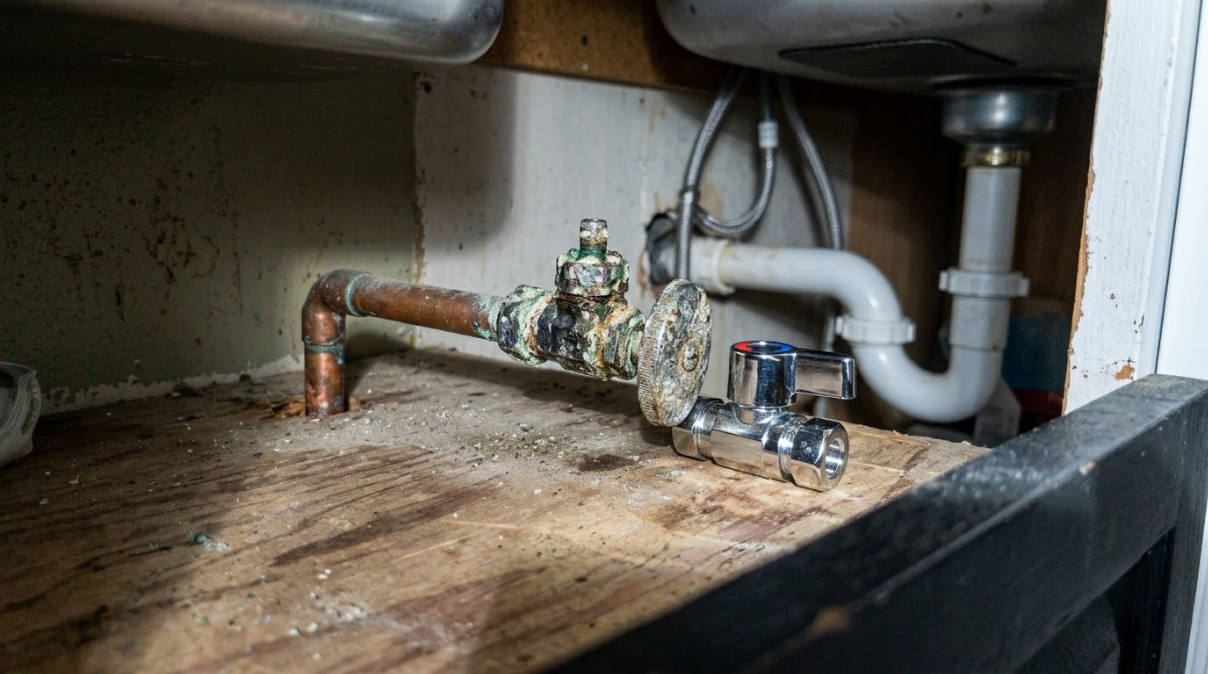
STOPS
Supply Stop Replacement
Seized angle stops make every future repair harder and turn a small emergency into a whole-house shut-off. Quarter-turn replacements go in as standard whenever a fixture is already apart on the bench.
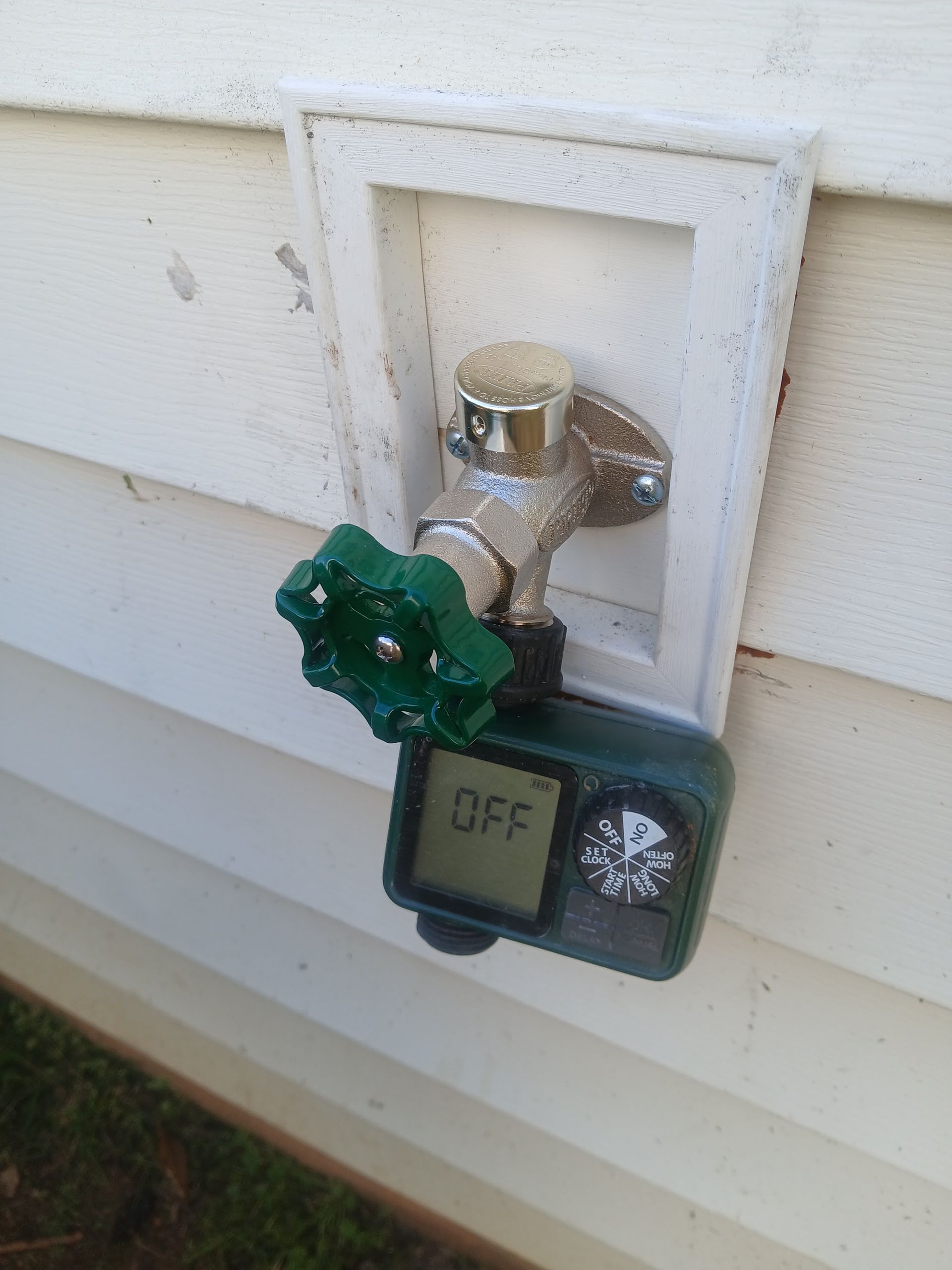
OUTDOOR
Outdoor and Utility Faucet Work
Hose bibs, laundry faucets, and utility sinks all take rough treatment and freeze damage year after year. Frost-resistant replacements fitted with working vacuum breakers solve most recurring problems out there permanently.
THE WORD ON OUR WORK
WHAT OUR CLIENTS SAY.
Customers frequently mention faucets they had already been told needed replacing coming back to life with nothing more than a cartridge, and the small courtesy of having the cabinet underneath left dry and tidy rather than damp and full of discarded old parts.
Common Questions
FREQUENTLY ASKED QUESTIONS.
Questions homeowners ask about faucets, covering causes of drips, whether repair is worthwhile, low pressure at a single fixture, and how to identify what is actually installed.
What is the most common cause of a leaking faucet?
A worn cartridge on modern fixtures, or a damaged seat and washer on older compression models. Both wear from normal use, and both are inexpensive parts on an otherwise sound faucet.
Can you repair a faucet instead of replacing it?
Usually, yes. If the manufacturer still supplies internals for that model and the body is not pitted or cracked, a repair restores the fixture completely for a fraction of replacement.
What causes a faucet to drip when turned off?
Something inside is no longer sealing. On cartridge faucets the cartridge has worn; on compression models the washer or the brass seat beneath it has. Tightening the handle only accelerates it.
Why is my kitchen faucet leaking from underneath?
Water below the sink can come from the supply connectors, the shank nut holding the faucet down, the spray hose connection, or the drain assembly. Drying everything and watching identifies which.
How much water does a dripping faucet waste?
One drip per second exceeds 3,000 gallons a year. A faster drip or several fixtures together push that considerably higher, which is why a small repair pays for itself quickly.
Why do I have low water pressure in only one faucet?
A single slow fixture is almost never a system problem. Check the aerator for debris first, then the supply stop and the cartridge, since all three restrict flow at just that outlet.
How do I identify my faucet brand and model?
Look for a name on the spout, the handle, or under the sink on the body. Where nothing is visible, photographing the fixture and the removed cartridge usually identifies it reliably.
Why should I choose Just Right Plumbing for faucet work?
We identify the model properly, repair wherever parts still exist, and check static pressure when failures keep repeating. Homeowners across Smithfield, NC appreciate not being sold a fixture they never needed.
HOW WE WORK
FROM STEADY DRIP TO SEALED FIXTURE, HERE IS HOW.
STEP 01
Identify the fixture
Brand, model, and handle type together decide which internals are needed. A photograph sent ahead often means the correct cartridge travels out with us and the whole repair finishes inside a single visit.
STEP 02
Confirm where the water is coming from
A drip from the spout, a leak at the handle base, and water sitting in the cabinet all indicate quite different failures. Establishing which one is actually happening comes before anything is dismantled.
STEP 03
Check the supply stops
Old angle stops frequently seize solid or begin weeping once they are finally turned. Testing them early avoids an unpleasant surprise partway through the repair and it identifies whether they need replacing at the same time.
STEP 04
Repair with the correct parts
Cartridges, seats, washers, and O-rings are all replaced with the correct components for that specific fixture. Mating surfaces are cleaned free of any mineral buildup so that the new parts seat down properly.
STEP 05
Replace only where repair will not hold
Obsolete internals, a cracked or pitted body, or a fixture that has already been rebuilt once all argue for replacement. That recommendation always comes with the reasoning attached rather than as a flat assertion.
STEP 06
Test, check pressure, and tidy
The fixture is run hot and cold, the cabinet beneath is checked dry, and static pressure is gauged wherever failures have been repeating. Old parts and all the packaging leave with us afterward.
Get Your Free Estimate
STOP THAT DRIP FOR GOOD, FREE.
Tell us the brand if you know it and describe where the water is appearing. We will explain over the phone whether it sounds like a repair or a replacement, and what the part is likely to be.
WHAT YOUR FREE ESTIMATE COVERS:
✓ Symptoms and brand discussed by phone
✓ Repair weighed honestly against replacement
✓ Correct cartridge identified in advance
✓ Supply stop condition checked
✓ Static pressure gauged on repeat failures
✓ Cabinet left dry and tidy