
Water Heater Replacement
Water Heater Replacement in Smithfield, NC
Once a storage water heater passes 10 years, industry guidance is unambiguous: plan the replacement rather than wait for the failure, because emergency swaps limit your choices to whatever sits on a shelf that morning. Just Right Plumbing, LLC handles planned water heater replacement across Smithfield, NC, assessing honestly whether the existing unit genuinely has nothing left in it, sizing its successor to the household rather than the label, and completing the removal, installation, and inspection inside a single scheduled visit.
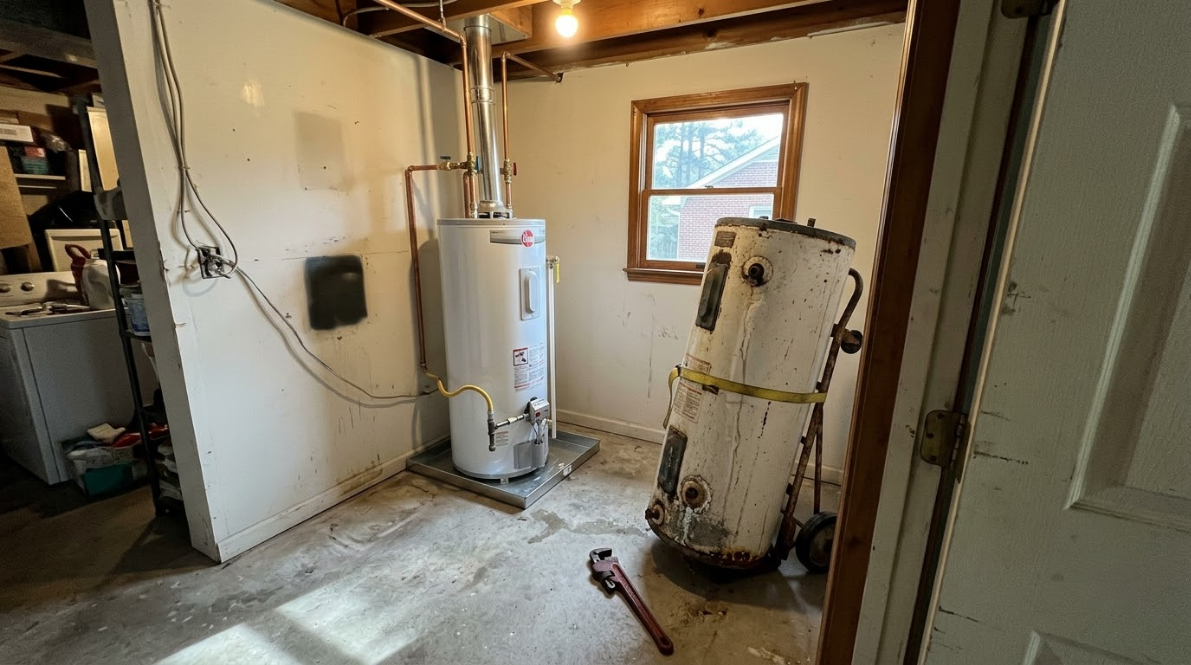
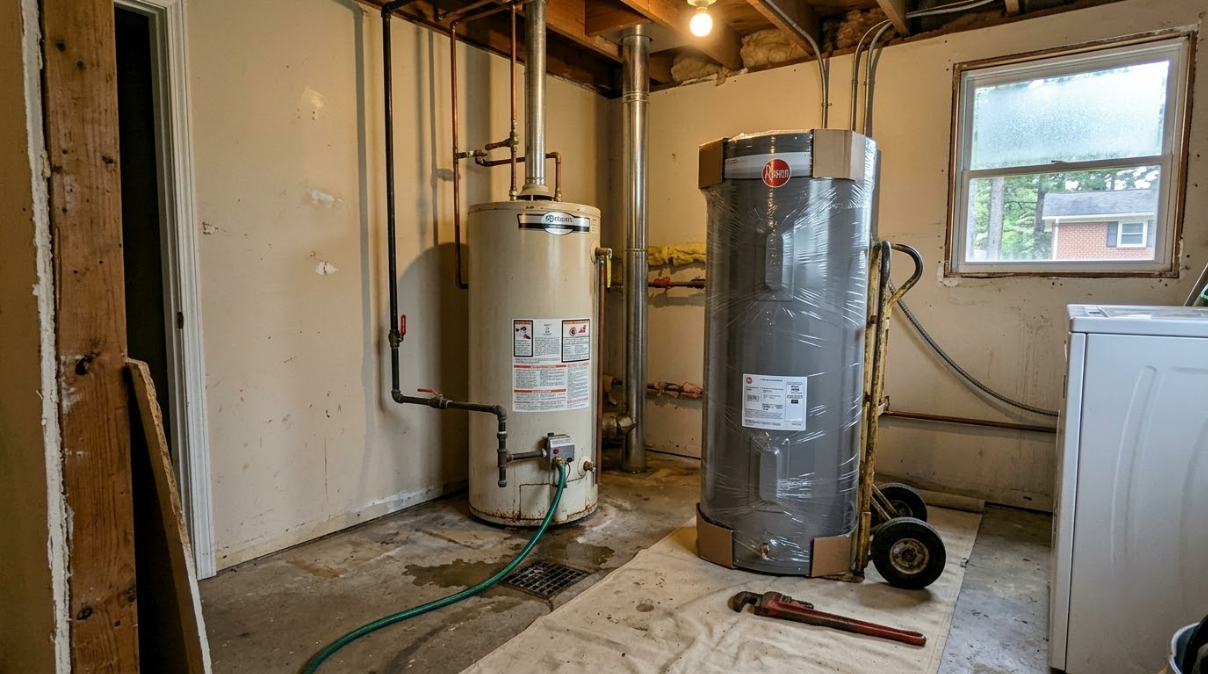
A PLANNED SWAP BEATS AN EMERGENCY ONE.
Tanks rarely fail politely. They let go overnight, or on a holiday weekend, or the week before guests arrive, and by then the only real question is how fast something can be fitted. That urgency costs money twice: once on the rushed labor, and again on a unit chosen for availability rather than efficiency.
Replacing on your own schedule reverses every part of that. You pick the model, the day, and the specification you want, and nothing in the house gets soaked in the meantime.
✓ Honest assessment before replacing
✓ Old unit drained and hauled away
✓ Sized to your household, not the label
✓ Completed in one scheduled visit
WATER HEATER REPLACEMENT
TANKS ANNOUNCE THEIR RETIREMENT EARLY.
The signals are consistent and easy to read once you know them. Rusty water on the hot side means the anode is gone and the liner is next. Visible corrosion at the fittings or seams says moisture has been present a long while. Recovery that keeps getting slower points at scale and element wear. Damp around the base that returns after cleanup is usually the tank itself, and that one has no repair.
HOMES HERE OFTEN TUCK TANKS AWAY.
Around Smithfield, water heaters sit in garages, closets, laundry rooms, and crawl spaces as often as they sit in basements. Each location changes the replacement: pan and drain requirements, ignition source elevation in garages, access for removing a full-height cylinder, and where a relief discharge can legally terminate. We check all of that before quoting so the price reflects the real job.
PULLING TANKS TEACHES YOU THE SIGNS.
There is a difference between a heater with 3 good years left and one that is running on borrowed time, and it shows up in the anode, the fittings, and the recovery curve rather than the birth date on the label. 7+ years of pulling these units teaches you to read that difference honestly. Sometimes the right answer is to wait a season. Want a straight opinion on yours?
WHY CHOOSE US FOR WATER HEATER REPLACEMENT.
AN HONEST VERDICT FIRST
We check the tank before recommending anything. If it has years left, you will hear that, even though the smaller repair is worth considerably less to us.
CHOICE INSTEAD OF WHATEVER FITS
Planning ahead means selecting the capacity, efficiency, and fuel type that suits your home rather than accepting the only model available on an emergency morning.
THE SPACE ASSESSED PROPERLY
Access, clearances, drainage, and venting all get checked before quoting. That is why the price we give holds once the old unit is actually out of the way.
DISPOSAL INCLUDED AS STANDARD
The old cylinder leaves with us. No arranging a pickup, no cylinder in the garage, no trip to the transfer station with a rusted tank in the back seat.
CODE CORRECTIONS ROLLED IN
Missing pans, wrong discharge piping, and absent expansion control get fixed during replacement. Doing it now costs a fraction of doing it as a separate visit later.
FINISHED IN A SINGLE DAY
Standard replacements are completed the same day, including removal, installation, filling, testing, and a proper cleanup afterward. Hot water is usually back well before the evening arrives.
WHAT WE REPLACE
OUR WATER HEATER REPLACEMENT WORK
Six replacement scenarios cover almost every call. Whichever applies to your home, the old unit leaves with us and the new one is fitted to current code and tested under load.
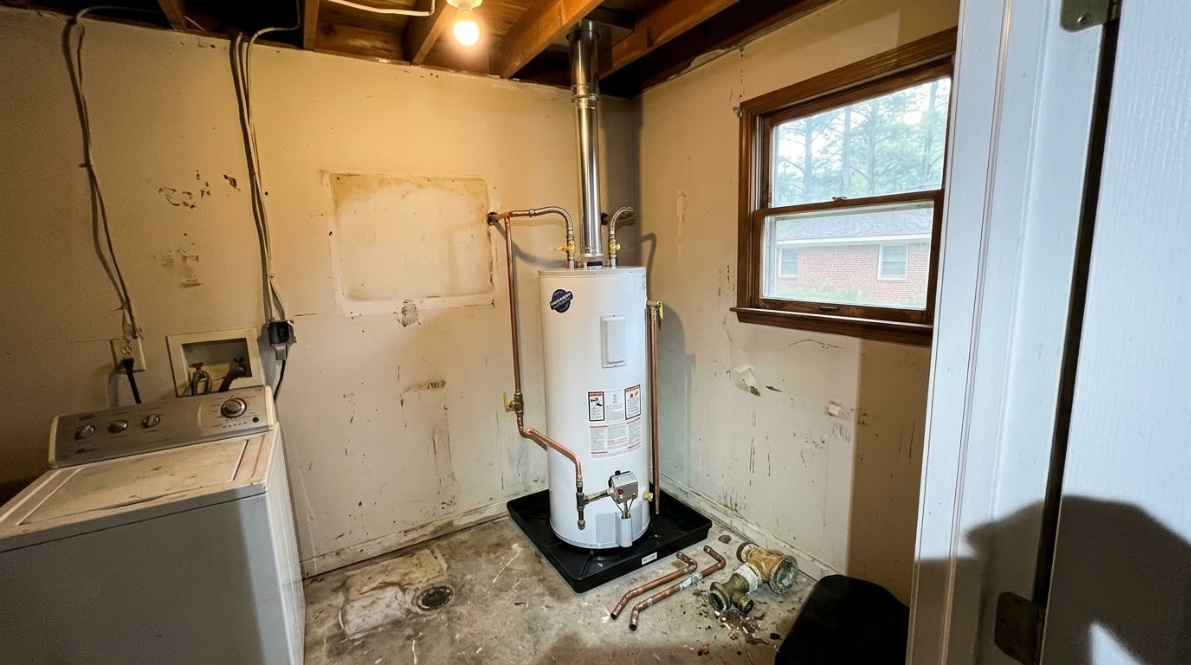
LIKE FOR LIKE
Standard Tank Replacement
Same fuel, same capacity, same location, done properly. Connections are remade rather than reused, the pan and discharge are corrected where needed, and the whole installation is left ready for inspection.
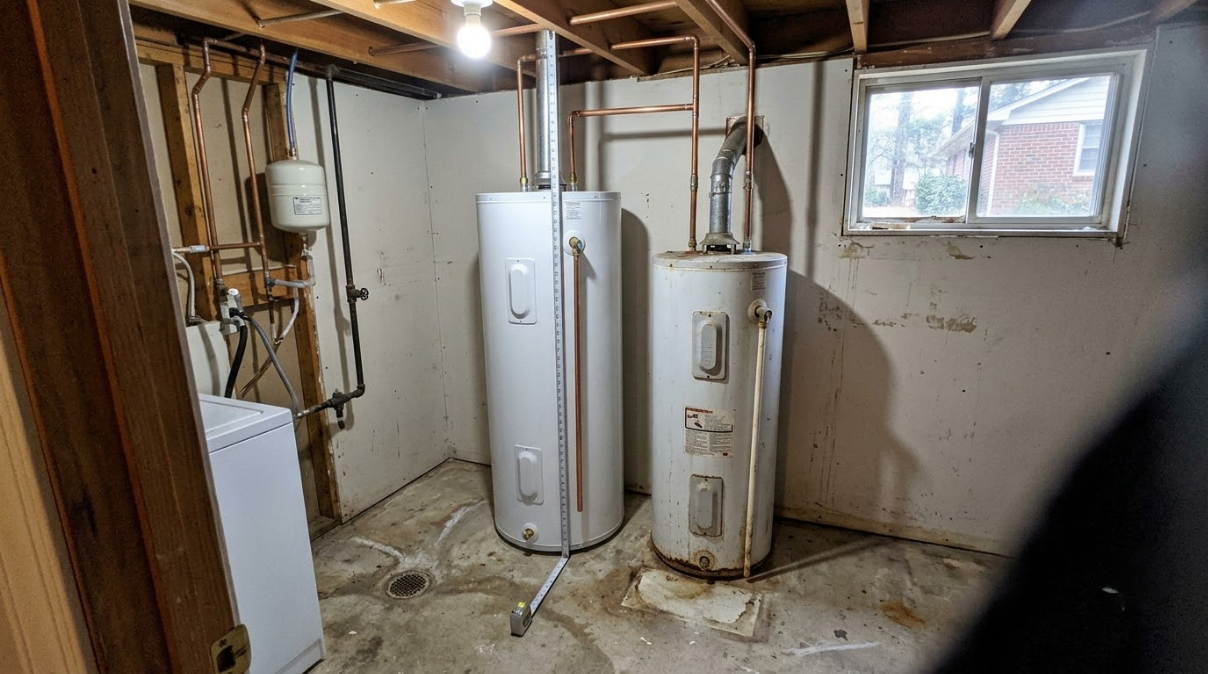
CAPACITY CHANGE
Upsizing and Downsizing
Households change, and so should the tank. Moving from 40 to 50 gallons or back again needs clearance, connection, and expansion checks rather than simply swapping one cylinder for another.
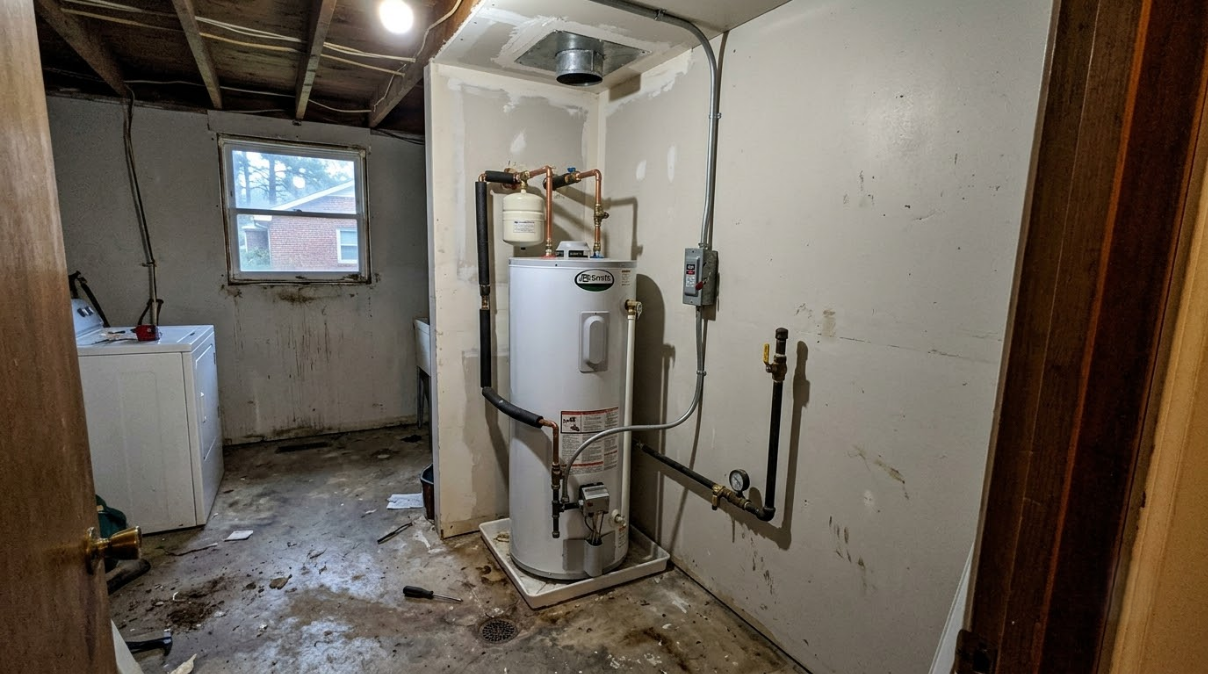
FUEL CHANGE
Gas to Electric Conversions
Switching fuel means new supply, capping what is no longer needed, and reworking venting entirely. It is a permit job, and it is worth planning properly rather than deciding on a failure morning.
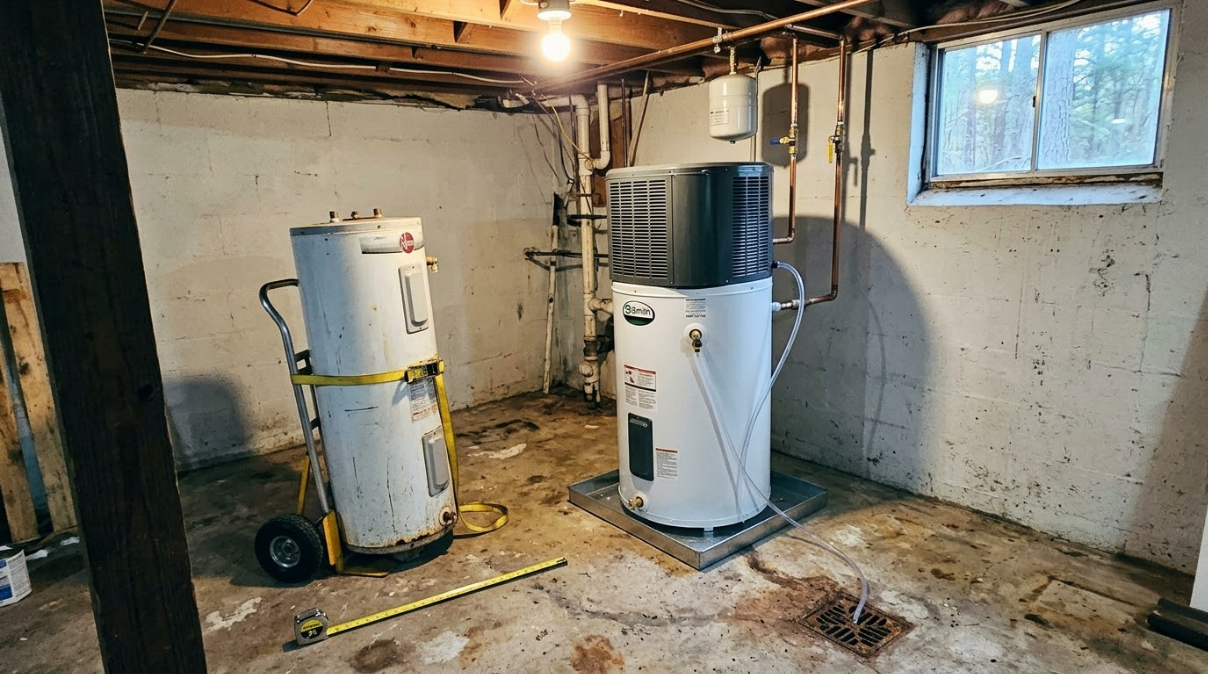
EFFICIENCY
Heat Pump Upgrade Replacement
Replacing a standard electric tank with a hybrid unit can cut water-heating energy sharply. The space needs adequate air volume and condensate drainage, which we assess honestly before recommending it.
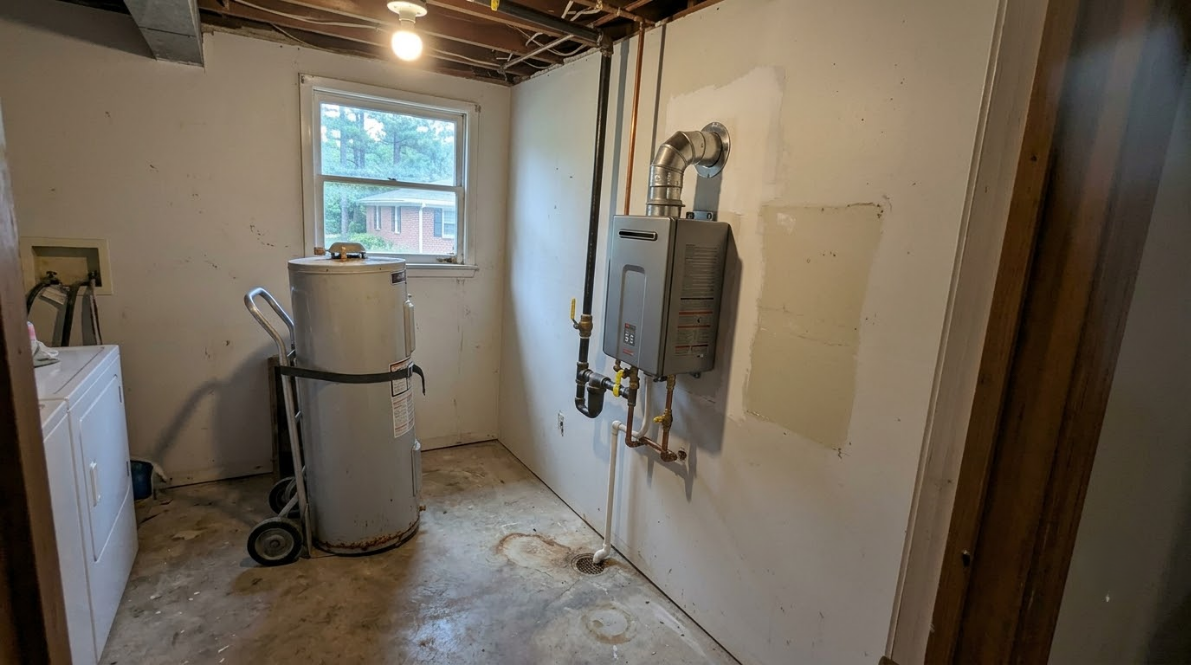
TANKLESS SWITCH
Tank to Tankless Conversion
Going tankless changes gas sizing, venting, and condensate handling completely. Where a home genuinely suits it, the payoff is endless hot water and a considerably longer service life from the equipment itself.
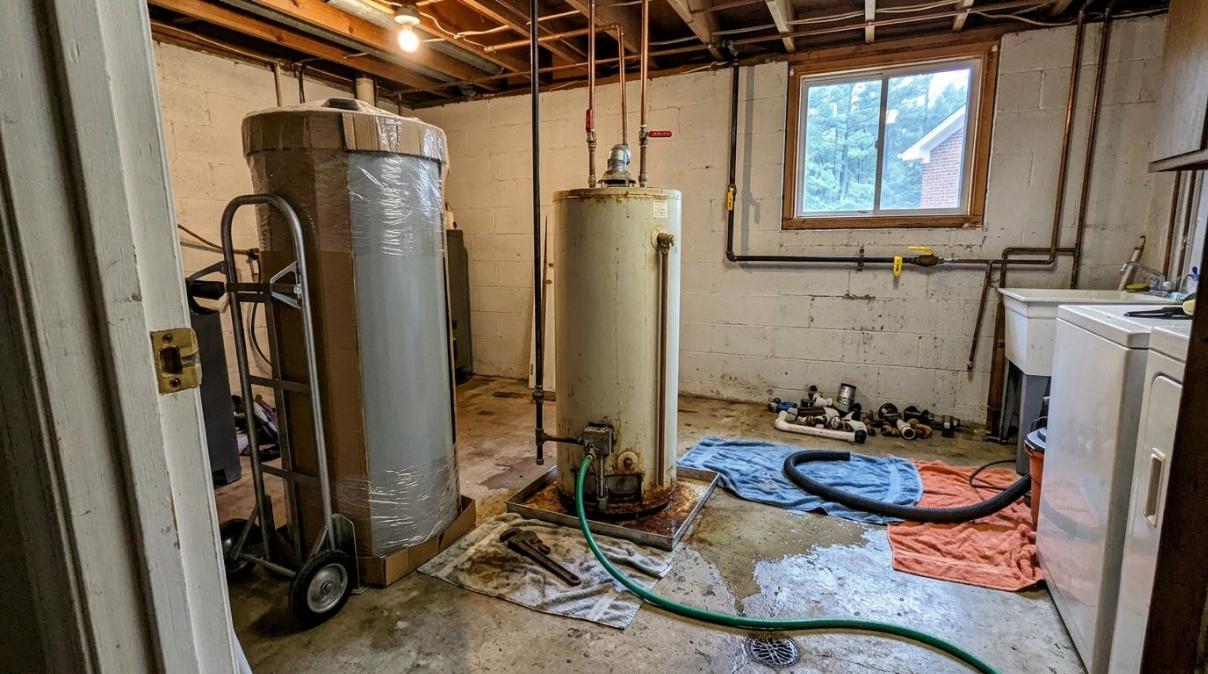
EMERGENCY
Failed Tank Replacement
When a tank has already let go, we shut it down, control the water, and get a suitable unit fitted quickly, without skipping the pan, discharge, and expansion details in the rush.
THE WORD ON OUR WORK
WHAT OUR CLIENTS SAY.
The feedback we hear most often is about being given a straight answer on whether replacement was really necessary at all, about the old unit being taken away without any fuss, and about hot water being restored on the same day the decision was finally made.
Common Questions
FREQUENTLY ASKED QUESTIONS.
Questions homeowners ask most about replacing a water heater, covering lifespan, warning signs, capacity changes, timing, and whether upgrading to a different type is worth considering.
When should a water heater be replaced?
Once a tank passes 10 years, planning a replacement is sensible. Rusty hot water, corrosion at seams or fittings, recovery that keeps slowing, and damp that returns after cleanup all argue for acting sooner.
How long does a water heater last?
Conventional storage tanks generally give 8 to 12 years, and hybrid heat pump units are commonly rated around 13. Water conditions, pressure, sediment, and whether the anode was ever replaced move that considerably.
Should you replace a water heater before it breaks?
Usually yes. Planned replacement lets you choose the model, the efficiency, and the day. Emergency replacement limits you to whatever is available and adds the cost of drying out whatever got wet.
How do you know if a water heater is bad?
Look for rust colored hot water, corrosion at the fittings or the seam, water pooling at the base that keeps returning, and a recovery time that has slowly stretched out over a year or two.
Can you replace a 40 gallon water heater with a 50 gallon?
Often, yes, provided the space allows the extra height and diameter and the connections can be adapted. Clearances, the pan, and expansion control all need rechecking rather than assuming the old setup transfers.
Should I switch to a tankless water heater?
It depends on the house. Tankless units last much longer and never run out, but they need gas sizing, venting, and sometimes electrical work. We will tell you honestly whether yours is a good candidate.
How long does it take to replace a water heater?
A like-for-like swap typically runs 2 to 4 hours from arrival to hot water. Fuel changes, relocations, capacity increases, and correcting existing code faults extend that into a longer half-day job.
Why should I choose Just Right Plumbing for replacement?
We assess before we replace, size the new unit to your household, and take the old one away. Homeowners around Smithfield, NC value hearing when a tank still has years left.
HOW WE WORK
FROM AGING TANK TO NEW UNIT, HERE IS HOW.
STEP 01
Assess what you currently have
Age, anode condition, corrosion, recovery time, and the state of the existing connections all get examined properly. Sometimes that assessment ends with a recommendation to wait a season, and we are perfectly happy saying so.
STEP 02
Match a new unit to the household
Capacity, first hour rating, fuel type, and efficiency rating are all chosen around how your home actually consumes hot water, rather than around its square footage or the number of bedrooms it happens to have.
STEP 03
Check the space and the code faults
Clearances, pan requirements, discharge routing, venting, and expansion control all get reviewed carefully before quoting, so anything the old installation got wrong is priced into the job rather than sprung on you later.
STEP 04
Agree a written price and a date
You receive one written price covering the equipment, labor, removal, disposal, permit, and any corrections. Then we book a day that genuinely suits your household rather than one that happens to suit our schedule.
STEP 05
Remove, install, and inspect
The old tank is drained down and hauled away, the new one is set and connected to current code requirements, and the county inspection is coordinated wherever the permit happens to require one.
STEP 06
Commission and hand over
The unit is filled, purged of air, tested under pressure, and set to a safe temperature. You get the paperwork, the shut-off locations, and the simple annual maintenance schedule that keeps the warranty valid.
Get Your Free Estimate
FIND OUT IF IT IS TIME YET, FREE.
Tell us the age of your tank and what it has started doing, and we will give you a straight opinion over the phone at no charge, along with a price for replacement if that is genuinely the right call.
WHAT YOUR FREE ESTIMATE COVERS:
✓ An honest verdict on the existing tank
✓ Capacity and fuel type recommendations
✓ Removal and disposal included
✓ Existing code faults identified
✓ Permit and inspection coordination
✓ A scheduled day that suits you