Tankless Water Heater Repair
Tankless Water Heater Repair in Smithfield, NC
Scale on a tankless heat exchanger is what erodes the 20-year service life these units are rated for, and it builds up quietly for a long while before any error code ever appears on the display panel. Just Right Plumbing, LLC repairs and services tankless water heaters across Smithfield, NC: descaling and flushing, ignition and flame faults, flow sensor errors, venting restrictions, and the cold water sandwich complaints that send perfectly good units off to the scrapyard years too early.
AN ERROR CODE IS A STARTING POINT.
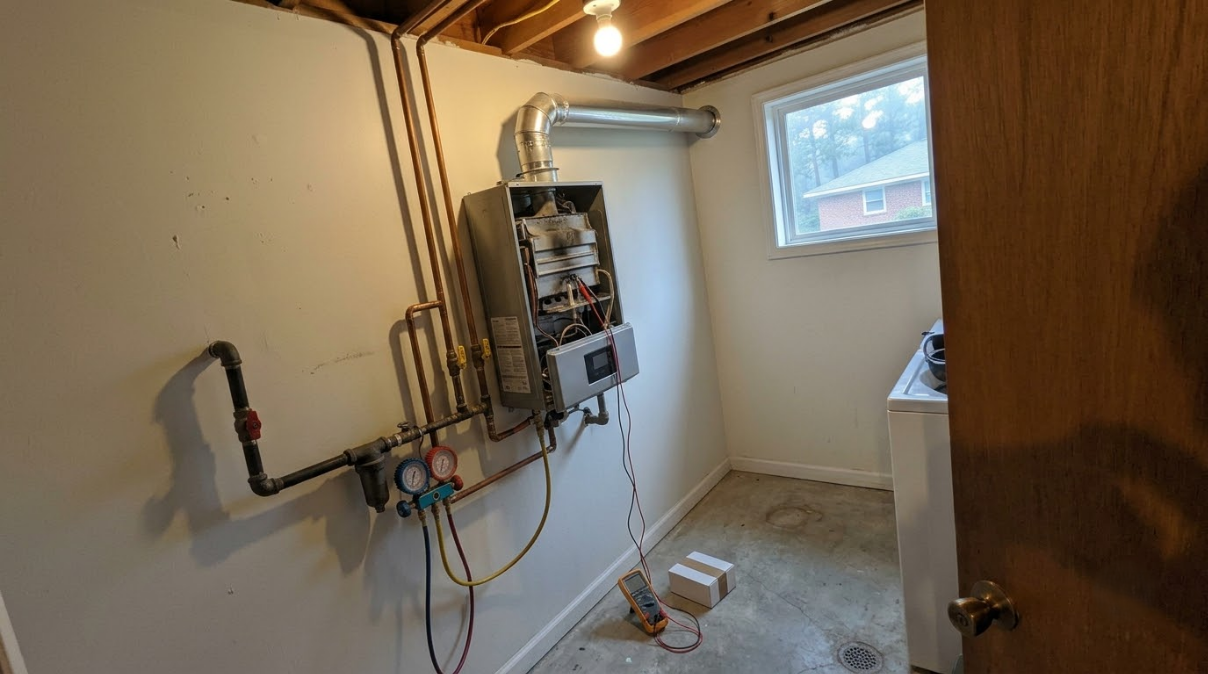
Manufacturers put diagnostic codes on the display for very good reason, but a code only ever identifies a symptom rather than its underlying cause. An ignition failure can mean inadequate gas supply, a blocked intake, a failed igniter, a dirty flame sensor, or a vent termination that has been slowly obstructing itself since the day of installation.
Reading the code, and then methodically testing each of the things it could actually mean, is the entire job. Replacing parts simply because the display hinted at one is how expensive mistakes happen.
✓ Diagnosis by testing, not guessing
✓ Descaling and filter service included
✓ Gas, venting, and flow all checked
✓ Licensed P1 plumber on every visit
TANKLESS WATER HEATER REPAIR
MOST TANKLESS FAULTS ARE MAINTENANCE FAULTS.
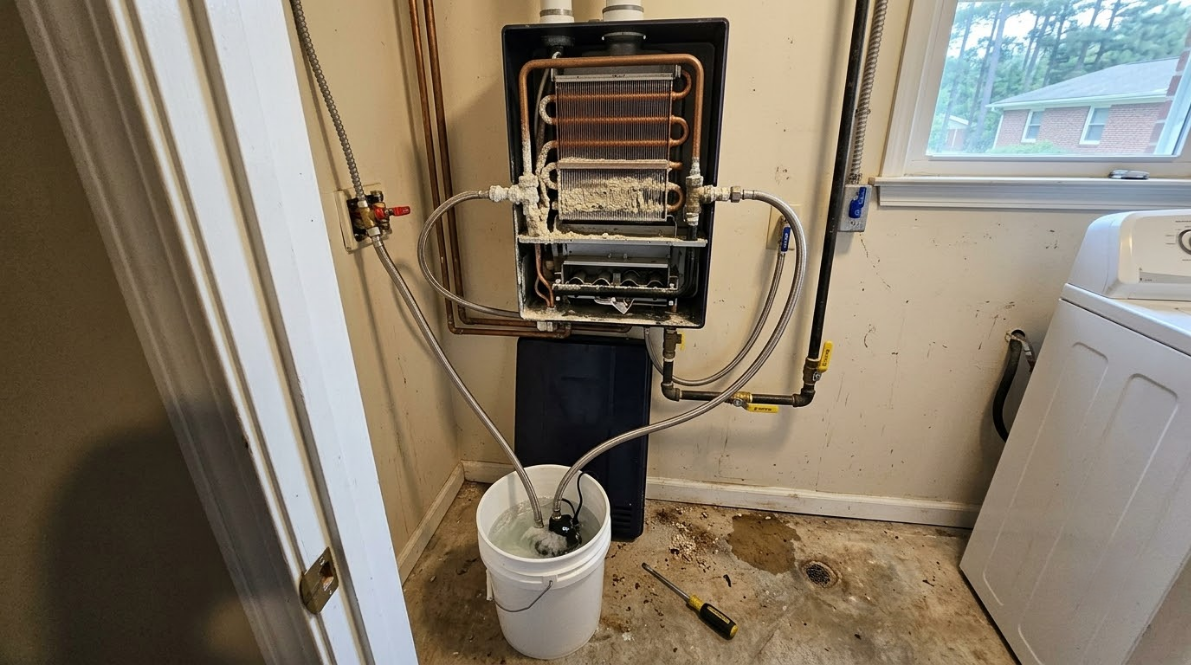
Tankless units are not fragile, but they are unforgiving about neglect. Scale narrows the passages inside the heat exchanger, which reduces flow, raises operating temperature, and eventually triggers the protective shutdowns owners read as failure. A clogged inlet filter screen produces the same symptoms from a different direction. Both are service items rather than repairs, and both are cheaper than the replacement they get mistaken for.
HARD WATER IS NOT ALWAYS THE CULPRIT HERE.
Municipal supply around Smithfield comes from the Neuse River and arrives relatively soft, so units in town scale more slowly than the manuals assume. Homes on private wells outside the town limits are a different story entirely. That difference changes how often a unit genuinely needs descaling, and we would rather set a realistic interval than sell an annual service that yours does not require.
ERROR CODES ARE A LANGUAGE, AND WE READ IT.
Every manufacturer numbers their faults differently, and the same three digits can mean very different things depending on the badge on the front. 7+ years spent around these appliances means we start from what the code genuinely indicates on your particular unit rather than from a general guess. That frequently saves an entire diagnostic visit, and quite frequently it saves a part as well. Tell us the code and the brand?
WHY CHOOSE US FOR TANKLESS REPAIR.
TESTED BEFORE ANYTHING IS REPLACED
Gas pressure, flow rate, ignition sequence, and venting all get checked properly. Parts are only fitted once the testing has confirmed which component genuinely failed.
DESCALING DONE THOROUGHLY
A proper flush circulates through the exchanger long enough to actually clear it, and the inlet filter screen gets cleaned at the same time rather than being overlooked.
THE INSTALL GETS REVIEWED TOO
Undersized gas lines and marginal venting cause faults that look like appliance problems. We check the installation behind the unit, because that is often where the answer sits.
REALISTIC SERVICE INTERVALS
Your water conditions determine how commonly descaling is needed, not a generic schedule. We will tell you honestly if your unit can safely go longer between services.
REPAIR KEPT AHEAD OF REPLACEMENT
These units are built to last 20 years. We work hard to keep yours doing that rather than treating an error code as an opportunity to quote a new appliance.
CLEAR EXPLANATIONS AFTERWARD
You hear what the fault was, what caused it, and what to watch for. Tankless owners who understand their unit call us far less often, which suits everybody.
WHAT WE SERVICE
OUR TANKLESS REPAIR WORK
Six service areas account for very nearly every tankless call we take. Most are resolved inside a single visit, and a good number turn out to be maintenance items rather than genuine component failure.
DESCALING
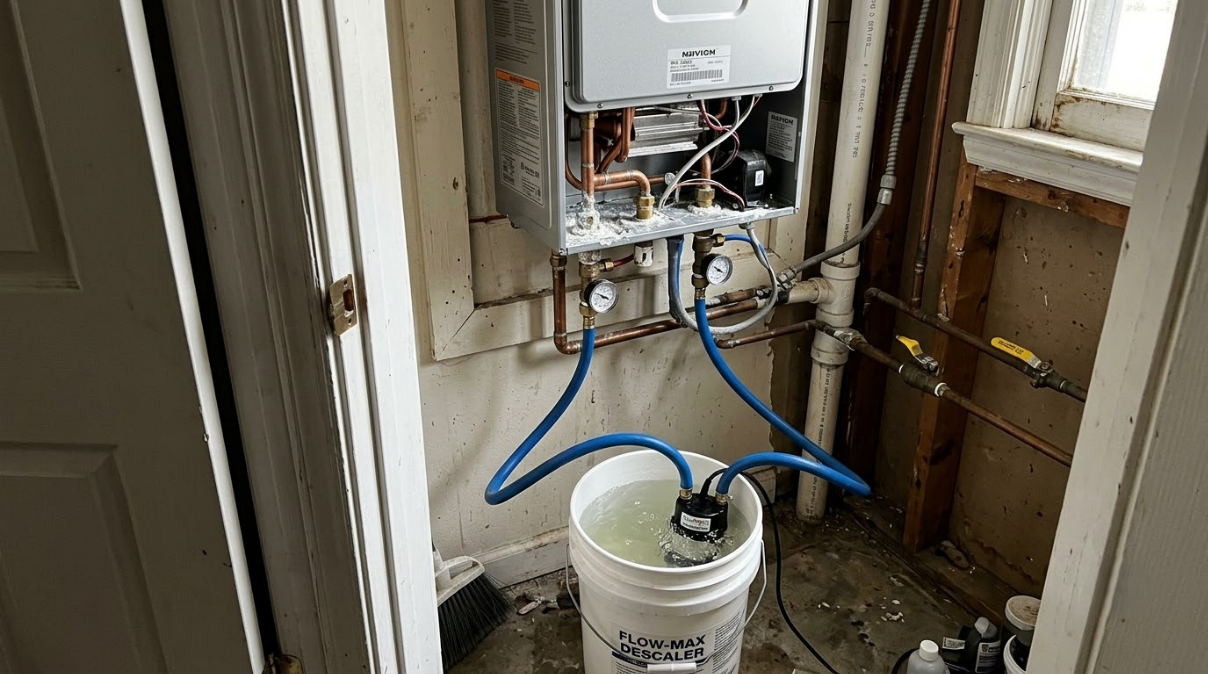
Descaling and Flushing Service
Mineral scale inside the heat exchanger restricts flow and forces the unit to work harder than it should. A circulated flush clears it, restores output, and quietly protects the appliance warranty.
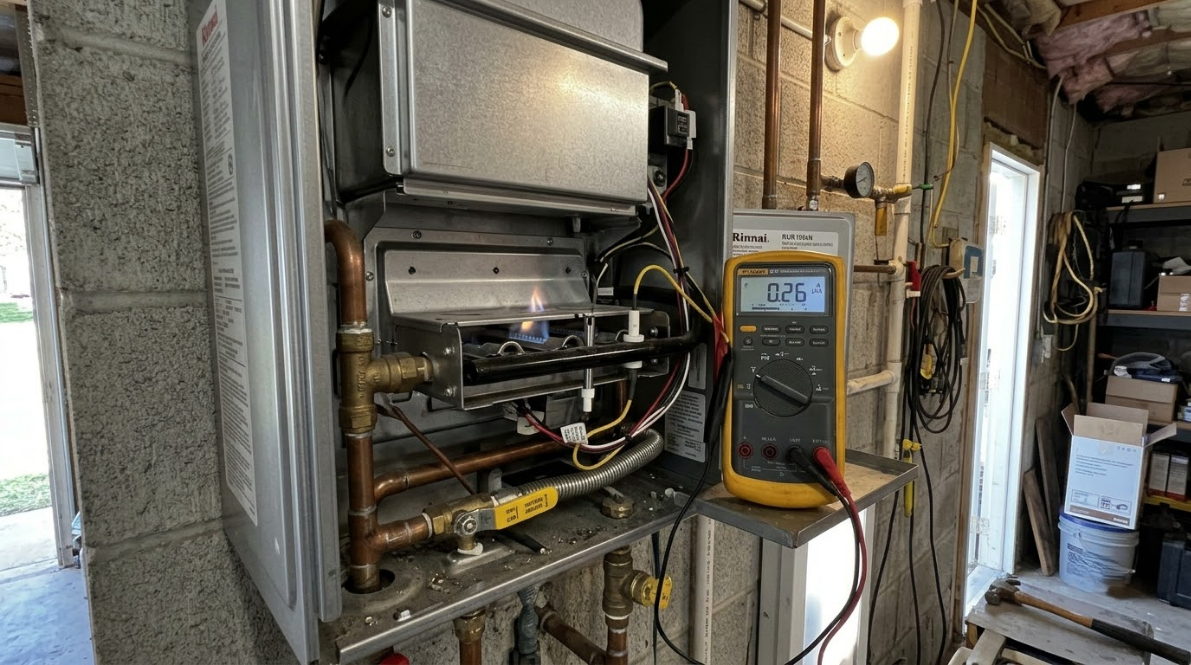
IGNITION
Ignition and Flame Fault Repair
Units that will not fire, or that lock out shortly after starting, usually point to gas supply, igniters, flame sensors, or restricted combustion air. Each gets tested rather than replaced hopefully.
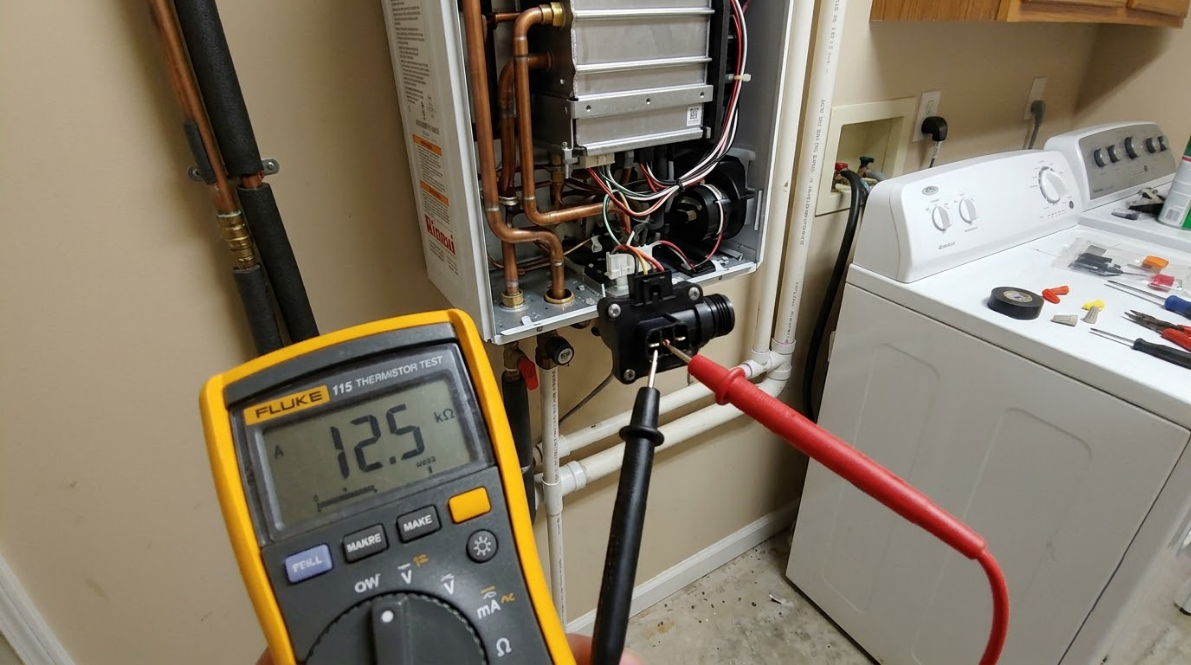
SENSORS
Flow and Temperature Sensor Repair
Flow sensors and thermistors drift and fail, producing erratic temperatures or a unit that refuses to fire at low flow. Replacing the correct sensor requires knowing which reading is actually wrong.
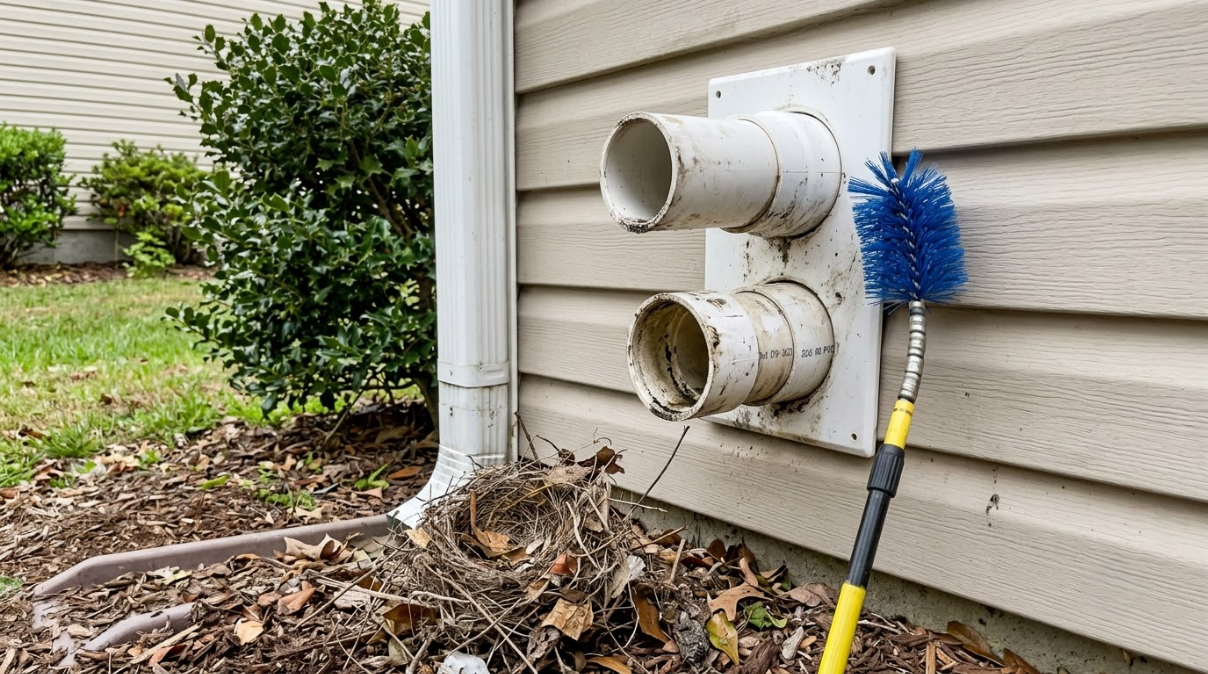
VENTING
Vent and Intake Clearing
Nests, debris, and obstructed terminations all restrict combustion air and trigger repeated protective shutdowns. Clearing and correcting the vent path solves faults that would otherwise look exactly like outright appliance failure.
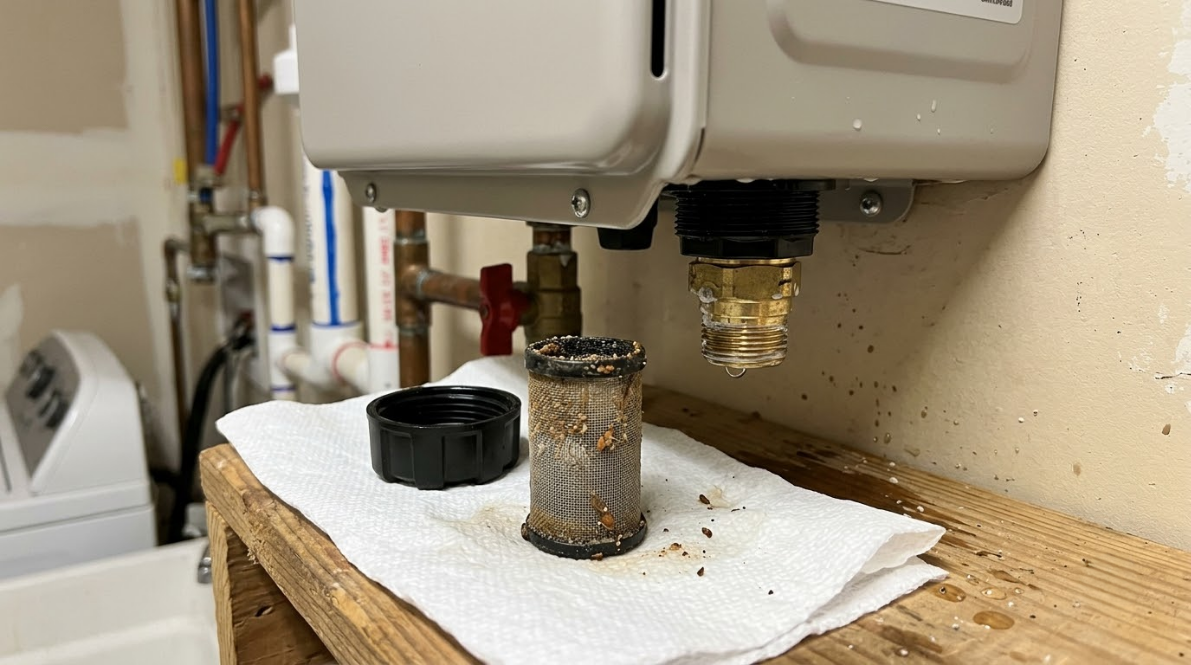
FILTERS
Inlet Filter and Screen Service
The inlet screen catches sediment before it can reach the heat exchanger, and it blocks up silently over time. Cleaning it is quick, inexpensive, and resolves a surprising share of low-flow complaints.
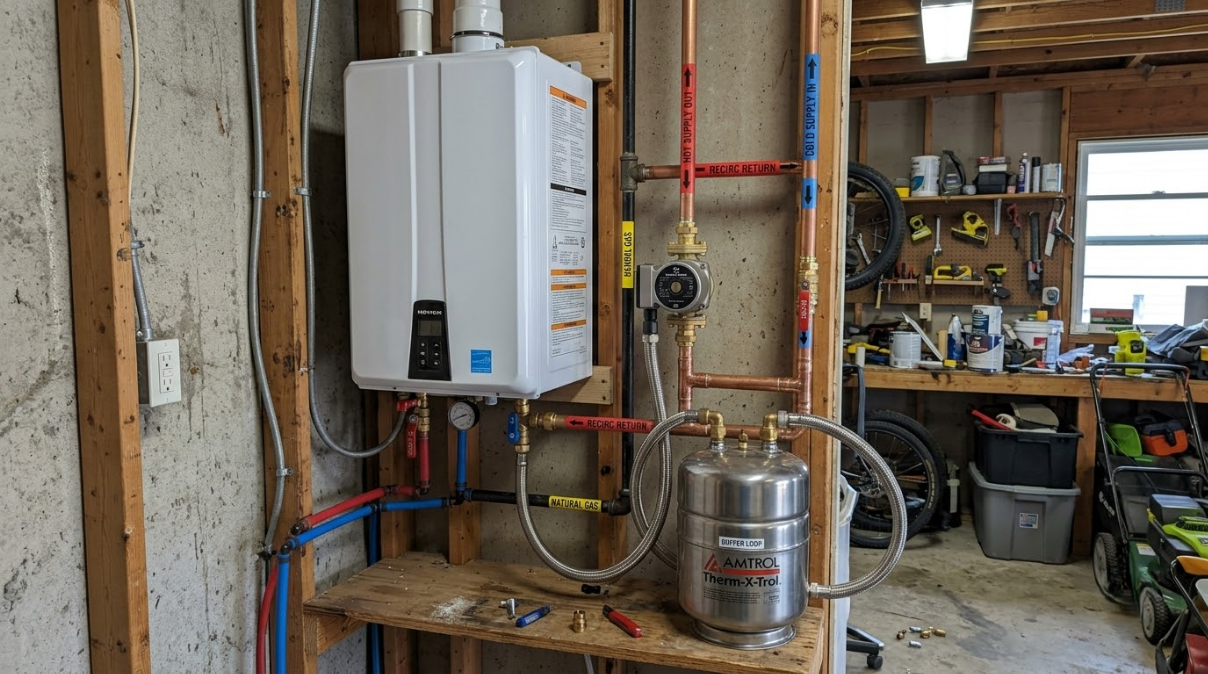
COMFORT
Cold Water Sandwich Correction
That sudden burst of cold water between two draws frustrates plenty of tankless owners. Recirculation, a small buffer tank, or correcting the activation flow rate all address it, depending on the installation.
THE WORD ON OUR WORK
WHAT OUR CLIENTS SAY.
Tankless owners tell us they appreciate having a fault properly explained to them rather than a replacement simply quoted, and several mention units that had been written off elsewhere coming back to full output after nothing more than a thorough descale and a cleaned inlet screen.
Common Questions
FREQUENTLY ASKED QUESTIONS.
Questions tankless owners ask most regularly, covering descaling intervals, ignition faults, the cold water sandwich, filter maintenance, and how to tell a service issue from a genuine failure.
How often should you flush a tankless water heater?
Annually is the common recommendation, though softer municipal water can stretch that. Homes on well water routinely need it more frequently, since scale is what shortens a tankless unit's life more than anything else.
Does a tankless water heater need to be descaled?
Yes. Scale forms on the heat exchanger surfaces even in softer water, restricting flow and raising operating temperatures. Descaling reverses that buildup and is the single most valuable maintenance a tankless unit receives.
Why does my tankless water heater not ignite?
Gas supply problems top the list, followed by blocked intake or exhaust terminations, failed igniters, and flame sensors coated with residue. The error code narrows it, but each possibility still needs testing.
What is a cold water sandwich?
A brief slug of cold water between two hot draws, caused by cooled water sitting in the pipe while the burner restarts. Recirculation, a buffer tank, or an adjusted activation flow rate reduces it.
How often should a tankless water heater filter be cleaned?
Check the inlet screen at least once a year, and more frequently if you are on well water or the local main has recently been disturbed. It takes minutes and prevents low-flow complaints.
Can you use vinegar to descale a tankless water heater?
White vinegar circulated through the unit is a common approach and works reasonably well, though it takes longer than a proprietary descaler. Either way, the unit needs isolation valves and a circulating pump.
Do tankless water heaters need annual maintenance?
They benefit from it considerably. A yearly visit covering descaling, the inlet screen, the venting, and a combustion check protects the 20-year life expectancy these units were designed around in the first place.
Why should I choose Just Right Plumbing for tankless repair?
We test the fault properly, review the installation behind it, and set descaling intervals to your actual water. Tankless owners in Smithfield, NC call us because we repair rather than replace.
HOW WE WORK
FROM ERROR CODE TO FULL OUTPUT, HERE IS HOW.
STEP 01
Get the code and the brand
Tell us the manufacturer, the model number, and exactly what the display is showing you. Those three details narrow the possibilities immediately and decide which parts and which tools travel out with us.
STEP 02
Verify gas, water, and power
Supply pressure, the flow rate through the unit, and the electrical supply all get measured before anything is opened up. Faults blamed on the appliance itself very frequently originate somewhere further upstream of it instead.
STEP 03
Inspect the vent and the intake
Terminations, routing, and required clearances all get checked carefully for obstruction and for code compliance. Nests, debris, and marginal installations produce repeated lockouts that look exactly like an appliance which has genuinely failed outright.
STEP 04
Descale and service the unit
The heat exchanger is flushed through properly, the inlet screen is cleaned, and the burner assembly is inspected. Many faults resolve entirely at this stage without a single component needing to be replaced.
STEP 05
Replace only what tested faulty
Where a sensor, an igniter, or a valve has genuinely failed, it gets replaced with the correct part for your specific model, and the reason it failed is investigated rather than simply accepted.
STEP 06
Run it and set the interval
The unit is run across multiple fixtures at once, the temperature is verified, and the error history is cleared. Then we agree a realistic descaling interval based on your actual water conditions rather than a generic schedule.
Get Your Free Estimate
GET THAT ERROR CODE EXPLAINED, FREE.
Tell us the brand, the model, and the code on the display, and we will tell you over the phone what it most likely means and what a repair involves, at no charge and with no obligation whatsoever.
WHAT YOUR FREE ESTIMATE COVERS:
✓ Your error code interpreted by brand
✓ Likely causes explained plainly
✓ Descaling and filter service quoted
✓ Gas and venting checks included
✓ Repair weighed honestly against replacement
✓ A realistic service interval afterward