
Drain Clearing
Drain Clearing in Smithfield, NC
The plumbing code requires a cleanout at intervals of no more than 100 feet on horizontal drainage and another at the junction of the building drain and the building sewer, which is precisely why proper access is what makes clearing a line straightforward instead of destructive. Just Right Plumbing, LLC clears drains throughout Smithfield, NC using cables and high-pressure jetting, then verifies the line actually runs clean with a camera rather than declaring victory when the water finally moves.
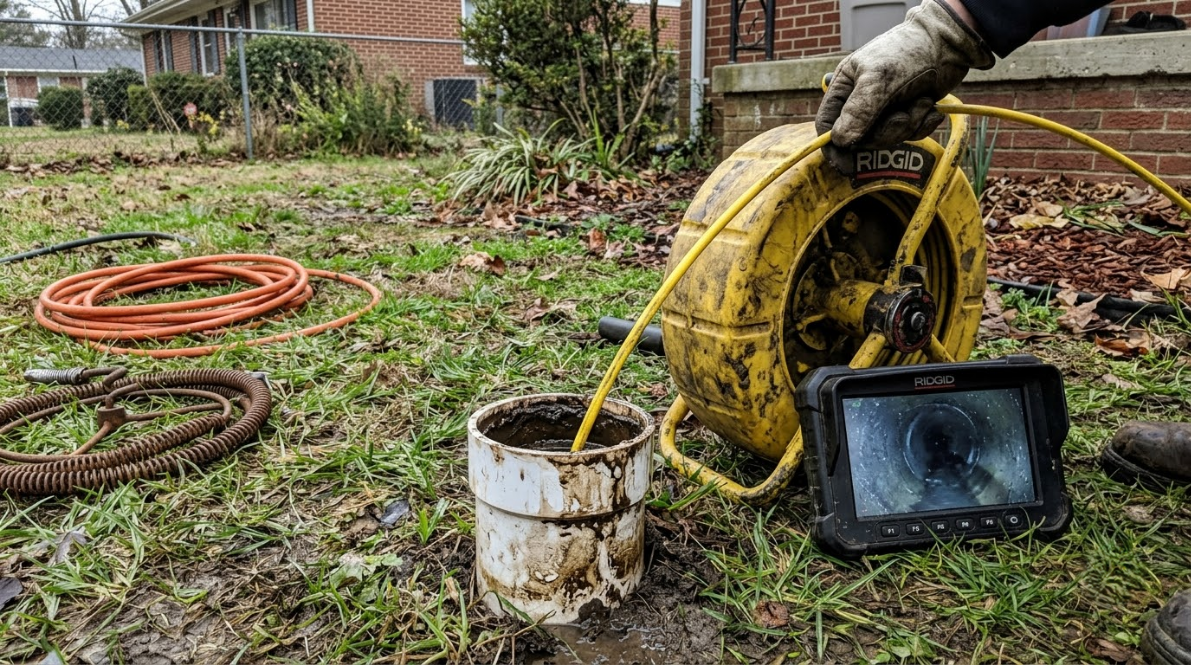
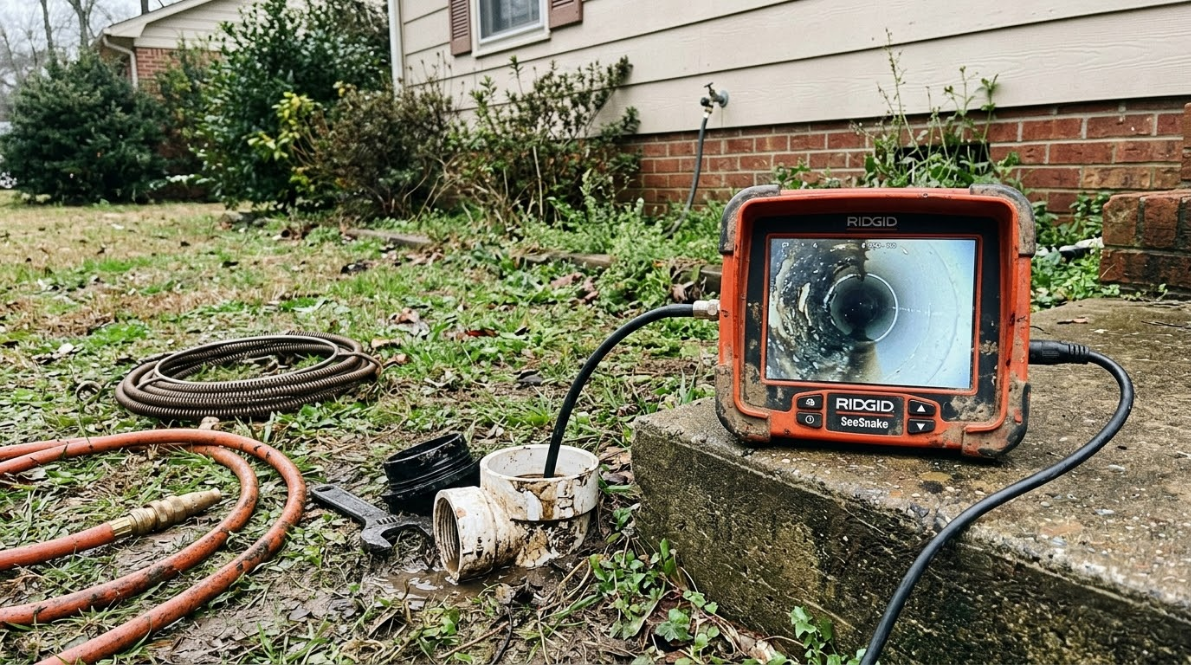
A CLEARED DRAIN AND A CLEAN DRAIN DIFFER.
Punching a narrow hole straight through a blockage restores the flow for a few weeks at the very best. The grease, soap, hair, and mineral scale still coating the pipe walls simply catch the next thing that passes through, and the same drain backs up all over again well before the season is out.
Clearing a drain properly means removing the material rather than piercing it, then confirming the pipe walls themselves are genuinely clear. That is the difference between one visit and four of them.
✓ Cable and hydro jetting available
✓ Camera verification after clearing
✓ Cleanout access used where possible
✓ Licensed P1 plumber on every job
DRAIN CLEARING
SLOW DRAINS ARE A COUNTDOWN, NOT A QUIRK.
A sink that takes twice as long to empty is not a personality trait of an older house. It is a measurement of how much of the pipe's diameter has already been lost to buildup. Left alone, that restriction keeps narrowing until a routine load of laundry or a holiday dinner tips it into a full blockage, usually at the least convenient possible moment. Clearing early is cheaper, faster, and far less unpleasant.
CAST IRON AND CLAY NEED A GENTLER HAND.
Plenty of properties around town still run cast iron and clay drainage, and neither responds well to being attacked. Cast iron scales and thins from the inside, clay joints shift and admit roots, and aggressive work in either can turn a blockage into a break. We match the method to the pipe material, which is exactly why we look at the line before choosing a tool.
CLEARING A LINE IS EASY. PROVING IT IS NOT.
Anyone with a cable can get the water moving again for an afternoon. Knowing whether the pipe is actually clear, whether the slope is still right, and whether something structural caused the blockage in the first place requires a camera and the experience to interpret what it shows you. 7+ years of running lines has taught us that the verification matters rather more than the clearing does. Would you like to see inside yours?
WHY CHOOSE US FOR DRAIN CLEARING.
THE RIGHT TOOL FOR THE PIPE
Cable, jetter, or a gentler approach depending on material and condition. Matching the method to the drain prevents the damage that aggressive clearing causes in older cast iron and clay.
VERIFIED, NOT ASSUMED
A camera confirms the line runs clean afterward. That removes the guesswork about whether the blockage has genuinely gone or merely been pushed further down the pipe.
CAUSES IDENTIFIED, NOT IGNORED
If a belly, a break, roots, or a venting fault created the blockage, you will hear about it. Repeat clogs almost always have a structural explanation behind them.
ACCESS USED PROPERLY
Cleanouts exist so drains can be worked without pulling fixtures apart. We find and use them wherever they exist, which keeps the visit shorter and considerably tidier.
NO CHEMICAL SHORTCUTS
Caustic cleaners damage older pipe and rubber seals while rarely reaching the actual blockage. Mechanical clearing removes the material instead of partially dissolving the nearest few inches.
CLEAN WORK AROUND YOUR HOME
Drain work is messy by nature. Drop cloths, containment, and a proper cleanup afterward are part of the job rather than an afterthought once the water is moving.
WHAT WE CLEAR
OUR DRAIN CLEARING WORK
Six clearing services cover everything from a slow bathroom sink to a main line that has stopped moving altogether. Each finishes with verification rather than an optimistic assumption about the result.
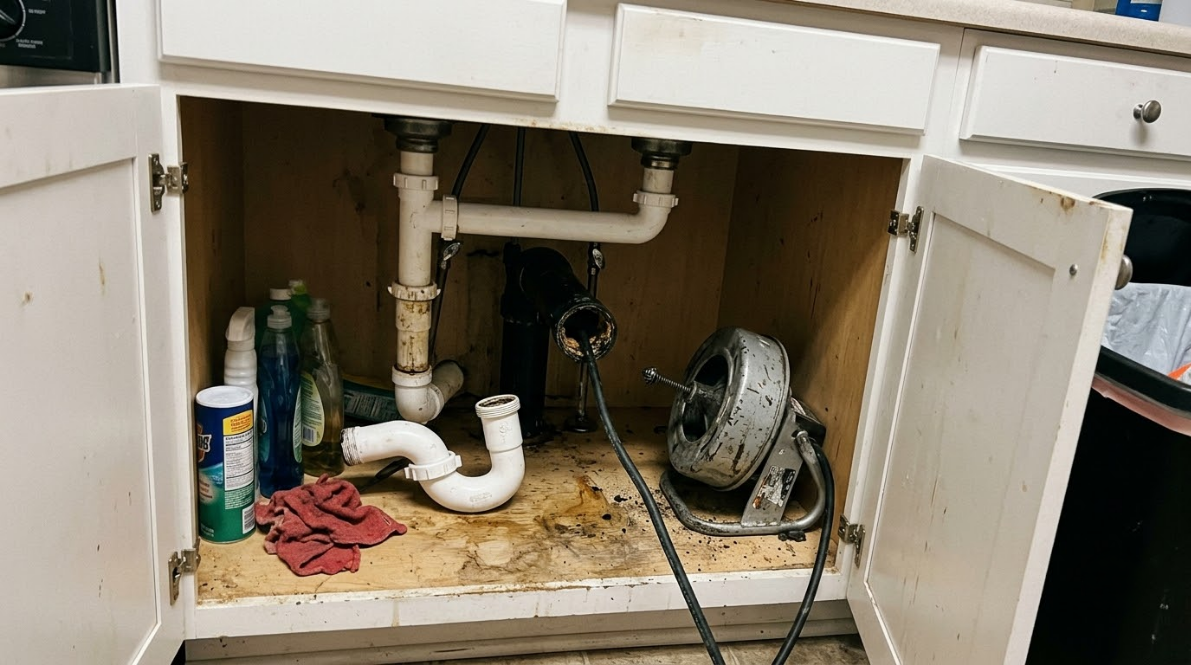
KITCHEN
Kitchen Sink Drain Clearing
Grease, food waste, and soap build a dense lining in kitchen drains that a cable alone often only bores through. Jetting removes the coating properly and restores the pipe's full original diameter.
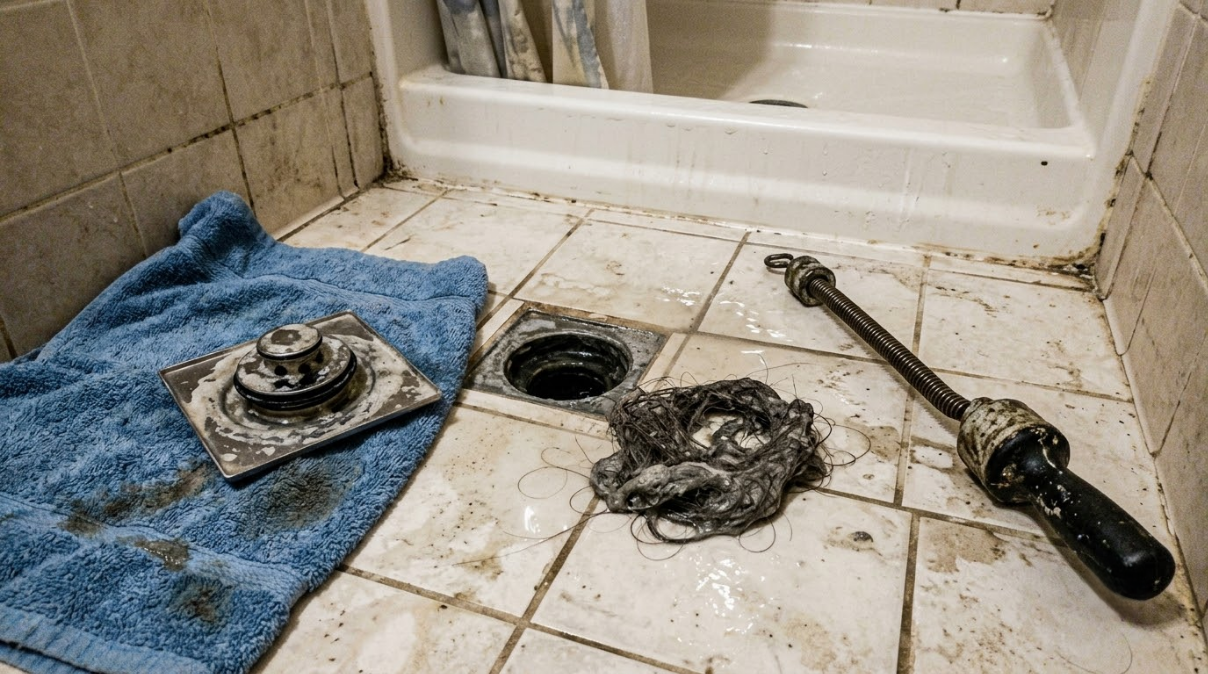
BATHROOM
Bathroom and Shower Drain Clearing
Hair and soap scum bind into a mat that catches everything after it. We remove that material rather than pushing it further along, and check the trap and stopper assembly while we are there.
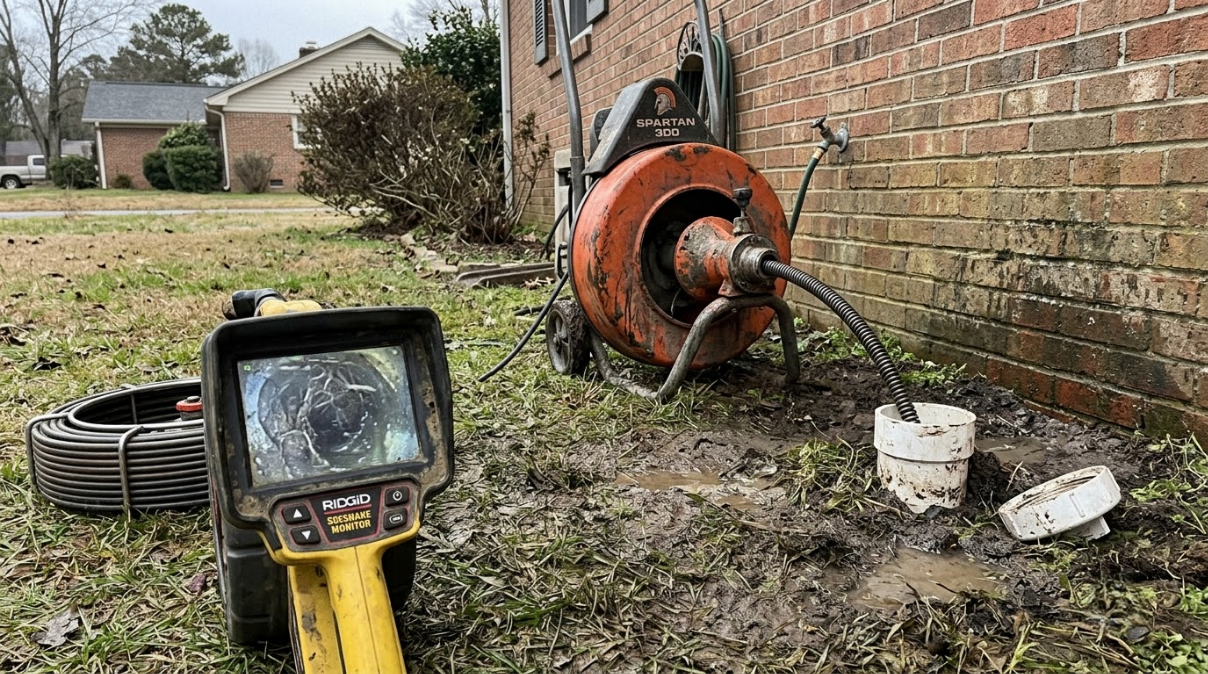
MAIN LINE
Main Sewer Line Clearing
When several fixtures back up at once, the problem sits in the main. We clear from the cleanout, then camera the line to establish whether roots, a belly, or a break caused it.
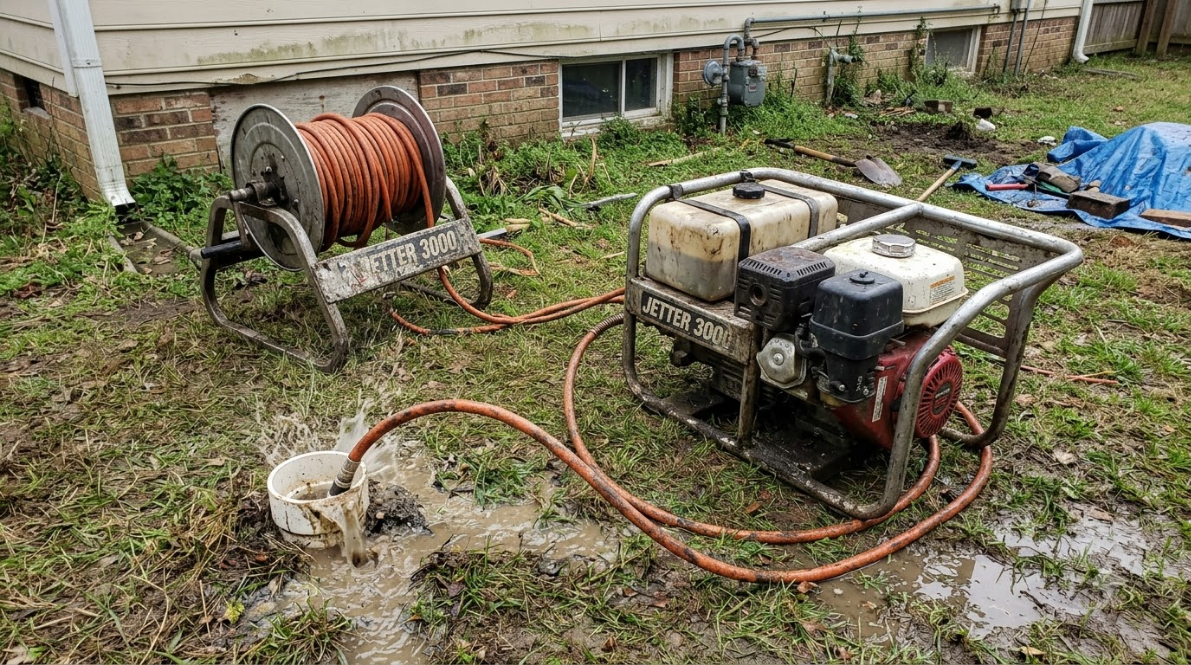
JETTING
Hydro Jetting Service
High-pressure water scours the pipe walls clean instead of simply piercing the blockage. It is the most thorough option available and by far the best answer for grease-laden commercial lines.
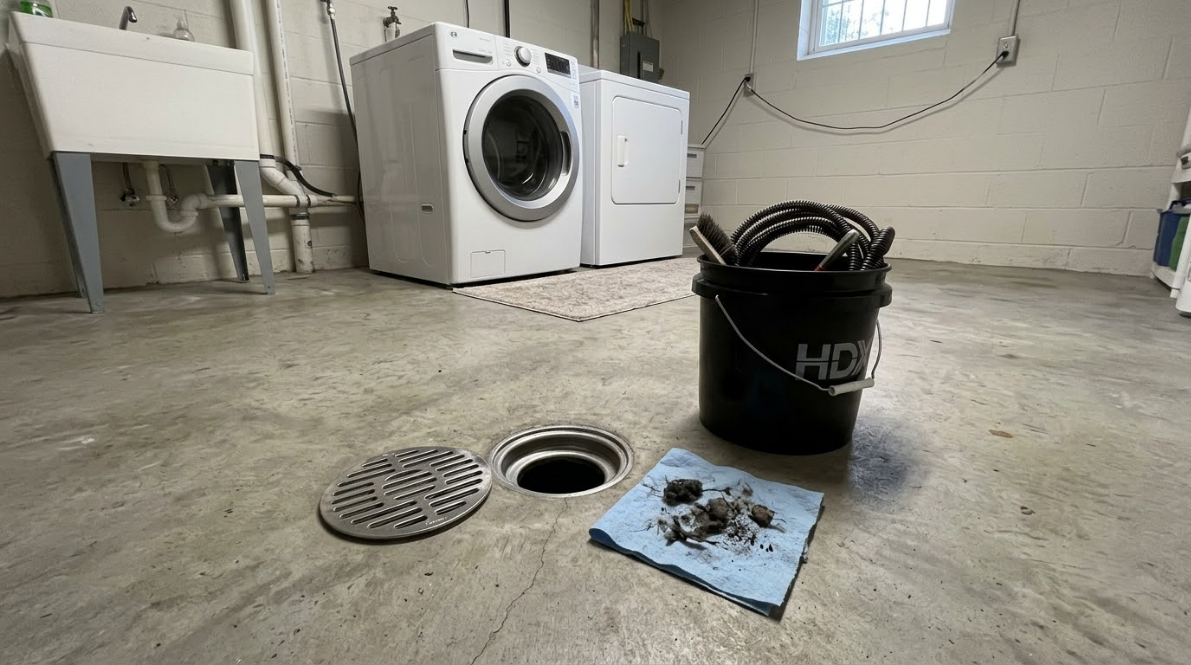
FLOOR DRAINS
and Laundry Drain Clearing
Basement, garage, and laundry drains all collect lint, sediment, and debris, and their traps dry out from simple disuse. Clearing and refilling them stops both the backups and the sewer odor that follows.
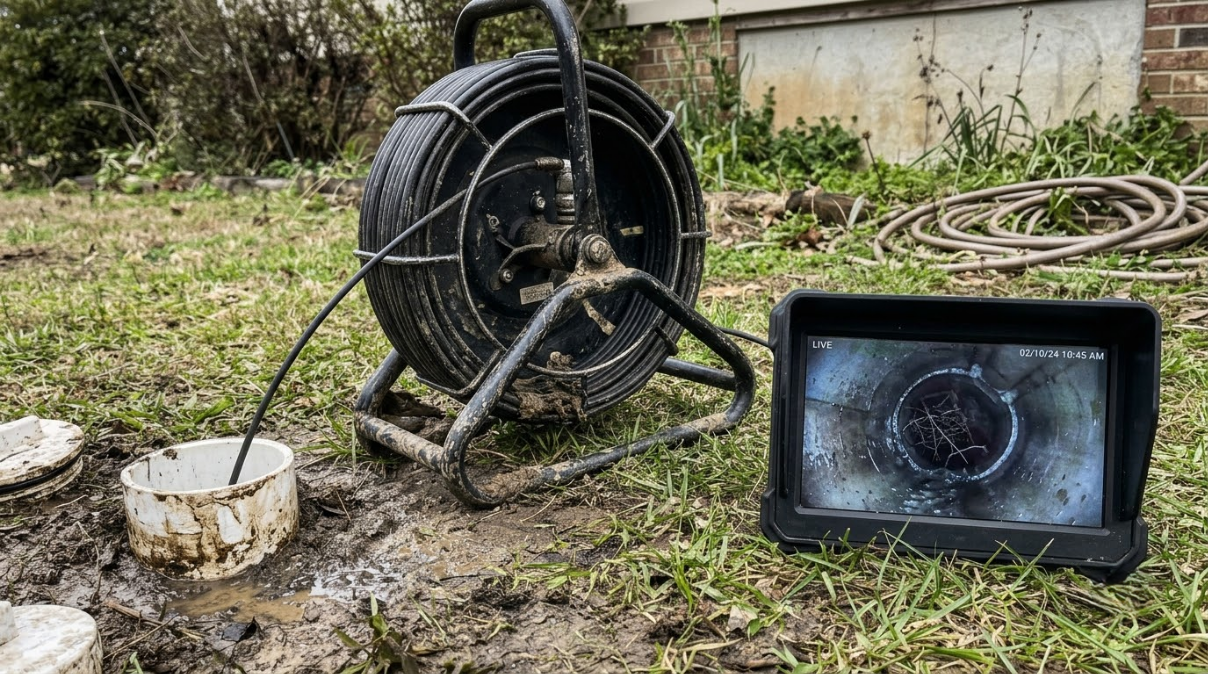
INSPECTION
Camera Drain Inspection
A camera survey shows the pipe condition, slope, joints, and any intrusion, recorded so you can see it too. It turns a guess about your drainage into an actual answer.
THE WORD ON OUR WORK
WHAT OUR CLIENTS SAY.
Customers regularly mention long-running kitchen blockages finally cleared for good, same-evening visits when a drain gave out unexpectedly on a weekday, and being shown the camera footage afterward so they could see for themselves exactly what had been causing the problem all along.
Common Questions
FREQUENTLY ASKED QUESTIONS.
Questions homeowners ask most about drain clearing, covering methods, how often drains need professional attention, whether chemical cleaners help, and what causes the same drain to keep blocking.
How often should drains be professionally cleaned?
Most homes benefit from a main line clearing every 18 months to 2 years. Kitchens with heavy cooking, houses with mature trees nearby, and older cast iron drainage all justify a shorter interval.
What is the difference between snaking and hydro jetting?
A cable bores a hole through the blockage and pulls some material back. Jetting uses high-pressure water to scour the entire pipe wall, removing the coating that causes the next blockage.
How long does drain cleaning take?
A single slow sink or tub usually takes under an hour. Main sewer lines run considerably longer, particularly where access is awkward or a camera survey is needed to understand what caused the blockage.
Can drain cleaning break or damage my pipes?
It can, when the wrong method meets old pipe. Cast iron thinned by scale and clay with shifted joints both need care, which is why the material and condition are assessed before any tool goes in.
Do you inspect the drain before clearing it?
Wherever access allows, yes. Knowing the pipe material, the depth, and whether roots or a belly are involved decides the method and prevents turning a blockage into a considerably worse problem.
Should I get my main line cleared if it has never backed up?
If the house has mature trees, older clay or cast iron drainage, or you have recently moved in without any history on the line, a camera survey is a sensible and inexpensive precaution.
What causes a foul smell around a drain?
Usually a dry or siphoned trap letting sewer gas past, or a buildup of organic material coating the pipe just below the fixture. Both are straightforward to identify and simple to resolve.
Why should I choose Just Right Plumbing for drain clearing?
We match the method to your pipe, verify the result with a camera, and tell you what caused it. Homeowners across Smithfield, NC call us when a drain keeps coming back.
HOW WE WORK
FROM STANDING WATER TO CLEAR PIPE, HERE IS HOW.
STEP 01
Establish which drains are affected
One slow fixture and several backing up at once point in very different directions. That single question, answered on the phone, usually tells us whether the issue is local or in the main line.
STEP 02
Locate the access point
Cleanouts, roof vents, and fixture openings each offer a different way into the line. Finding the right access saves time, protects your fixtures, and keeps the working mess contained to a single area.
STEP 03
Choose the method for the pipe
Pipe material, pipe age, and the nature of the blockage together decide between a cable and a jetter. That single decision is what protects older drainage from the damage indiscriminate clearing so regularly causes.
STEP 04
Clear the blockage properly
The obstruction is removed rather than merely pierced, and the loosened material is pulled back or flushed right through. Working the full length of the line matters far more than simply getting water moving again.
STEP 05
Verify with a camera
The line is surveyed properly after clearing to confirm the walls are clean, and to check the slope, the joints, and whether anything structural has contributed to the blockage in the first place.
STEP 06
Explain the cause and prevention
You hear what was actually in the pipe, what most likely put it there, and what would keep it from coming back. Where a repair is genuinely needed, that gets explained separately and honestly.
Get Your Free Estimate
GET THAT DRAIN CLEARED PROPERLY, FREE.
Describe which fixtures are slow and how long it has been building, and we will tell you at no charge whether this is a local blockage or a main line problem, and what clearing it properly would involve.
WHAT YOUR FREE ESTIMATE COVERS:
✓ Local or main line established by phone
✓ Cable and jetting options explained
✓ Pipe material considered first
✓ Camera verification included
✓ The actual cause identified
✓ Prevention advice afterward